About Nepal Footprint Holiday

We are a team of full service-oriented travel entrepreneurs based in Kathmandu. Offering the best depth guidance services and travel advice, exciting, customized holiday packages or tailor-made trips in Nepal’s most admired and preferred off-beat destinations. We specialize in small group treks and tours in the Himalayas which is the beauty of Nepal.

Follow Us

Annapurna Base Camp Trek – 14 Days

$1050/Per Person

Location

Annapurna Region

Duration

14 Days

Altitude

4,130 m (13,550 ft)

Difficulty

Moderate

Group Size

2-12 pax

Best Season

All Year
Annapurna base camp trek route
Annapurna Base Camp

Trip Overview of the Annapurna Base Camp Trek – 14 Days

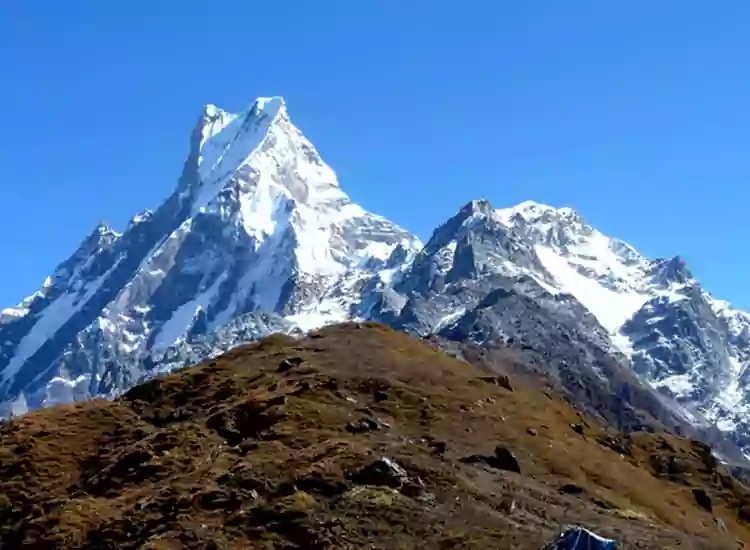
The Annapurna Base Camp Trek is the most well-known trekking package in Nepal, offering an excellent spot for mountain lovers from around the world. This trek takes you deep into the heart of the Annapurna Conservation Area, offering you astonishing views of surrounding mountains such as Annapurna I (8,091 m), Machhapuchare, Hiunchuli, and Annapurna South. Regarded as a moderate difficulty trek, the journey is suitable for both first-time trekkers and experienced hikers looking for a rewarding mountain journey.

The trek starts from the scenic city of Pokhara and passes through the beautiful villages like Ghorepani, Chhomorong, and Bamboo, along with rhododendron forests, picturesque rivers, waterfalls, and terraced farmlands. One of the major highlights of this trek is the early morning hike to Poon Hill, a famous viewpoint to catch the stunning sunrise and panoramic views of the nearby Himalayas. As you walk through Gurung and Magar villages, you even get the chance to experience local culture, lifestyle, and warm hospitality.

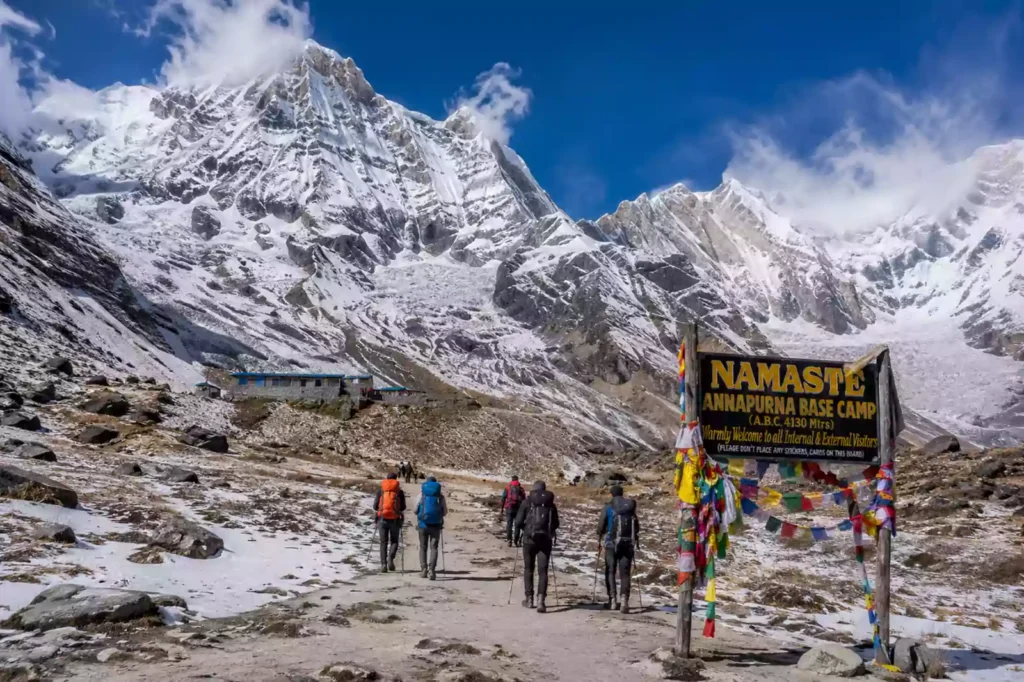
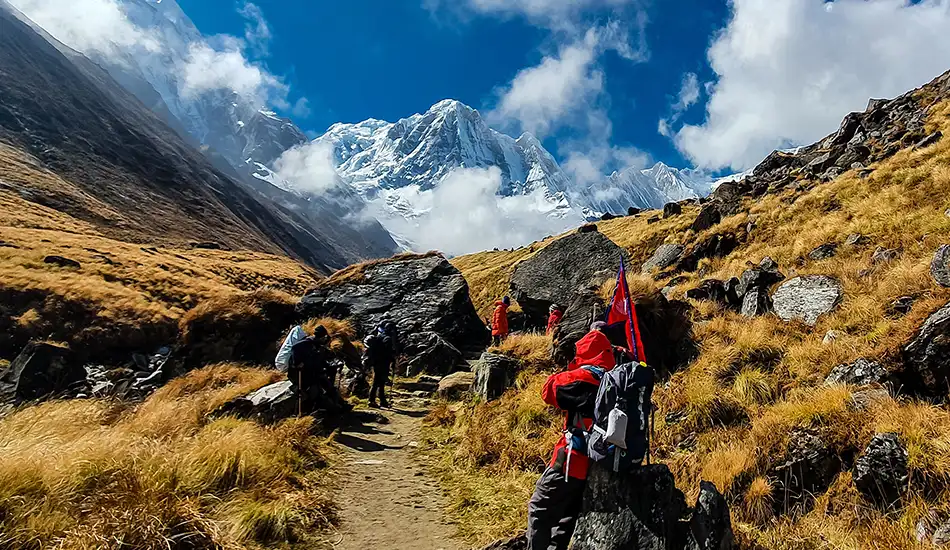
As you reach Base Camp (4,130 m), one of the most unforgettable moments of the entire journey, treats to the impressive beauty of towering snow-capped peaks. The itinerary designed by our team even includes reaching the Machhapuchare Base Camp (3,700 m), and then to the natural hot springs at Jhinu Danda, which makes the journey more refreshing.

The Annapurna Base Camp Trek package is best done in spring (March – May) and autumn (September – November), offering you clear mountain views and pleasant weather. Therefore, with a well-planned itinerary, experienced guides, and comfortable teahouse accommodation, this trek is one of the best trekking packages in Nepal, mainly for first-time trekkers and budget hikers.

Important Highlights during the Annapurna Base Camp Trek

  • Get a chance to stand at the base of Annapurna I (8,091 m), where you see yourself being surrounded by snow-covered Himalayan giants.
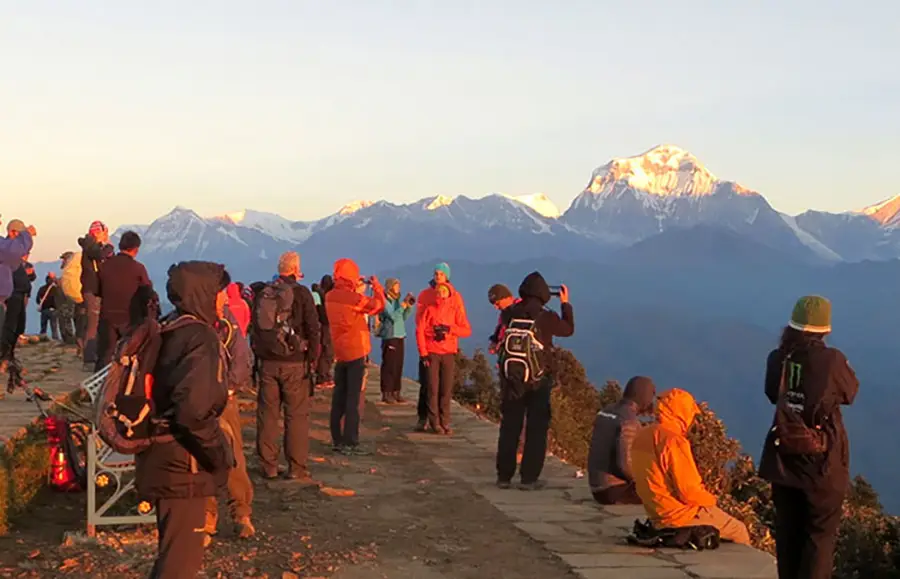
  • Appreciate the best sunrise views in Nepal, offering you panoramic views of Annapurna, Dhaulagiri, Machhapuchare, and Nilgiri ranges.
  • Get close-up views of the Machhapuchare Himal, as you reach the Machhapuchare Base Camp.
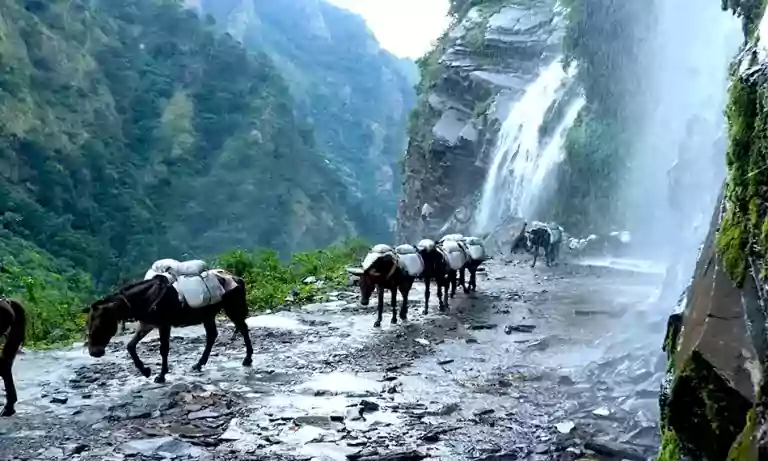
  • Pass through a wide range of landscapes, from rhododendron forests, rivers, waterfalls, terraced farms, to high alpine terrain.
  • Experience the authentic village life, taste local foods, and enjoy the warm mountain hospitality offered by the traditional Gurung and Magar villages.
  • Relax your tired muscles in natural hot springs beside the river after days of trekking.
  • Trek through Nepal’s largest protected area, the Annapurna Conservation Area, with unique biodiversity, wildlife, and flora.
  • Best trekking package from Pokhara, covering easily accessible routes, well-marked trails, and excellent infrastructure.

Difficulty Level of Annapurna Base Camp Trek

The Annapurna Base Camp is one of the most popular trekking routes in Nepal, taking you into the heart of the Annapurna Sanctuary. This trek is known to treat you to the stunning views of Annapurna I, Machhapuchare, Annapurna South, and Hiunchuli. The journey passes through beautiful rhododendron forests, rivers, waterfalls, and traditional Gurung and Magar villages. As you reach Annapurna Base Camp at 4,130 m, it is one of the most memorable experiences, as you are surrounded by the world’s highest peaks.

For beginners, the difficulty level of Annapurna Base Camp Trek is considered a moderately difficult trek and is suitable for first-time trekkers with basic fitness. The trails are well-marked, and the trek does not require technical climbing skills. Daily, you will be walking for 5 to 7 hours with gradual altitude gain. However, with proper acclimatization, a steady walking pace, and guidance from experienced guides, beginners can comfortably complete this trek.

Annapurna Base Camp Trek Compared to Other Treks

The Annapurn Trek is special because it offers a perfect mix of high Himalayan scenery, cultural experience, and comfortable trekking infrastructure in a short time. Compared to other treks, this route takes you into the heart of Annapurna Sanctuary, where you feel yourself being surrounded by towering peaks such as Annapurna I, Machhapuchhre, Annapurna South, and Hiunchuli.

Reaching 4,130 meters, without technical climbing, is what makes this trek most rewarding for both beginners and experienced trekkers. What really makes the Annapurna Base Camp Trek Compared to Other Treks is the unique landscapes and traditional culture you experience in this journey. The trail passes through lush rhododendron forests, alpine meadows, glaciers, rivers, and traditional Gurung and Magar villages.

Spots like Poon Hill sunrise, Machapuchare Base Camp, and relaxing Jhinu Danda hot springs are what add extra speciality to this journey. Compared to other treks, this base camp trek offers excellent teahouse facilities, easy access from Pokhara, and a rich combination of nature, culture, and adventure.

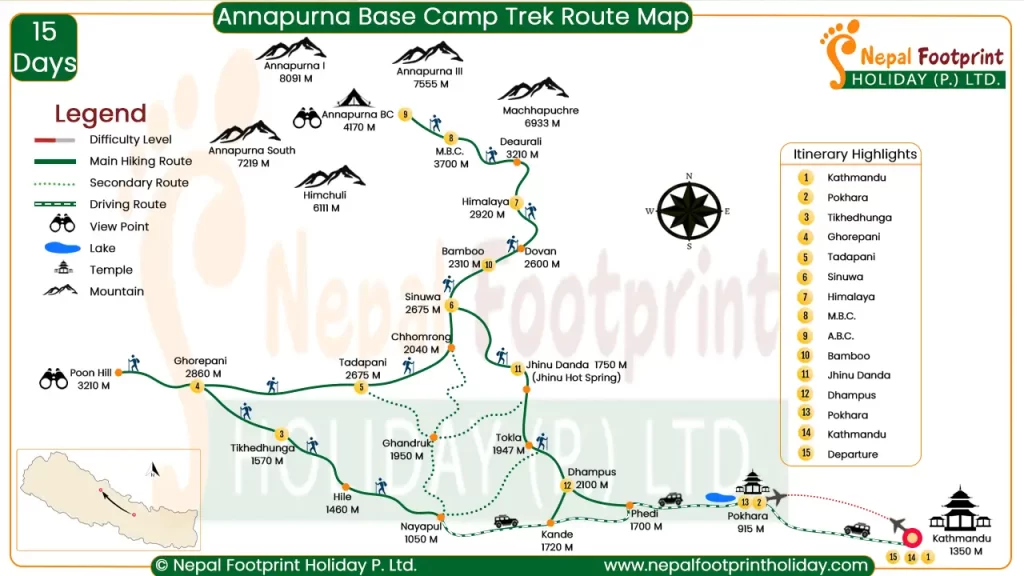
Annapurna Base Camp Trek Route Map & Elevation

Map of Annapurna Base Camp Trek

Day by day Itinerary

Upon your arrival in Kathmandu, you will be welcomed by one of our team representatives. Then, you will be transferred to your designated hotel inside Kathmandu Valley. After check-in, you can rest or explore the nearby area at your own pace. In the evening, a short briefing about the trek will be provided to you. After that, you can explore the nearby areas on your own. 

After your morning breakfast at your hotel in Kathmandu, you take a scenic drive from Kathmandu to Pokhara, which takes around 6 to 7 hours, depending on the route and traffic conditions. The drive involves passing through rivers, beautiful hills, and rural villages. Upon reaching Pokhara, you check into your hotel and relax. In the evening, you can explore Pokhara at your own pace. 

On Day 03, you will be taking a scenic drive from Pokhara to Nayapul, as you navigate through beautiful hills and rivers. As you reach Nayapul, you stop for lunch, and then start your trek towards Ulleri. Starting your trek on Day 03 is an amazing chance to witness the beauty of the landscapes and acclimatize to the gradual altitude. Along the way, you will be passing through traditional villages, dense forests, and peaceful trails, and reach Ulleri. Upon reaching Ulleri, one of the excellent spots to rest and appreciate the beauty of the surrounding mountains. 

On Day 04, you begin your trek from Ulleri to Ghorepani, which involves passing through terraced fields, picturesque waterfalls, and rhododendron forests, with steep stone steps, as you near Ghorepani. The walk includes passing through charming villages, stone-paved routes, and a quiet atmosphere. Overnight at a basic yet comfortable teahouse with modern amenities provided.

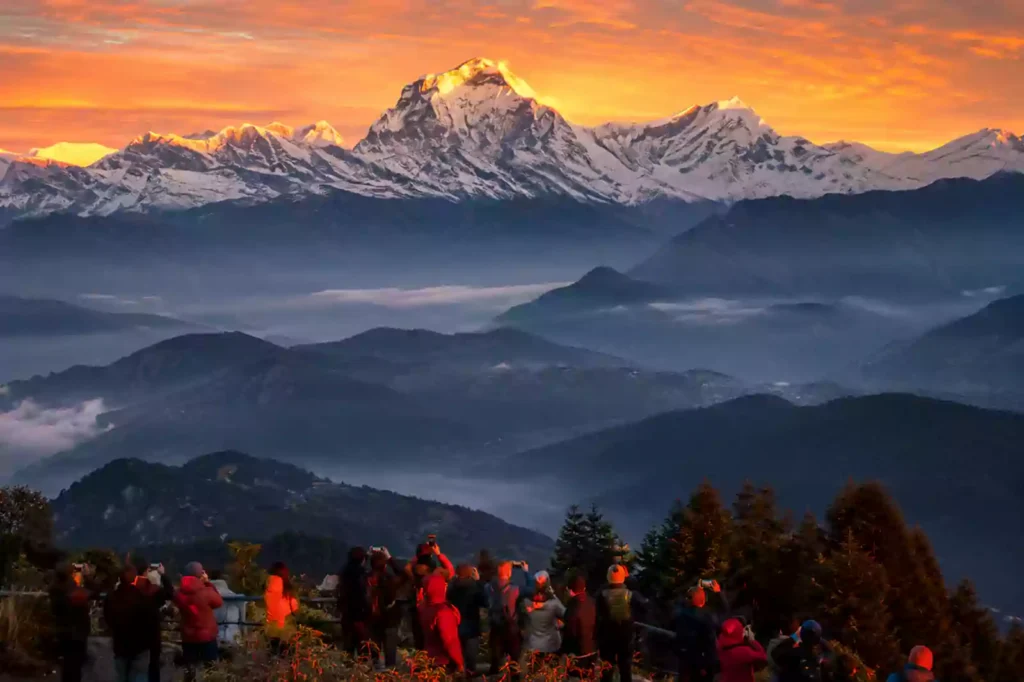
On Day 05, you will be taking a short early morning hike to Poon Hill, which is considered to be the best viewpoint to catch the stunning sunrise views over the snow-capped mountains. After enjoying the eye-catching sunrise views, you descend back to Ghorepani for your breakfast. You then take a short walk towards Tadapani from Ghorepani, which includes a mix of gradual uphill and downhill sections. Along the way, you can expect the route with stone steps and natural trails, passing through traditional villages. 

Trekking from Tadapani to Sinuwa, on Day 06 via Chhomrong, includes a gradual descent, passing through rhododendron forests, terraced fields, and traditional Gurung villages. Along the way, you can experience the traditional charm of Gurung villages, as well as stunning mountain views, rivers, and lush greenery. Overnight stay at Sinuwa in a simple teahouse, surrounded by serene natural beauty. 

On Day 07, you will be trekking from Sinuwa to Deurali, passing through lush rhododendron forests along the Modi Khola river valley. The trail includes a gradual ascent through dense bamboo forests and scenic mountain routes, offering you breathtaking views of Annapurna South, Machhapuchare, and Hiunchuli peak. Along the way, you can enjoy the peaceful surroundings as you Himalayan, spending overnight at a local teahouse. Upon reaching Deurali, you can relax and soak in the serene Himalayan atmosphere. 

On Day 08, you will be moving from Deurali to Machhapuchare Base Camp, offering you diverse landscapes, from lush forests to the open alpine zone of the Annapurna Sanctuary. At this time, you get to witness the beauty of the Machhapuchare and Annapurna range, making the trek worth it. From here, you then move higher towards the Annapurna Base Camp, which is the final destination of the day. As you reach, you get to witness the close-up views of the surrounding mountains, which makes the journey even more engaging. From this point, you get to see stunning panoramic views of towering mountains. 

On Day 10, after an unforgettable morning at Annapurna Base Camp, you begin your descent to Bamboo, taking about 6 to 7 hours. Today’s walk includes passing through alpine meadows, rivers, and forests, offering stunning views of surrounding peaks throughout the way. Upon reaching Bamboo, you stay at a local teahouse, relax, and share stories of the trek with the locals. 

Trekking from Bamboo to Jhinu Danda on Day 11 is the most rewarding day of your journey, as you will be descending to lower altitudes. Today’s walk includes passing through steep descents on stone steps, which can be demanding on your knees. As you pass through lush greenery landscapes, the astonishing sound of the Modi Khola river makes the walk even more amazing. Upon reaching Jhinu Danda, an excellent place to enjoy natural hot springs, you can relax your tired muscles after your long journey. 


The trek from Jhinu Danda to Dhampus Village involves passing through several traditional villages and river crossings over suspension bridges. On this day, you pass alongside the Modi Khola River, cross through several traditional houses, and forest areas. As you near Dhampus, the walk feels easy and passes through small villages and green forest areas, offering you stunning views of the Annapurna and Manaslu ranges during clear weather. 

On Day 12, you will be descending towards Phedi and then taking a short yet scenic drive towards Pokhara. The starting section of the trek involves a gradual downhill, passing through Gurung village areas and stunning views of Annapurna. Along the way, you navigate through forests and villages, leading you towards Phedi. From here, you will be taking a short, pleasant drive, which is the end of your trek to Annapurna Base Camp. Reaching Pokhara, you have enough time to explore the nearby areas and visit Phewa Lake. 

On Day 13, you will be taking a return drive from Pokhara back to Kathmandu. Along the way, you can expect beautiful scenery, passing alongside the Trishuli River. If you are lucky enough, you can even see glimpses of the Himalayas, usually on clear days. The route from Pokhara to Kathmandu is well-known for its picturesque landscapes, where you even pass via local villages. After 6 to 7 hours, you finally reach Kathmandu, which marks the end of your journey. In the evening, you are facilitated with a farewell dinner, where you share your experiences with the team and fellow trekkers. 


Day 14 marks the end of your journey to Annapurna Base Camp. On this day, you will be transferred to the Tribhuvan International Airport by one of our team representatives, depending on your departure time. Hope you had an amazing stay and a good experience trekking with the team of Nepal FootPrint Holidays. Safe travels, and hope to meet soon at the next trekking destination with the team. 

Include/Exclude

Includes

  • Pickup and Transfer to and from Tribhuvan International Airport to your hotel in Kathmandu.
  • Three-star hotel accommodations in Kathmandu with breakfast included.
  • Tea house accommodation throughout the trek.
  • Three meals a day (breakfast, lunch, and dinner) during your trek to Annapurna Base Camp.
  • Conservation Area Permit and Other Required Ones.
  • Trekkers Information Management System (TIMS) Card.
  • Government-licensed and experienced Guide and local Porter for every two individuals for the trek. (Nepal FootPrint
  • Holidays covers the staff’s meals and accommodations, along with all the travel expenses throughout the trek).
  • Government Taxes and the Company’s Service Charge.
  • Basic First Aid Kit
  • Emergency life saver oxygen and mask support.
  • Welcome and Farewell Dinner in an authentic Nepalese restaurant.
  • Duffle Bag.

Excludes

  • International flight ticket to and from Kathmandu.
  • Nepal Entry Visa Fees (options for on-arrival visa at the Tribhuvan International Airport).
  • Major meals in Kathmandu (other than breakfast).
  • Personal expenses during the trek, such as phone bills, snacks, drinks, and other services.
  • Hot shower and charging electronic devices in the teahouses.
  • Personal trekking gear.
  • Tips for guide, porter, and driver.
  • Major Sightseeing in Kathmandu to the UNESCO Sites.
  • Flight from Pokhara to Kathmandu (can be added for an extra cost).

General Information

Accommodation and Meal Options

Accommodation for the Annapurna Base Camp Trek is mostly provided at a local teahouse, but during your stay in Kathmandu and Pokhara, it is offered at standard and comfortable hotels. During your trek to the base camp, local teahouse accommodations make your stay even more comfortable. The rooms are simple, with twin beds, warm blankets, and shared bathrooms, mainly at higher altitudes. These teahouses are mostly run by the locals of this region, offering you a warm stay and hospitality.

Similarly, meals for the ABC trek are basic yet fulfilling after long walking hours. The meals are provided at the local teahouse, including options such as Dal Bhat, soup, fried rice, Thukpa, noodles, and hot drinks. As you ascend higher, the meal options can even get more basic and simple, so carrying extra snacks and protein bars is highly recommended.

Guides and Porter

Guide for the Annapurna Base Camp is highly recommended if you are a first-time trekker in Nepal. At times, the route to the base camp is more challenging and confusing, so hiring a guide can help you navigate safely. These guides are licensed ones and can speak fluent English, which can ensure your safety and security throughout the trek. They even help you interact with the locals of the region, offering you even more secure travel at higher altitudes.

Porters for the trekking to Annapurna Base Camp are required, as they make sure you fully enjoy your trek without the burden of the heavy baggage. They are the locals of the region, who even help you interact with the locals and experience the traditional lifestyle of this region.

Best Time to do Annapurna Base Camp Trek

Selecting the best time for the Annapurna Base Camp Trek is the most important decision to take, as it overall determines your experience in the Annapurna region. Choosing the best time to do Annapurna Base Camp Trek is essential for an even more engaging experience.

Spring (March to May)

The Spring trek is highly recommended if you are new to trekking in Nepal. During this time, you are rewarded with stable conditions, well-maintained trails, and comfortable temperatures. Spring is known to attract more trekkers from around the world, which makes the trail a bit crowded. This time is also known to reward you with stunning views of snow-capped peaks, which makes your journey even more engaging.

Autumn (September to November)

Autumn is another peak time to trek, as during this season, you are treated to favorable mountain conditions. The temperature is stable, the mountain views are magnificent, and the trails are well-marked. This time also attracts many trekkers, which makes accommodation options limited, so early booking is highly recommended if you plan to take this trek during autumn.

Winter (December to February)

Trekking to Annapurna Base Camp during winter is possible, but not recommended, if you are a first-time trekker. This season is perfect for those who have prior experience in trekking through snowy conditions. However, if you want to see the stunning snow-covered views of the surrounding mountains, winter might be the time you need to take on this trek. Some accommodations might even be closed, usually at a higher altitude. If you have proper winter gear, you can also reach the base camp under the guidance of an experienced guide.

Summer (June to August)

Summer is not the best time to take on the Annapurna Base Camp, due to the monsoon season, which makes the trail more slippery, along with high chances of landslides at lower altitudes. Leeches are also common in lower areas, which makes this time a bit less favorable than other seasons.

Annapurna Base Camp Essential Permits

For the Annapurna Base Camp Trek, you must obtain certain permits that are necessary to ensure a safe and hassle-free experience throughout the trek. These permits are required for every trekker, as there are various checkpoints where you need to show this permit. Below are the Annapurna Base Camp Essential Permits that need to be obtained before you start your journey.

Annapurna Conservation Area Permit (ACAP)

The Annapurna Conservation Area Permit (ACAP) is one of the required permits to be obtained for the base camp trek. As reaching the base camp involves passing through the Conservation Area, obtaining it is necessary. The ACAP permit can be easily obtained from the Nepal Tourism Board Office in Kathmandu through a registered trekking agency. The cost of the ACAP for foreign trekkers is around NRP 3,000, for SAARC Nationals around NRP 1,500, and for Nepali nationals is NRP 100.

Trekkers Information Management System (TIMS) Card

Another necessary permit for the Annapurna Base Camp trek is the Trekkers Information Management System Card (TIMS), which is essential to ensure safety throughout the trek. The main objective of this permit is to track your location and monitor your trekking activities, ensuring a safe and comfortable journey. This permit costs around NRP 2,000 for individual trekkers and NRP 1,000 for group trekkers, trekking through a registered trekking agency.

Gear and Packing 

Having proper gear and essential packings for trekking to Annapurna Base Camp is necessary to ensure safety and comfort. Below is the list of gear and packing that are required for this trek.

Clothing

  • Base layers (moisture-wicking thermal tops and bottom).
  • Mid-layers (fleece jacket and pants, with lightweight down jacket).
  • Outer layers (waterproof and windproof jacket and trousers).
  • Warm beanie
  • Sun hat
  • Neck gaiter
  • Waterproof gloves
  • Hiking socks and trekking boots with good ankle support.

Trekking Gear

  • Duffle bag
  • Small backpack (20 – 30L) for essentials
  • Duffle bag for porters
  • Sleeping bag (for cold temperatures).
  • Trekking poles (easily adjustable).
  • Headlamp with extra batteries.

Toiletries and Personal Items

  • Sun protection with SPF
  • Sunglasses
  • Lip balm with SPF
  • Quick-dry towel
  • Wet wipes
  • Biodegradable soap
  • Toilet paper
  • Hand sanitizer
  • Personal medications
  • Blister plasters
  • Basic first aid kit

Safety Tips for Annapurna Base Camp Trek

Annapurna Base Camp is considered one of the most accessible treks in Nepal, which can be done by first-time trekkers. Still, some sections need to have proper guidance and precautions to be followed. Below are the safety tips for the Annapurna Base Camp Trek.

  • Prepare yourself physically before the trek, as the journey includes long walking hours and high altitude.
  • Altitude sickness can be a major problem during your trek, so make sure to acclimatize properly and take frequent breaks.
  • The weather in Annapurna can change frequently, so pack warm layers, a waterproof jacket, good trekking shoes, gloves, and a warm hat.
  • Before you start your trek, check the weather conditions each day, as it helps you to avoid bad weather.
  • Do not take shortcuts or unknown paths. Always stick to the main trekking routes to prevent getting lost or passing through dangerous terrain.
  • Avoid alcohol and smoking at high altitudes as they increase the risk of altitude sickness.
  • Drink only boiled or purified water to avoid stomach problems.
  • Trek with a licensed guide and in a team to increase safety throughout the trek, as they are known about route, weather conditions, and emergency procedures.
  • Carry a basic first aid and emergency kit, as it must include basic medicines, altitude sickness tablets, bandages, pain relievers, and personal medication.

Travel Insurance

Travel insurance is necessary for the Base Camp, as they help you protect yourself from unexpected problems during the trip. The insurance helps to cover financial losses and emergencies that may happen while traveling, especially in remote and high-altitude areas. As the journey takes you to high altitude and remote mountain areas, where medical facilities are limited, proper travel insurance, it ensures your safety, support, and peace of mind during emergencies.

FAQ’s for Annapurna Base Camp

  1. What is the Annapurna Base Camp Trek in Nepal?

    The Annapurna Base Camp Trek in Nepal, is one of the most comfortable and easily accessible trekking routes in Nepal. Situated in the Annapurna region, this trek passes through the Annapurna Conservation Area, where you must need to obtain permits to safely cross this section. 

  2. When is the ideal time for the Annapurna Base Camp Trek?

    The most preferred time for the Annapurna Base Camp Trek is during spring (March to May), autumn (September to November), and possibly even in Winter (December to February). These seasons offer you stable weather conditions, moderate temperatures, and dazzling mountain views.

  3. What are the weather and temperature conditions while trekking to Annapurna Base Camp?

    The temperature and weather during the trek to the base camp are predictable with pleasant conditions, mainly in the time of spring and autumn. These seasons are perfect for trekking to higher altitudes. 

  4. Is it possible to get a visa for Nepal upon arrival at the International Airport?

    Yes, getting a visa for Nepal is possible upon arrival, but there are only certain countries that can get these services. However, to save your time, we highly recommend to fill out the online visa application in advance.

  5. Who is responsible for picking me up at the airport upon my arrival at the airport?

    One of our team representatives will be waiting for you outside the Tribhuvan International Airport, with our signboard of (Nepal Footprint Holidays), where he will pick you up and transfer you to your designated hotel inside the Kathmandu Valley.

  6. Is there ATMs or money exchange facilities during the trek?

    Facilities of ATMs or money exchange are not possible during your trek, as there are no such services; therefore, it is highly advisable to carry enough cash from Kathmandu.

  7. Should I hire a guide and porter for the Annapurna Base Camp Trek?

    Hiring a guide and local porter for this trek is not mandatory, but highly recommended, if this is your first time in this region. Having an experienced guide is necessary to navigate through well-marked trails, arrange accommodations, and obtain permits throughout your journey.

  8. Do I need to have prior experience for this trek?

    Having prior experience is not necessary, but can be helpful at times, mainly while you reach higher altitude. The journey involves passing through gradual ascents and descents that might be challenging for beginners.

  9. Are there any age requirements for trekking to the mountains?

    Mountain trekking has no age restrictions, but trekkers need to have proper physical fitness and should be able to handle high altitude conditions. We even had some families and kids who completed this trek easily with no serious injuries.

  10. Can a solo female trekker do this trek comfortably?

    Completing this trek, as a solo female trekker, can be done easily with no tough challenges, but they must be insured with an experienced guide. Nepal is the safest country, mainly for women, which itself makes trekking in higher area safe for them.

  11. Do I need to have travel insurance for this trek?

    Travel insurance is highly recommended, mainly if you are planning to trek in higher altitudes. With this, you can have a comfortable trek, with stress-free travel, as it covers costs for medical treatments, helicopter evacuation, and trip cancellations.

  12. What are the types of accommodation and food along the trails?

    Accommodation for this trek is mainly provided at local teahouses, which are run by the local families, offering clean rooms, twin beds, warm blankets, and shared bathrooms. In the same way, food is provided at the teahouses, with options such as Dal Bhat, Thupka, noodles, soup, and hot drinks.

  13. Do I get private rooms during my stay in Kathmandu and Pokhara?

    Yes, as you arrive in Kathmandu and Pokhara, accommodation is provided at 3-star hotel facilities, with private rooms and attached bathrooms.

  14. Can I do this trek as a vegetarian?

    Yes, most of the teahouses along the route offer vegetarian meals. However, during your trek, it is highly recommended to avoid foods that are hard to digest quickly.

  15. What is the transportation arrangement from Kathmandu to Pokhara and back to Kathmandu?

    Transportation from Kathmandu – Pokhara – Kathmandu is mostly in a private bus, depending on the group size. However, if you want a more comfortable experience, then a flight to Pokhara is also a better option, but you need to pay an extra amount, as the service is not included in the package.

Video

Guest Review

John Doe
  • On: Jan 01, 1970

First time in Nepal – Annapurna Trek We spent a great time in Nepal this October. Bashu is extremly friendly and can solve every unexpected situation with his well prepared team. Ram who was our guide during the treking knew when we need some rest and when we could hurry a bit, during the 14 days trek we never felt ourself tired. I hope we meet again soon.

Carlos
  • On: Oct 11, 2017

We have been Annapurna Base Camp Trek in 2017 with Nepal footprint trek. The organizer Mr. Bashu help us lot plan hour memorable holiday. He guided to us up to ABC and take care us so much, the price of the trek is very reasonable and offer best service on the trek. specially clean and hygienic food, clean lodges, smooth transport and local porters for the baggage. Thank you footprint and Bashu for everything. We will recommend you Vietnam people from our country.

You may like

Related trips

Annapurna Region
Annapurna Yoga trek
From
$00
3,210 m.
12 Days day
View Details
Annapurna Region
Mardi Himal Trek
From
$950
$1190
4450 m.
11 day
View Details
Annapurna
Annapurna Dhaulagiri Community Trek
From
$970
$1100
3300 m.
9 day
View Details
Mustang
Mustang Trekking
From
$2300
$2500
3870 m.
16 day
View Details
Annapurna Region
Jomsom Muktinath Kaligandaki
From
$00
3800 m.
12 Days day
View Details
Mustang
Mustang Overland Tour
From
$2300
$2500
3840 m.
9 Days day
View Details
Annapurna Region
Tilicho Lake Trek – 17 Days
From
$2400
Thorang La Pass (5,416 m)
17 day
View Details
Annapurna Region
Nar Phu Trek – 12 Days
From
$1550
$1700
5,416 m (17,769 ft)
12 Days day
View Details
Annapurna Region
Poon Hill Trek
From
$1200
$1350
3,210 m
8 day
View Details
Annapurna
Annapurna Circuit Trek – 16 Days
From
$1450
$1550
5,416 m (Thorang La Pass)
16 day
View Details

0+

Number of Days

0+

Total Destinations

0+

Travellers

0k+

Happy Traveler