

Location
Makalu RegionDuration
22 DaysAltitude
7129 m.Difficulty
ChallengingGroup Size
2 - 12 paxBest Season
Spring / Autumn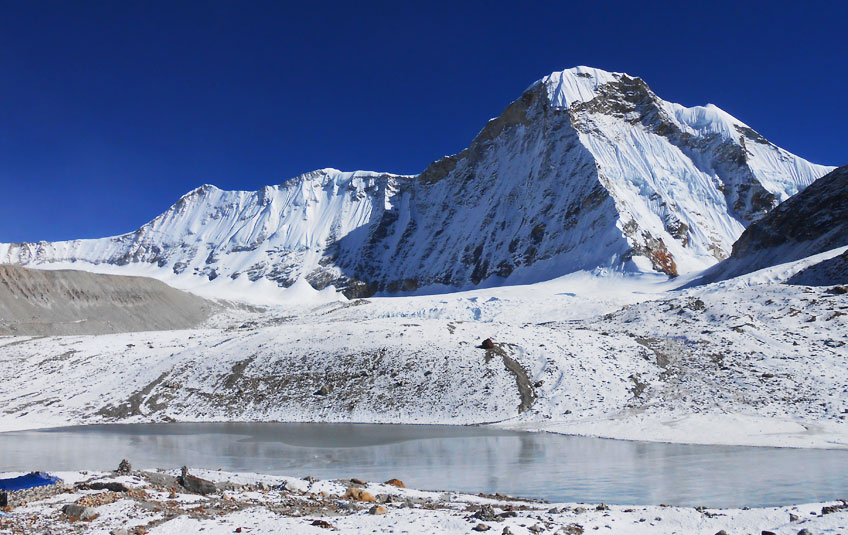
The Baruntse Expedition is a climb of Mt. Baruntse (7,129m), a technically challenging Himalayan peak located between Mt. Everest and Mt. Makalu, first summited in 1954 and typically approached via the Southeast Ridge.
Mt. Baruntse 7129m is technically one of the most challenging peaks to climb in the entire world.
The peak was first climbed by Coil Todd and Geoff Harrow in the first in 1954.
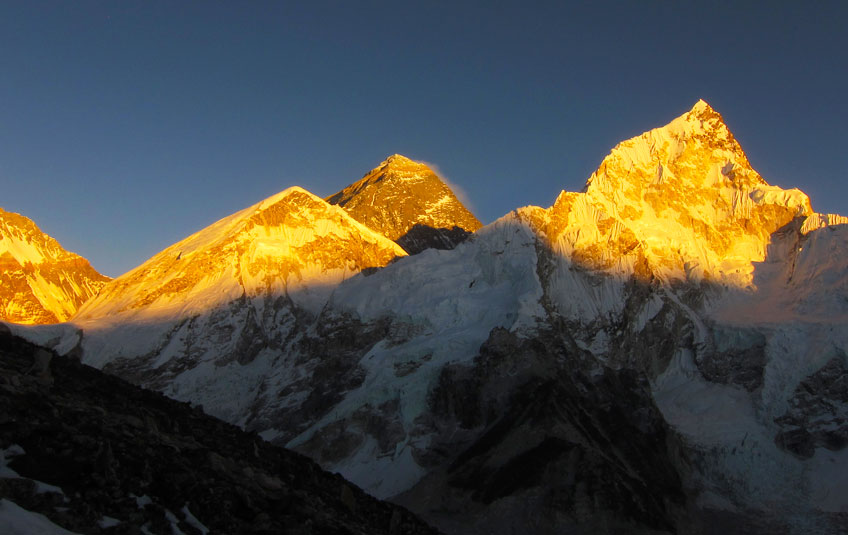
Mt. Baruntse rises between two Himalayan giants, Mt. Everest and Mt. Makalu.
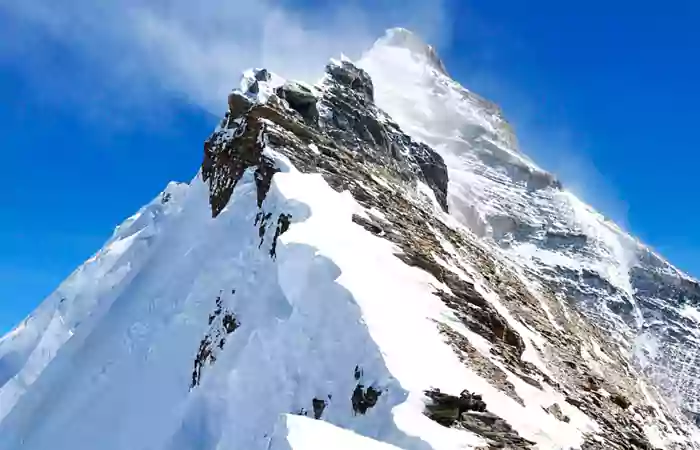
Most of the climbers who accomplished the expedition to the top of Mt. Baruntse climbed via the trail on the southwest ridge.
Our Expedition also treads the same popular climbing route.
However, the peak has also been conquered through the trails of Arun Valley that stretches to Makalu Base Camp.
The Baruntse Expedition is a guided climb of Mt. Baruntse (7,129m) in Nepal’s Khumbu region.
Trekkers reach Mt. Baruntse via the popular southwest ridge route or the Arun Valley trails leading to Makalu Base Camp. The mountain stands between Mt. Everest and Mt. Makalu.
Baruntse occupies a striking position at the heart of the Khumbu, surrounded by three of the world’s most storied peaks, with Everest to the north and Makalu to the east.
Industry sources commonly describe Baruntse as a natural progression climb for mountaineers who’ve already summited a trekking peak such as Mera Peak or Island Peak and want to step up into serious 7,000m territory before eventually attempting an 8,000m expedition.
Because the approach passes through the same trails used for Everest Base Camp trekking, climbers also get to experience the culture, monasteries, and mountain villages of the Khumbu region along the way — making the trip as much a cultural journey as a climbing expedition.
The Baruntse Expedition begins with the scenic flight to Lukla.
After almost two weeks of trekking, acclimatizing, and exploring the natural and cultural delights of the Everest Region, we head to the Base Camp of Baruntse.
During our acclimatization process, we took the time to explore the sacred Paach Pokhari 5200m, which lies in proximity to Baruntse Base Camp.
The steep section of ice cliffs inclines at 50 degrees, with a high risk of avalanche.
Most itineraries approach Baruntse Base Camp by trekking from Lukla across the Mera La pass (roughly 5,700–5,800m) through the remote Hunku Valley — one of the least-visited valleys in the Khumbu.
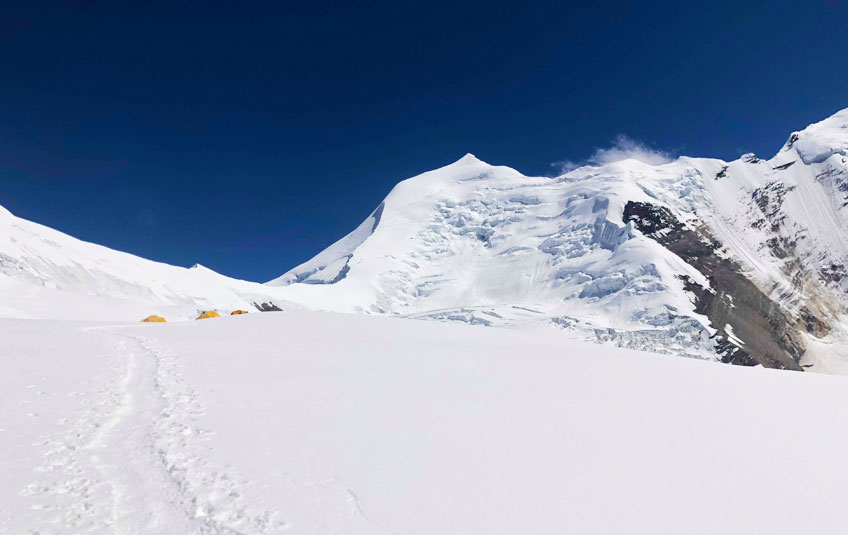
From Base Camp, teams typically set an Advanced Base Camp around 6,000m, then Camp I near 6,100–6,450m below the East or West Col, and Camp II around 6,400–6,420m on the Southeast Ridge, before the final summit push toward 7,129m.
Above Camp I, snow slopes steepen to roughly 45 degrees, and fixed ropes are used through the more exposed sections leading up toward the col.
The descent retraces the same route back to Base Camp before the trek out toward Lukla for the return flight to Kathmandu.
Arrival to Kathmandu airport and transfer to hotel B/B plan
Briefing and shopping in Kathmandu, Mt. Baruntse Climbing Permit processing. Hotel B/B plan
Climbers are suggested to climb this beautiful peak during spring, which has the ideal weather for a Baruntse Expedition.
Autumn is also a wonderful season for undertaking this adventurous feat.
However, Autumn and spring are the best times to climb this beautiful snowy peak.
Baruntse is widely graded as a serious but achievable 7000m expedition for climbers with prior mountaineering experience.
Because Baruntse rises above 6,999m, it falls under Nepal’s government-issued expedition-peak category rather than the standard NMA trekking-peak permit system. Climbers typically need three layers of paperwork: an expedition royalty and climbing permit from Nepal’s tourism ministry, a Makalu Barun National Park entry permit, and a TIMS card for the trekking approach.
Royalty costs for 7,000m peaks like Baruntse vary widely by season and team size — industry sources place the range anywhere from a few hundred dollars up to several thousand per climber, with spring departures generally costing more than autumn ones. Most expedition operators handle this paperwork directly, and it’s usually bundled into the overall package price.
Climbers should allow time in Kathmandu before departure for permit processing, gear checks, and final briefings with the expedition team.
Our expert mountain guides, top-notch trekking gear and equipment, and throughout communication for timely backup could make your Baruntse Expedition in Nepal the most thrilling and memorable alpine adventure in the Himalayas.
Mt. Baruntse stands at 7,129m and is considered one of the most technically challenging peaks to climb in the world.
Baruntse was first climbed in 1954, with the ascent made via the popular southwest ridge route that most climbers still use today.
Spring offers the ideal weather for the Baruntse Expedition, and Autumn is also considered a wonderful season for this climb.
Number of Days
Total Destinations
Travellers
Happy Traveler