

October and November are among the most popular months for trekking in Nepal. These two months form the heart of Nepal’s autumn trekking season, when the monsoon has usually ended, mountain visibility improves, and many Himalayan trails offer favorable conditions for long-distance trekking.
From the iconic Everest Base Camp to the diverse landscapes of the Annapurna region, remote Manaslu Circuit, scenic Langtang Valley, and turquoise Gokyo Lakes, Nepal offers trekking options for different fitness levels, durations, and travel styles.
However, October and November are also peak trekking months. Popular routes can become busy, and teahouse accommodation may fill quickly. Planning your trek in advance can make your experience more comfortable.
Why October and November Are Peak Trekking Season in Nepal
Autumn is widely considered one of the best seasons for trekking in Nepal. October generally brings more stable weather after the summer monsoon, while November continues to offer dry conditions and excellent mountain visibility.
Some of the main advantages include:
- Clearer views of the Himalayan mountains
- Generally dry and stable trekking trails
- Comfortable daytime temperatures at lower and mid elevations
- Excellent conditions for mountain photography
- Well-established teahouse operations on major trekking routes
- Good visibility for mountain flights and trekking approaches
The main disadvantage is popularity. Trails such as Everest Base Camp and Annapurna can become crowded during the peak autumn period.
If you want a quieter experience, consider less crowded routes or travel toward the beginning or end of the peak season.
Best Trekking Destinations in Nepal in October and November
1. Everest Base Camp Trek
The Everest Base Camp Trek is one of the best choices for travelers who want the classic Himalayan experience. The route takes trekkers through the famous Khumbu region, Sherpa villages, Buddhist monasteries, and Sagarmatha National Park before reaching Everest Base Camp.
October and November are particularly attractive for the Everest region because mountain visibility is often excellent, allowing trekkers to enjoy views of Everest, Lhotse, Nuptse, Ama Dablam, and other Himalayan peaks.
The standard itinerary takes around two weeks, including acclimatization days. The trek is moderately challenging because of the altitude rather than technical climbing.
For travelers looking for the classic Everest experience, see our Everest Base Camp Trek itinerary and package.
Best for: First-time Himalayan trekkers, Everest enthusiasts, mountain photography, and classic Nepal trekking.
2. Annapurna Circuit Trek
The Annapurna Circuit Trek is one of Nepal’s most diverse long-distance trekking routes. The landscape changes dramatically as the trail moves from lower valleys and subtropical areas toward the high Himalayan environment around Thorong La Pass.
One of the biggest attractions is the variety of scenery. Trekkers can experience waterfalls, forests, traditional villages, arid mountain landscapes, and spectacular Himalayan peaks during one journey.
October and November are excellent months for the Annapurna Circuit because the weather is generally favorable for crossing Thorong La Pass at 5,416 meters.
The trek is particularly suitable for travelers who want a longer journey with a mixture of mountain scenery and cultural experiences.
Explore the Annapurna Circuit Trek route and itinerary before planning your autumn adventure.
Best for: Diverse landscapes, long-distance trekking, mountain scenery, and cultural experiences.
3. Annapurna Base Camp Trek
If you want an impressive Himalayan trek but have less time, the Annapurna Base Camp Trek is a strong option.
The route passes through traditional villages, terraced farmland, rhododendron forests, and mountain valleys before reaching Annapurna Base Camp at approximately 4,130 meters.
Compared with longer Himalayan circuits, the Annapurna Base Camp route can fit more easily into a shorter Nepal itinerary.
October and November provide good opportunities for clear mountain views, especially around the Annapurna Sanctuary.
You can review the Annapurna Base Camp Trek itinerary to compare the route, duration, and trekking experience.
Best for: Shorter Himalayan adventures, first-time trekkers, mountain views, and travelers with limited time.
4. Manaslu Circuit Trek
For trekkers looking for a more remote Himalayan experience, the Manaslu Circuit Trek is an excellent autumn choice.
The route circles Mount Manaslu, the world’s eighth-highest mountain, and passes through remote mountain communities, Buddhist villages, forests, river valleys, and high-altitude terrain.
One of its biggest advantages is the sense of remoteness compared with Nepal’s most heavily visited trekking routes.
The trek also includes the challenging Larkya La Pass, making it more demanding than many shorter trekking routes.
October and November are among the best periods for the Manaslu region because stable conditions are important when crossing high mountain passes.
See the Manaslu Circuit Trek itinerary and details if you are considering a quieter alternative to Everest or Annapurna.
Best for: Experienced trekkers, remote landscapes, cultural immersion, and travelers seeking fewer crowds.
5. Langtang Valley Trek
The Langtang Valley Trek is one of the most accessible Himalayan trekking options from Kathmandu.
The route takes you into Langtang National Park and through traditional Tamang and Tibetan-influenced communities. As the trail gains elevation, forests gradually give way to alpine landscapes and impressive Himalayan views.
October and November are particularly good for Langtang because clear weather can provide excellent views of Langtang Lirung and surrounding peaks.
Another advantage is that the trek can be completed in a relatively short period compared with longer Everest or Manaslu journeys.
For a detailed route and itinerary, visit the Langtang Valley Trek package.
Best for: Shorter Himalayan trekking, cultural experiences, mountain views, and travelers with limited time.
6. Gokyo Valley Trek
The Gokyo Valley Trek provides a different perspective of the Everest region.
Instead of following the standard Everest Base Camp route all the way to Base Camp, the trek heads toward the beautiful Gokyo Valley and its famous glacial lakes.
The climb to Gokyo Ri at approximately 5,357 meters is one of the major highlights. From the viewpoint, trekkers can enjoy spectacular views of Everest, Lhotse, Makalu, Cho Oyu, and the surrounding Himalayan landscape.
October and November are excellent months for this route because clear conditions can make the mountain panorama particularly impressive.
The Gokyo Lake Trek is a good option for travelers who want the Everest region without following the standard Everest Base Camp itinerary.
For experienced trekkers wanting to combine Gokyo Lakes, Cho La Pass, and Everest Base Camp, our Gokyo Cho La Pass Trek guide provides more information.
Best for: Alpine lakes, panoramic mountain views, experienced trekkers, and travelers looking for an alternative Everest-region route.
7. Mardi Himal Trek
The Mardi Himal Trek has become a popular choice for travelers looking for a relatively short trek with impressive mountain scenery.
The trail passes through forests, ridges, and traditional mountain landscapes before reaching viewpoints overlooking Machhapuchhre, Annapurna South, Hiunchuli, and surrounding peaks.
Its relatively short duration makes Mardi Himal particularly attractive for travelers who have limited time in Nepal.
October and November are excellent months for this trek because clear autumn conditions can provide outstanding mountain views.
For a route overview and planning information, see our Mardi Himal Trek guide.
Best for: Short trips, scenic mountain views, beginner-to-intermediate trekkers, and travelers combining trekking with a Nepal tour.
October vs November: Which Is Better for Trekking in Nepal?
Both October and November are excellent months for trekking, but the experience can differ slightly.
Trekking in Nepal in October
October marks the beginning of the main autumn trekking season. Temperatures are generally comfortable at lower elevations, while higher trails can offer excellent mountain visibility.
The biggest advantage is the combination of relatively comfortable conditions and clear Himalayan views.
However, October is also one of the busiest periods on popular routes.
Trekking in Nepal in November
November continues the favorable autumn trekking conditions. The air can feel cooler, especially in the mornings and evenings and at higher elevations.
Clear skies and dry trails can create excellent conditions for mountain photography and long trekking days.
As November progresses, temperatures become colder at high elevations, so warm layers and appropriate trekking equipment become increasingly important.
So, which month is better? There is no universal winner. October may suit travelers who prefer slightly warmer conditions, while November can be attractive to those who enjoy cooler temperatures and crisp mountain scenery.
Which Trek Is Best for You?
The best trekking destination depends on your available time, fitness, altitude experience, and preferred type of adventure.
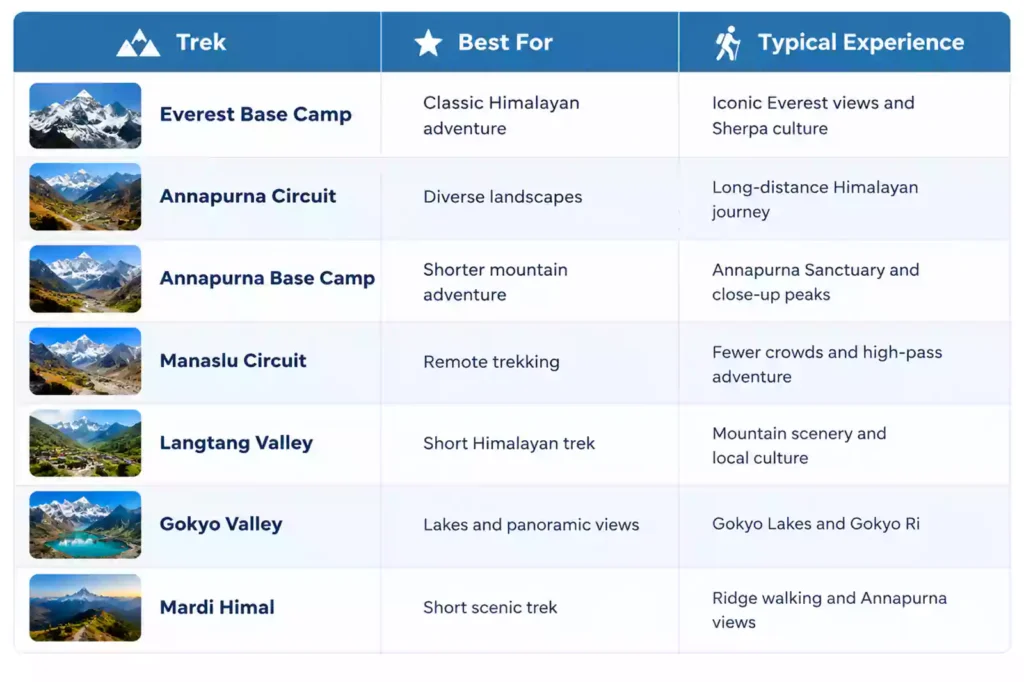
If you are still deciding between major trekking regions, compare the route length, maximum altitude, difficulty, accommodation, transportation, and overall trekking environment rather than choosing only by popularity.
What to Expect During Nepal’s October–November Trekking Season
Because October and November are peak trekking months, advance planning is important.
Popular routes can have busy trails and limited availability at some teahouses. Flights to mountain destinations can also be affected by weather, even during the generally favorable autumn season.
Before starting your trek, consider:
- Booking accommodation and transportation in advance
- Arranging the required trekking permits
- Using a licensed trekking guide where required
- Carrying suitable layers for changing temperatures
- Taking a warm jacket and sleeping bag for high elevations
- Using comfortable, broken-in trekking footwear
- Carrying sun protection, sunglasses, and sunscreen
- Allowing enough time for acclimatization
- Purchasing appropriate travel and trekking insurance
- Keeping some flexibility in your itinerary for weather delays
Most importantly, good trekking season does not mean guaranteed weather. Conditions in the Himalayas can change quickly, particularly at high elevations.
Plan Your Nepal Trek for October or November
Choosing the right trek is easier when you start with three questions:
How many days do you have?
A shorter trip may be better suited to Mardi Himal, Langtang Valley, or Annapurna Base Camp, while longer holidays open up options such as Everest Base Camp, Annapurna Circuit, or Manaslu Circuit.
How much altitude and physical challenge are you comfortable with?
High-altitude treks require proper preparation, gradual acclimatization, and realistic expectations about walking hours.
What type of experience do you want?
Choose Everest for the iconic Himalayan experience, Annapurna for landscape diversity, Manaslu for remoteness, Gokyo for alpine lakes and mountain panoramas, Langtang for a shorter cultural and mountain journey, or Mardi Himal for a compact scenic trek.
Ready to Trek Nepal This October or November?
October and November are among the best times to experience Nepal’s Himalayan trails, but the right trek depends on your time, experience, fitness level, and travel goals.
Explore Nepal trekking packages and compare routes before choosing your adventure.
Not sure which trek fits your trip? Contact the Nepal Footprint Holiday team with your available days, trekking experience, and preferred level of difficulty. Our local team can help you select a suitable route and build an itinerary around your October or November travel plans.
From classic Everest adventures to quieter Himalayan trails, Nepal has a trekking experience for almost every type of mountain traveler.
Standing above 6,400 m with five of the world’s fourteen 8,000 m peaks arranged across the horizon is an experience that requires a high-altitude commitment but not a technical mountaineering background. That is what makes Mera Peak the most logical first step for climbers who are ready to go genuinely high. For the full day-by-day itinerary, fixed departure dates, and all-inclusive pricing, see the Mera Peak Climbing package page. Dates fill quickly in spring and autumn. Inquire Now and the team at Nepal Footprint Holiday will confirm availability and walk you through the preparation steps before your first Himalayan summit.
Government of Nepal registered · Kathmandu-based · 10+ years guiding experience