
Direct answer: The Upper Mustang permit cost in 2026 is US$50 per person per day inside the restricted area, replacing the previous flat-rate system that charged a minimum of US$500 for the first ten days regardless of actual time spent there. For a standard 10-day Upper Mustang trip, the cost remains US$500. For shorter visits, the new system is meaningfully cheaper. The permit is issued by Nepal’s Department of Immigration and must be arranged through a registered trekking agency before entering the restricted zone north of Kagbeni.
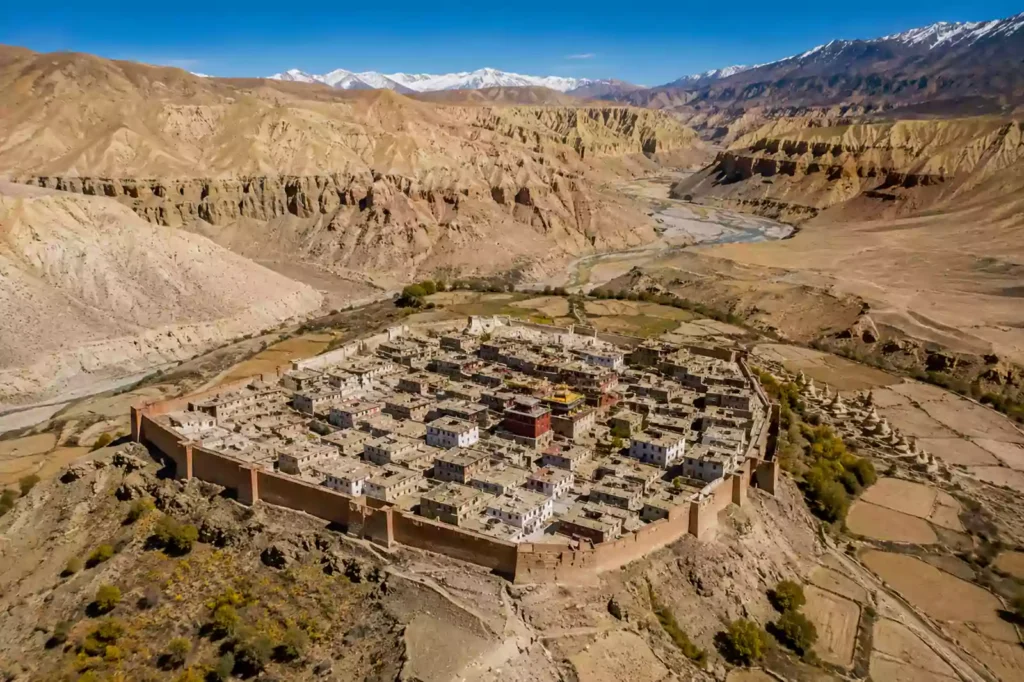
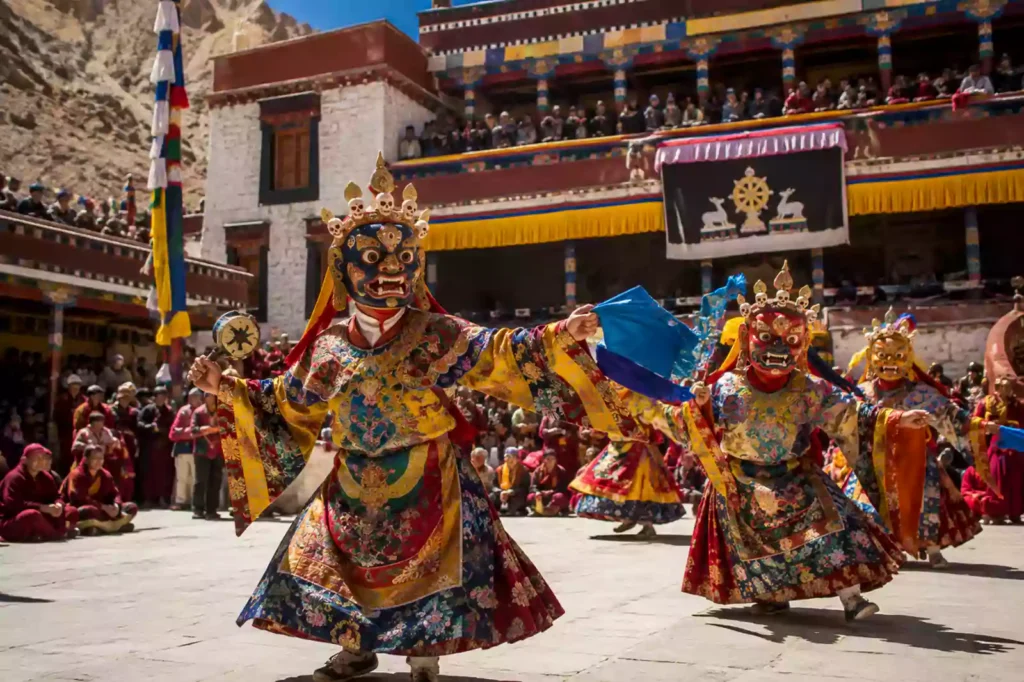
As for whether it is worth it: Upper Mustang is the only place in Nepal where the original Tibetan Buddhist kingdom culture has been preserved in near-intact form. Lo Manthang’s walled city, the painted cave monasteries of Chhosar and Luri Gompa, the eroded desert canyons between Ghami and Tsarang, and the Tiji Festival in the Lo Manthang courtyard are experiences with no equivalent elsewhere in the Himalayas. The permit cost is real. What it unlocks is irreplaceable.
What is the Upper Mustang Restricted Area Permit?
Upper Mustang is a restricted zone under Nepal’s Foreign Travel and Trekking Regulation. The restriction was first lifted for foreign visitors in 1992, but has remained under a controlled-access permit system ever since, limiting visitor numbers and requiring all foreign travelers to enter through a registered agency with a licensed guide.
The permit is officially called the Restricted Area Permit (RAP). The Department of Immigration issues it, not the Nepal Tourism Board or TAAN. Unlike standard national park permits and TIMS cards, travelers cannot obtain the RAP independently at a trailhead or checkpoint.
The restricted zone begins at Kagbeni village, north of Jomsom. Travel in the Jomsom, Muktinath, and Kagbeni corridor does not require the RAP and falls under standard Annapurna Conservation Area permit requirements. The restricted-area permit becomes mandatory the moment a traveler heads north of Kagbeni toward Chele, Ghami, Tsarang, and Lo Manthang.
Upper Mustang permit cost 2026: the new fee structure
The 2026 permit fee structure represents the most significant change to Upper Mustang access in decades. The previous system charged a minimum of US$500 per person for the first ten days inside the restricted area, with US$50 per additional day beyond ten. This applied regardless of how many days a traveler actually spent in Upper Mustang. A five-day visit cost the same as a ten-day one.
The new system, which took effect in late 2025 and applies fully from 2026, replaces the minimum block with a straightforward daily rate: US$50 per person per day inside the restricted area, charged only for days actually spent there.
The permit cost table under the new system:
The practical impact of this change depends entirely on trip length. For any itinerary of exactly ten days or longer, the cost is the same as before. For shorter trips (particularly five- to seven-day jeep tours, motorcycle itineraries, or condensed trekking routes to Lo Manthang), the saving is substantial. A five-day visit that previously triggered the full US$500 minimum now costs US$250.
Old vs new: permit cost comparison
The 2026 reform improves affordability and flexibility for shorter trips. For the standard 10-day Upper Mustang trek, the most common itinerary, the permit cost is unchanged.
What else changed in 2026: solo travelers now permitted
The permit fee change was not the only regulatory update. On 22 March 2026, Nepal’s Department of Immigration removed the previous two-person minimum group requirement for Upper Mustang restricted-area permits. Solo travelers can now obtain the RAP.
This is an important clarification: solo permit access does not mean independent, guideless travel. A licensed guide and arrangements through a registered trekking agency remain requirements for entering Upper Mustang. The change means a single traveler no longer needs to find a second person to share the permit with in order to qualify. It does not create an independent trekking option.
What other permits are required?
The RAP is not the only permit cost to account for for an Upper Mustang trip. Because Upper Mustang sits within the Annapurna Conservation Area, travelers also need an Annapurna Conservation Area Permit (ACAP), currently priced at NPR 3,000 (approximately US$22) for foreign nationals in 2026.
The full permit picture for a standard Upper Mustang trek or jeep tour:
- Restricted Area Permit (RAP): US$50 per person per day
- Annapurna Conservation Area Permit (ACAP): NPR 3,000 per person
- TIMS Card: NPR 1,000 per person (group trekkers through a registered agency)
All three should be confirmed with the registered trekking agency at the time of booking, since administrative procedures and fee structures are subject to change. The Department of Immigration and a registered Nepali agency are the authoritative sources for current permit requirements.
How to obtain the Upper Mustang permit
The RAP must be arranged through a government-registered trekking agency in Nepal. It cannot be obtained independently by the traveler at the border, at Jomsom airport, or at Kagbeni. The permit is issued in Kathmandu or Pokhara before departure.
Documents typically required include a valid passport, a valid Nepal visa, a passport-size photograph where specified, the trekking or jeep tour itinerary, and the applicable permit fees. The agency handles the submission process and collects the permit on behalf of the traveler.
The permit must be carried throughout the Upper Mustang journey. Checkpoints within the restricted area verify permits at multiple points on the route, including at Kagbeni on entry and at various checkpoints between Chele and Lo Manthang.
Is the Upper Mustang permit cost worth it?
The honest answer depends on what draws a traveler to Upper Mustang in the first place.
Upper Mustang is the rain shadow of Dhaulagiri and Annapurna, which means clear skies and dry conditions even during Nepal’s monsoon months. The landscape is unlike anything else in Nepal: layered red, ochre, and grey cliffs carved by wind and water into canyons, caves, and ridgelines that look more like the American Southwest than the Himalayas. Villages such as Ghami, Tsarang, and Lo Manthang have supported communities for centuries. Inside Lo Manthang’s walls, Buddhist monasteries preserve 14th- and 15th-century murals, some of the oldest surviving examples of Tibetan Buddhist art in the world.
Muktinath Temple, accessible at the lower end of the Mustang valley, is one of the most sacred pilgrimage sites in the Hindu and Buddhist traditions. Thousands of devotees travel here annually, but the cultural weight of Lo Manthang itself, the walled capital of the former Kingdom of Lo, is something only accessible with the RAP.
For travelers who want that specific experience (an ancient walled city, cave monasteries, a landscape untouched by the development that has reshaped most of Nepal’s trekking corridors, and access to a cultural tradition that is genuinely disappearing), the permit is unambiguously worth it.
For travelers whose main interest is Himalayan mountain views and general trekking experience, the lower Mustang valley (accessible without the RAP) and the Jomsom Muktinath corridor provide a substantial experience at significantly lower permit cost. Our Jomsom Muktinath Trek covers the lower valley in full.
Best time to visit Upper Mustang
Spring (March to May):
One of the two best windows. The Tiji Festival in Lo Manthang falls in May according to the Tibetan lunar calendar and draws visitors who want to witness the three-day masked dance celebration. Temperatures are comfortable, trails are dry, and the sky is reliably clear.
Monsoon (June to August):
Upper Mustang’s rain-shadow position makes it one of the only trekking destinations in Nepal that remains viable during the monsoon. While the rest of Nepal sees heavy rainfall, Lo Manthang receives minimal precipitation. This is the quietest, most atmospheric window for visitors who want the restricted area with far fewer other travelers on the route.
Autumn (September to November):
Post-monsoon clarity brings sharp views of Dhaulagiri and Nilgiri to the south. October is the busiest month across all of Nepal’s trekking corridors, which extends to Upper Mustang. Excellent conditions, more company on the trail.
Winter (December to February):
Cold temperatures and snow on high passes can restrict access. Possible for well-equipped, experienced visitors but not recommended for a first Upper Mustang trip.
How to plan an Upper Mustang trip
Upper Mustang is accessible by trekking, jeep tour, or motorcycle (with biking tour arrangements). The starting point is Jomsom, reached by a short flight from Pokhara or by road from Beni. The journey north from Jomsom to Lo Manthang takes three to four days on foot; a jeep tour can reach Lo Manthang in one to two days from Jomsom.
Our Upper Mustang Trekking package covers the classic trekking route through the Kaligandaki valley to Lo Manthang and back, with all permits, a licensed guide, and full logistics included. For those who prefer wheels over boots, our Upper Mustang Biking Tour follows the same route by mountain bike with jeep support. The Mustang Overland Jeep Tour is the fastest way to reach Lo Manthang, suited to travelers with less time.
For current permit fees and official restricted-area regulations, the Nepal Department of Immigration is the authoritative source.
Frequently asked questions
What is the Upper Mustang permit cost in 2026?
The Upper Mustang Restricted Area Permit (RAP) costs US$50 per person per day inside the restricted zone in 2026. A 10-day trip costs US$500, a 7-day trip costs US$350, and a 5-day trip costs US$250. The old flat-rate minimum of US$500 for ten days regardless of actual time spent was removed in late 2025.
Can I get the Upper Mustang permit on my own?
No. A government-registered trekking agency in Nepal must arrange the RAP. Travelers cannot obtain it independently at the border, Jomsom, or Kagbeni. A licensed guide must also accompany travelers throughout the journey inside the restricted area.
Can a solo traveler get an Upper Mustang permit in 2026?
Yes. As of 22 March 2026, the previous two-person minimum group requirement for the Upper Mustang RAP was removed. Solo travelers can now hold a permit. A licensed guide through a registered agency remains required; solo refers to traveling without a second permit holder, not to traveling without a guide.
When does the Upper Mustang restricted zone begin?
The restricted zone begins at Kagbeni village, north of Jomsom. Travel in the Jomsom, Muktinath, and lower Mustang area does not require the RAP. The permit is required from Kagbeni northward through Chele, Ghami, Tsarang, and Lo Manthang.
Upper Mustang is one of the few places in the Himalayas where a permit fee grants access to a living kingdom, an ancient walled city, and a unique cultural landscape found nowhere else.The 2026 fee reform makes shorter visits cheaper than ever. Explore the packages above to find the right format for your trip, then take the first step: Inquire Now and the team at Nepal Footprint Holiday will confirm current permit requirements, lock in your dates, and handle the RAP process from start to finish.