

Travel information can change rapidly. Please confirm current route, road, weather, and border conditions with your trekking agency before departure.
The flash flood that struck Nepal’s northern border region on 26 August 2026 has brought devastation to communities, infrastructure, travelers, and pilgrims. Our deepest sympathy goes to everyone who has lost loved ones, those still waiting for news, and the local communities facing the long task of rebuilding.
The disaster also affected international travelers using the Nepal–Tibet corridor, including pilgrims traveling toward Mount Kailash and Lake Mansarovar. Several foreign nationals were among those reported missing after the flood struck the Rasuwa border area.
At Nepal Footprint Holiday, we believe the first response to this tragedy must be compassion, not tourism. At the same time, we understand that travelers with upcoming treks or pilgrimages need clear, honest information. If you are asking whether Nepal is safe for trekking after the 2026 flood, the answer depends entirely on your specific route, and this update explains exactly what happened, which trekking areas are affected, which major destinations sit outside the immediate disaster zone, and what you should do before moving forward with your plans.
What Happened in Nepal?
A catastrophic flash flood struck Rasuwa district near Nepal’s border with Tibet on 26 August 2026. The event followed a collapse involving ice, rock and debris in the high Himalayas. The resulting surge of water and debris moved rapidly through the river system, causing extensive destruction along the Lhende Khola and Bhote Koshi corridor. Roads, bridges, homes, power infrastructure and border facilities suffered severe damage. The scale of destruction across Timure, Syabrubesi and downstream communities has been documented in photographs by the Kathmandu Post.
The Gyirong–Rasuwagadhi border crossing, an important overland connection between Nepal and Tibet, was directly affected. Rescue operations have been complicated by damaged infrastructure, difficult terrain, and unstable conditions in the immediate aftermath. Nepal is also working to rebuild early-warning infrastructure in the northern border region.
Travelers should not treat this as a standard monsoon disruption. The Rasuwa–Rasuwagadhi corridor requires careful, verified assessment before any attempt to travel through it.
Which Trekking Routes Are Affected by the Nepal Flood 2026? The most serious impact is concentrated in and around Rasuwa and the Nepal–Tibet border corridor, which has direct consequences for the following areas.
Langtang Valley
The Langtang Valley is the trekking area most directly connected to the affected Rasuwa corridor. The standard approach passes through the Rasuwa area, with Syabrubesi serving as the main gateway. Because the flood severely damaged infrastructure in this part of Rasuwa, travelers should not assume that a normal Langtang itinerary can proceed simply because sections of the trail itself may remain intact. The condition of roads, bridges and access points must be verified before departure. For background on the Langtang region, our Langtang Himal Trekking guide covers the route in full.
Gosaikunda
Gosaikunda is another important destination affected by the Rasuwa situation. The lake is both a major trekking destination and a significant pilgrimage site. The wider Rasuwa area was particularly busy with pilgrims when the disaster occurred. Travelers planning a Gosaikunda journey should obtain current route information before traveling toward Dhunche and the affected areas.
Other Routes Requiring Verification
Travelers should also check current conditions for routes connected to the affected region, including the Tamang Heritage Trail, Helambu-related approaches, Ruby Valley routes and any trails whose road access passes through damaged areas. Route status can change during recovery, and a corridor described as disrupted today may reopen after repair, while new landslides or infrastructure problems could create additional restrictions.
Is Nepal Safe for Trekking After the Flood? Regions Outside the Disaster Zone
News of a major disaster can easily create the impression that the entire Himalayan trekking network has shut down. That is not the case. Nepal’s trekking regions span a vast and geographically diverse area. The Rasuwa disaster does not automatically affect trekking in the Everest, Annapurna, Manaslu, Mustang, Dolpo or Kanchenjunga regions.
Everest and Khumbu
The Everest region lies well east of the Rasuwa disaster zone. The Everest Base Camp Trek and other Khumbu routes are not directly affected by this flood. Standard checks on weather, flights, trail conditions, and local advisories remain necessary before any Himalayan departure.
Annapurna
The Annapurna region is geographically separate from the affected corridor. The Annapurna Circuit Trek and Annapurna Base Camp Trek are not directly affected by the Rasuwa flood. Current local weather, transportation and trail conditions should still be verified before departure.
Manaslu, Mustang, Dolpo and Kanchenjunga
These regions are also geographically separate from the Rasuwa flood zone. That does not mean every route in these regions is automatically guaranteed to be open, since mountain roads and trails can experience landslides and seasonal hazards independently of this disaster. The correct approach in every case is route-specific safety verification, not a blanket assumption that the whole country is either open or closed.
Nepal Flood 2026: Trekking Route Status at a Glance
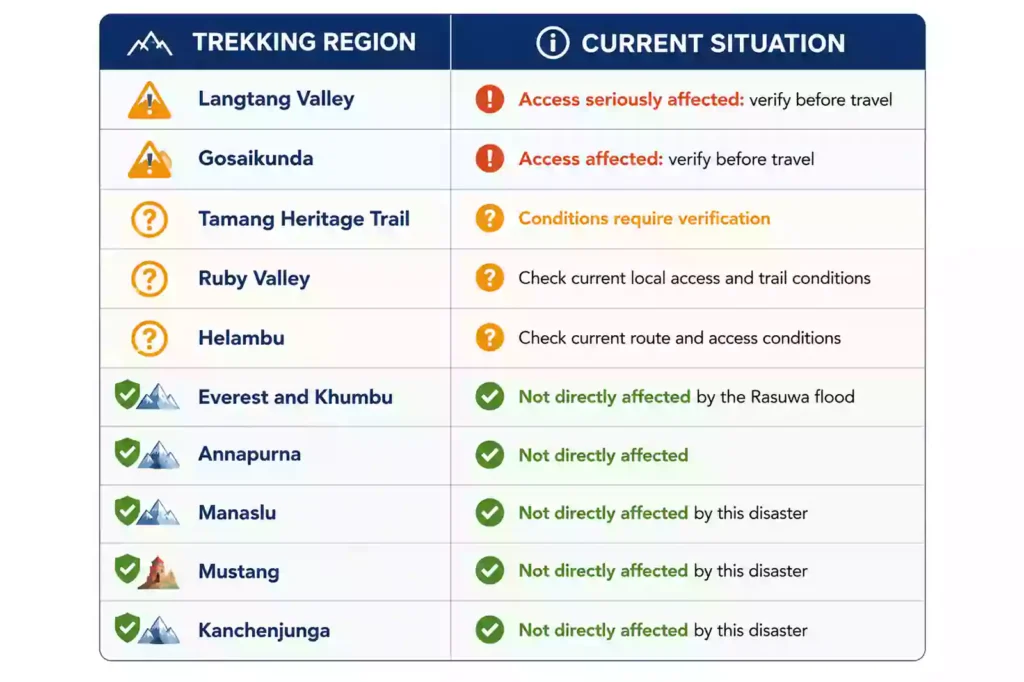
Important: This is a destination-level overview, not a guarantee that every individual trail, road or flight is operating normally. Travelers must confirm conditions with their operator before departure.
How Has the Nepal Flood Affected the Kailash Mansarovar Yatra?
The impact on the Kailash Mansarovar Yatra has been especially painful. The Rasuwagadhi–Gyirong border corridor is an important overland route between Nepal and Tibet, and the flood damaged infrastructure along this entire corridor. Reports following the disaster described large numbers of pilgrims and foreign travelers as missing or unaccounted for. Many were on their way to Kailash Mansarovar when the flood struck.
For many pilgrims, the Kailash Mansarovar Yatra represents years of planning, deep spiritual preparation and personal sacrifice. This was not simply a disrupted journey for those affected.
Nepal Footprint Holiday extends sincere sympathy to the pilgrims affected by the disaster, the families waiting for information about loved ones, travelers whose journeys were interrupted, guides, drivers and local support teams, and the communities of Rasuwa facing the difficult work of recovery. Our Tibet tour and Kailash pilgrimage pages will be updated as border conditions and official guidance evolve.
No pilgrimage or trekking itinerary is more important than human life and safety.
Is Nepal Safe for Trekking After the 2026 Flood? The Honest Answer
Whether Nepal is safe for trekking after the 2026 flood has no responsible one-sentence answer, because it depends entirely on the specific destination.
Some areas have been severely affected. Others remain geographically separate from the disaster zone and continue to operate. The Rasuwa–Rasuwagadhi–Timure corridor requires particular caution. The United States has issued a specific travel warning for the Rasuwa area, and the situation continues to evolve.
Before traveling, your trekking agency should be able to confirm current road and trail conditions, flight operations, local authority guidance, weather forecasts, permit requirements, whether alternative routes exist, and whether postponement is advisable.
If your journey passes through an affected corridor, do not proceed based on an old itinerary or a single social media update. Conditions in this region are still being assessed.
Should You Cancel Your Nepal Trek After the Flood?
Not necessarily, but the right question is not “Is Nepal closed?” The better question is: “Is Nepal safe for trekking after the flood for my specific route right now?”
If your planned journey uses the Rasuwa corridor, postponing or adjusting the itinerary may be necessary. If your trek is in a geographically separate region such as Everest or Annapurna, the situation is substantially different, and your operator can advise on current conditions. Nepal’s trekking network is large and diverse. A disaster concentrated in one corridor does not close the whole country.
A Message of Solidarity to Rasuwa
The people of Rasuwa need more than short-term attention. Mountain communities depend on roads, transport, tourism, hospitality, trade and local businesses. When infrastructure is destroyed, the economic impact continues long after the floodwaters have receded.
Responsible tourism will eventually play a role in helping communities rebuild their livelihoods. But responsible tourism does not mean rushing back into damaged areas before they are ready. It means listening to local authorities, respecting community decisions, following safety guidance and returning when routes have been properly assessed and reopened.
Nepal will rebuild. The Himalayas will continue to welcome trekkers and pilgrims, and Nepal Footprint Holiday will continue to support those journeys. But right now, safety comes first.
How Nepal Footprint Holiday Is Supporting Travelers
If your planned itinerary is affected by the Nepal flood 2026, our team can help assess alternative arrangements, including rescheduling, rerouting, or postponement, depending on current conditions and official guidance. We have more than two decades of experience operating in Nepal, Bhutan and Tibet, with established local teams and close relationships within Nepal’s tourism network.
If you already have a booking with us and are concerned about your route, please contact our team before making any independent travel arrangements. We will give you an honest assessment based on the most current information available.
Frequently Asked Questions
Is Nepal safe for trekking after the 2026 flood?
It depends on the specific route. The Rasuwa border corridor has suffered severe damage, while major trekking areas such as Everest and Annapurna are outside the immediate impact zone. Travelers should confirm current conditions with their operator before departure.
Which trekking routes were affected by the Nepal flood?
The most significant impact is in the Rasuwa corridor, affecting access toward Langtang and Gosaikunda. Travelers should also verify conditions for the Tamang Heritage Trail and other routes whose road access passes through the affected area.
Is Langtang Trek affected by the flood?
Yes. The Langtang region has been affected by disruption in the Rasuwa access corridor. Road, bridge, and trail conditions must be confirmed before starting the trek.
Is Everest Base Camp Trek affected by the Rasuwa flood?
The Everest and Khumbu regions were not directly affected by the Rasuwa flood. Standard checks on mountain weather and transportation remain necessary before departure.
Is Annapurna Base Camp Trek affected by the flood?
The Annapurna region is outside the immediate Rasuwa flood zone. Current local weather, transportation and trail conditions should still be verified before travel.
Is Kailash Mansarovar Yatra affected by the flood?
Yes. The flood severely disrupted the Rasuwagadhi–Gyirong border corridor, an important overland route toward Tibet and Kailash Mansarovar. Pilgrims with upcoming journeys should wait for confirmed route and border information before traveling through the affected area.
Can I still trek in Nepal after the 2026 flood?
Yes, but trekking conditions must be assessed by region. The Rasuwa and Langtang corridor has been heavily affected, while several major trekking regions are outside the immediate disaster zone. Always verify current conditions before departure.
This update reflects conditions and reporting as of 2 September 2026. The situation remains active and conditions are subject to change. Nepal Footprint Holiday will update this page as new information becomes available. For the latest guidance on your specific route, contact our team directly.