

The Annapurna Circuit Trek Cost 2027 depends mainly on trek length, group size, guide and porter services, accommodation, food and transportation. For planning, a guided trek commonly sits around the US$900 to US$1,600 range, while comfort-focused trips can cost more. Current government fees should be treated separately from 2027 estimates because fees and operating costs can change.
I have worked in Himalayan trekking since 1999. When trekkers ask me about the price of the Annapurna Circuit, I do not give them one number and send them on their way.
The better question is: what will you actually pay for?
That includes the permit, guide, porter, teahouse, meals, transport, and the small expenses that appear after Manang. A package can look expensive until you add everything included.
How Much Does the Annapurna Circuit Trek Cost in 2027?
The Annapurna Circuit Trek Cost 2027 is best planned as a range, not a fixed tariff. A practical planning budget is about US$900 to US$1,600 per person for a guided trek, with private transport, longer itineraries and higher comfort pushing the price higher. These are planning figures, not guaranteed 2027 prices.
The biggest mistake is comparing only the headline package price.
One operator may include permits, meals and transport. Another may quote a lower number and charge those items separately.
Nepal Footprint Holiday current Annapurna Circuit package page is a useful example. It lists a full package with a licensed guide, porter, teahouse accommodation, meals, permits, and ground transportation. Because the live page currently shows conflicting price displays, confirm the exact 2027 quotation before publishing or booking.
What Permits Do You Need for the Annapurna Circuit?
The Annapurna Circuit requires an Annapurna Conservation Area Permit and current trekking registration requirements. For foreign trekkers, the current Nepal Tourism Board rate is NPR 3,000 for ACAP and NPR 2,000 for TIMS, giving a current planning figure of NPR 5,000. Check the rules again before a 2027 departure.
The Annapurna Conservation Area Permit, or ACAP, covers entry into the conservation area.
The Nepal Tourism Board currently lists the foreigner ACAP fee at NPR 3,000.
The current TIMS system also lists NPR 2,000 for non-SAARC applicants. The Annapurna Circuit appears on the official list of routes requiring a licensed trekking guide and agency-issued TIMS.
That gives you a useful current baseline:
- ACAP: NPR 3,000
- TIMS: NPR 2,000
- Current combined planning figure: NPR 5,000
Do not treat those as guaranteed 2027 prices. Government fees can change.
For a detailed explanation of the permit system, see our ACAP permit and TIMS guide.
How Much Does a Guide Cost on the Annapurna Circuit?
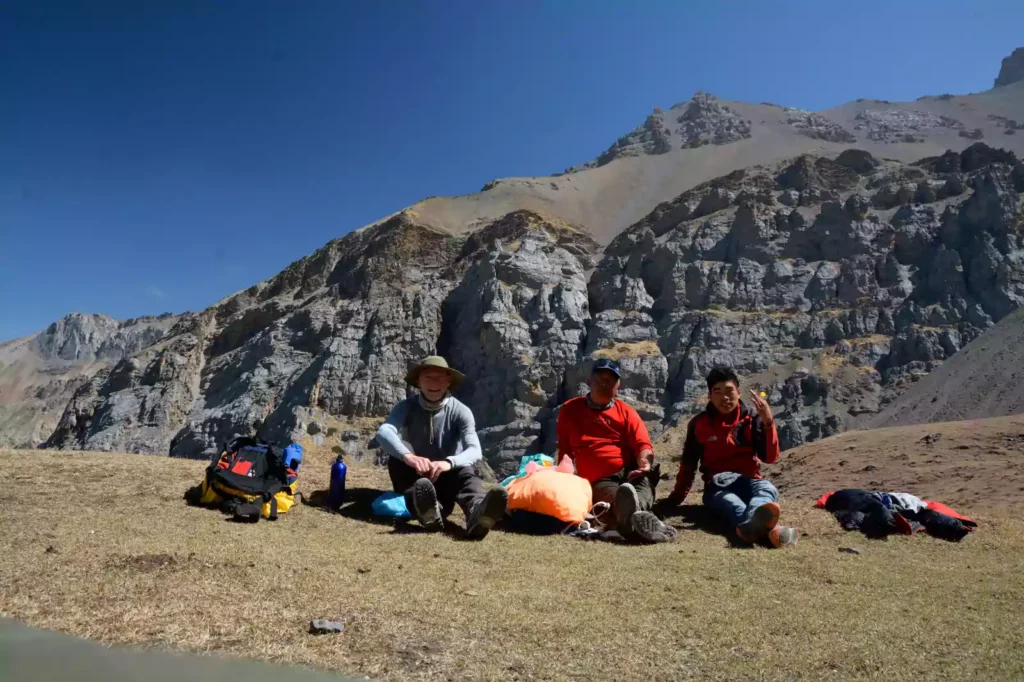
A licensed guide is now part of the realistic Annapurna Circuit budget for foreign trekkers. The exact guide cost depends on the guide’s experience, trek length, group size and package structure. In an agency package, the guide’s accommodation, food, insurance and transport may already be included.
This is one area where trying to save money can create the wrong economy.
A good guide helps with route decisions, daily pacing, teahouse arrangements and communication. More importantly, the guide becomes part of your safety system as you approach Manang, Thorong Phedi and Thorong La.
At Nepal Footprint Holiday, we operate small-group and tailor-made treks with local guides. That lets us plan the walking days around the people in the group rather than forcing everyone into the same pace.
How Much Does a Porter Cost?
A porter is an optional extra for some trekkers, but it can make a long Annapurna Circuit more manageable. The cost depends on the number of trekking days, group arrangement and whether porter service is included in your package. Check whether the quoted price covers the porter’s food, accommodation, insurance and transport.
The Circuit becomes much more demanding once you are walking above 3,000 metres.
Carrying a heavy backpack while climbing toward Thorong La is unnecessary for many trekkers. A porter lets you walk with a smaller daypack while your main luggage travels separately.
If you compare two packages, ask one simple question:
Is porter support included, and what expenses for the porter are covered?
That answer can make a large difference to the apparent price.
How Much Do Food and Teahouses Cost?
Food and teahouse costs on the Annapurna Circuit generally rise with altitude. A practical Nepal trekking budget is around NPR 3,000 to NPR 5,500 per person per day for basic teahouse travel, while higher sections can require roughly NPR 4,500 to NPR 7,000 for accommodation, meals, drinks and small expenses.
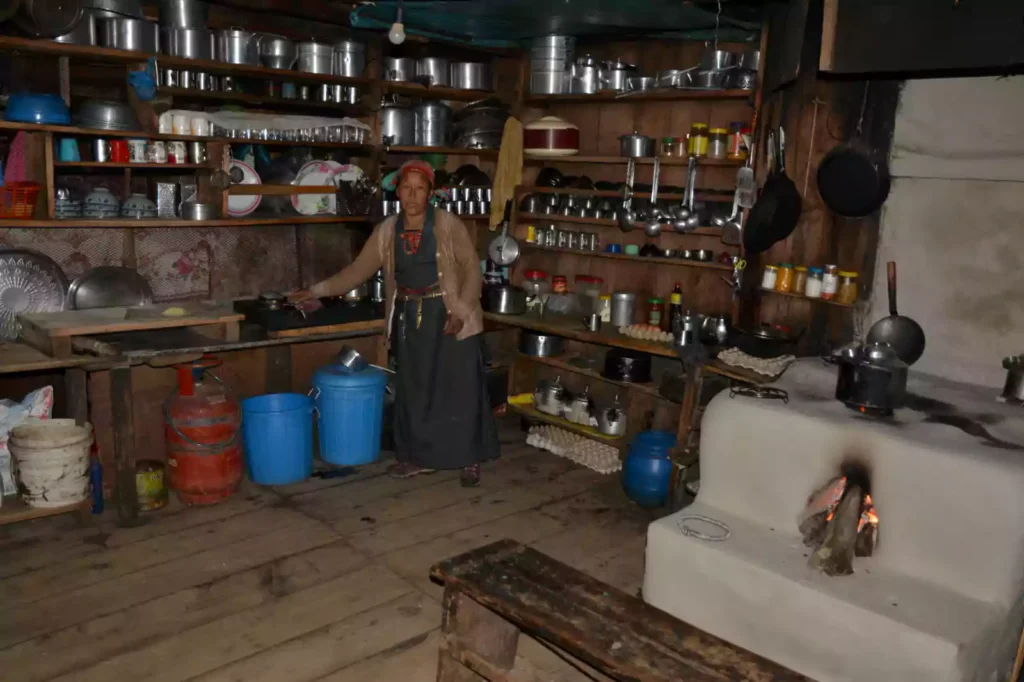
Prices are not the same in Besisahar and near Thorong Phedi.
As supplies travel farther into the mountains, meals, rooms, hot drinks and services become more expensive.
A simple daily budget can include:
- Teahouse room
- Breakfast
- Lunch
- Dinner
- Drinking water
- Tea and other hot drinks
- Charging
- Wi-Fi where available
- Hot showers
- Snacks
Dal bhat remains one of the practical choices on the trail. It is filling, familiar and widely available.
For a broader calculation method, see our Nepal trekking daily cost guide.
What Does Transportation Add to the Annapurna Circuit Cost?
Transportation can be a significant part of the Annapurna Circuit budget because the route begins and ends with road travel, and your final cost depends on shared or private vehicles and the exact itinerary. Ask whether Kathmandu, Pokhara, Besisahar, Jomsom, or other transfers are included before comparing package prices.
The Circuit has a major cost advantage over routes that depend on a mountain flight at the start.
However, road travel does not mean predictable travel.
Road conditions, construction, weather and local transport availability can affect both timing and cost. A private 4WD gives you more control but costs more than shared transport.
This is why I prefer to price transportation according to the actual itinerary rather than give trekkers a misleading universal fare.
What Does Thorong La Add to the Budget?
Thorong La itself does not require a separate pass fee for the standard Annapurna Circuit. The financial issue is the preparation around the pass: an appropriate itinerary, accommodation before the crossing, guide support, food, water and enough time to deal with weather or altitude problems.
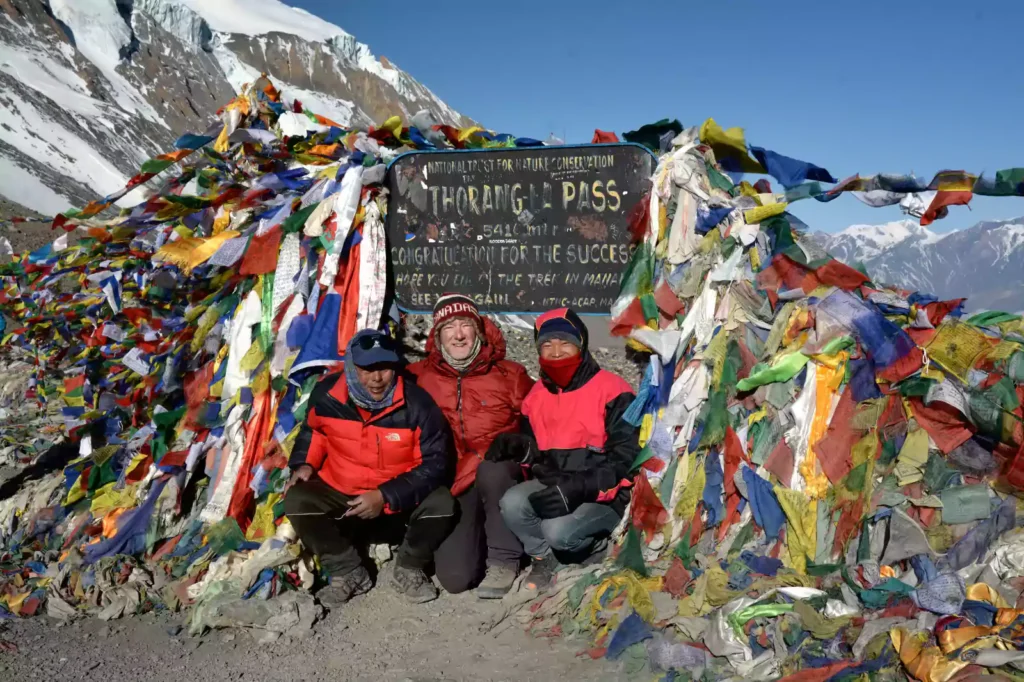
Thorong La reaches 5,416 metres, or 17,769 feet.
The standard crossing is physically demanding. NFH’s current route planning places the night before the crossing around Thorong Phedi or High Camp, followed by the long descent toward Muktinath.
That is where cutting the itinerary too aggressively can become a false saving.
I would rather add sensible acclimatization time than save money by making the highest part of the trek unnecessarily rushed.
For the actual crossing strategy, use our Thorong La Pass crossing guide.
How Much Should You Budget for Gear and Insurance?
Gear and travel insurance should be treated as separate costs unless your trekking package clearly includes them. Essential personal gear varies widely because many trekkers already own suitable equipment, while others rent or purchase items in Kathmandu or Pokhara. Insurance should cover high-altitude trekking and appropriate emergency evacuation.
Do not buy an expensive expedition kit for a standard teahouse trek.
Review what you already own first. Then rent or purchase only what you genuinely need.
Your separate budget should allow for:
- Warm sleeping system where required
- Trekking boots
- Waterproof layers
- Warm jacket
- Trekking poles
- Gloves and hat
- Headlamp
- Personal medication
- Water treatment
- Travel insurance
Insurance deserves more attention than many gear purchases. The trek reaches more than 5,000 metres, and medical evacuation can be extremely expensive without suitable coverage.
Speak with your insurer before leaving home and confirm that the policy covers your planned altitude and emergency evacuation.
What Hidden Costs Should You Expect?
Hidden costs on the Annapurna Circuit usually come from personal spending rather than the basic trek itself. Hot showers, charging, Wi-Fi, snacks, drinks, tips, gear rental, insurance, visa fees and unexpected transport or accommodation can all increase the final bill.
This is why I advise trekkers to keep an emergency cash buffer.
Do not plan your money down to the last rupee.
A simple approach is:
- Calculate your package or fixed trek costs.
- Add your daily trail budget.
- Add insurance and personal gear.
- Add tips and personal purchases.
- Keep extra money for delays or itinerary changes.
Most small purchases feel insignificant individually. Together, they can become a noticeable part of a two-week trek.
How Can You Reduce the Annapurna Circuit Trek Cost?
To reduce the Annapurna Circuit Trek Cost 2027, share transportation, travel in a small group, use standard teahouses, eat local meals, and avoid unnecessary upgrades. Do not reduce costs by removing required permits, ignoring guide rules, or cutting the acclimatization schedule.
The sensible savings are straightforward:
- Share a private vehicle where practical.
- Join a small group instead of booking everything privately.
- Use standard teahouses.
- Eat local meals.
- Carry reusable water bottles.
- Rent specialist gear instead of buying it for one trip.
- Compare package inclusions rather than headline prices.
The wrong savings are different.
Skipping required documentation or rushing the high-altitude section can create much larger costs later.
Is the Annapurna Circuit Worth the Cost?
Yes, the Annapurna Circuit can offer strong value because one trek combines long-distance walking, high-altitude terrain, mountain villages, cultural variety and the Thorong La crossing without relying on an expensive mountain flight at the start. The value depends on choosing an itinerary that includes the services and acclimatization you actually need.
The route changes dramatically as you walk.
You begin in lower valleys and follow the Marsyangdi River toward Manang. The vegetation thins. Stone villages replace greener foothills. Then comes the high country, Thorong La and the descent toward Muktinath and the Kali Gandaki.
That variety is one reason the Circuit remains one of my preferred long-distance routes in Nepal.
What About Altitude Sickness and the Cost of Safety?
Altitude sickness matters on the Annapurna Circuit because the route reaches 5,416 metres at Thorong La. Headache, tiredness, nausea, dizziness and loss of appetite can occur after gaining altitude. Trekkers should ascend gradually, avoid sleeping higher when symptomatic and descend if symptoms worsen despite rest.
The CDC advises gradual acclimatization for high-altitude travel and warns that people whose symptoms worsen while resting should descend.
Fitness does not make someone immune to altitude illness.
That is why a well-planned rest day around Manang can be worth far more than the money saved by rushing the itinerary.
If you have a medical condition or concerns about high-altitude travel, speak with your doctor before the trek.
You can also review our altitude sickness guide.
What Should You Ask Before Booking?
Before paying a deposit, ask for the complete inclusion list.
Check these points:
- Are ACAP and TIMS included?
- Is the licensed guide included?
- Is porter service included?
- Are the porter’s expenses covered?
- Which ground transfers are included?
- How many nights of teahouse accommodation are included?
- Are all trekking meals included?
- Is travel insurance excluded?
- Are personal drinks and showers excluded?
- What happens if weather or road conditions change the itinerary?
- Is the quoted price fixed for your departure date?
This comparison prevents the common mistake of choosing the cheapest headline price and discovering later that half the trek was excluded.
FAQ: Annapurna Circuit Trek Cost 2027
How much does the Annapurna Circuit Trek cost in 2027?
The Annapurna Circuit Trek cost in 2027 is best planned at around US$900 to US$1,600 per person for a guided trek, depending on itinerary, group size, transport and comfort. Private or longer trips can cost more. These are planning ranges, not fixed government or 2027 package tariffs.
What permits are required for the Annapurna Circuit?
The main permits are the Annapurna Conservation Area Permit and current TIMS registration requirements. The current Nepal Tourism Board rate is NPR 3,000 for ACAP and NPR 2,000 for TIMS for non-SAARC applicants. Requirements and fees can change, so confirm them before your 2027 departure.
Is a guide mandatory for the Annapurna Circuit?
Yes, a licensed guide is mandatory for the Annapurna Circuit under Nepal’s current trekking rules. The route appears on the Nepal Tourism Board’s list of trekking areas requiring a licensed guide and agency-issued TIMS. Older articles describing independent guide-free trekking on this route may no longer reflect current rules.
How much money should I carry for the Annapurna Circuit?
You should carry enough Nepali cash for daily trail spending plus an emergency reserve. A practical basic trekking budget is around NPR 3,000 to NPR 5,500 per day, rising to roughly NPR 4,500 to NPR 7,000 in higher sections. Your package inclusions determine how much additional cash you actually need.
Does the Annapurna Circuit package include food and accommodation?
Yes, many guided Annapurna Circuit packages include teahouse accommodation and three meals during trekking days, but you should confirm this before booking. NFH’s current package describes teahouse accommodation and breakfast, lunch, and dinner as included. Personal drinks, some services, and expenses outside the stated itinerary may remain extra.
Does Thorong La require a separate permit or fee?
No, Thorong La does not normally require a separate pass fee for the standard Annapurna Circuit. The pass is part of the route inside the Annapurna Conservation Area. Your budget should instead allow for the accommodation, food, guide support and preparation needed for the high-altitude crossing.
Final Advice on Annapurna Circuit Trek Cost 2027
The best Annapurna Circuit Trek Cost 2027 is not the lowest number you can find online. It is the price that clearly explains what you receive.
Start with the current permit requirements. Then compare guide and porter arrangements, meals, teahouses and transportation. Finally, add insurance, gear, tips and a cash reserve.
I have been organizing Himalayan treks since 1999, and this is the approach I recommend: pay for good logistics before paying for unnecessary comfort.
A well-planned Annapurna Circuit should leave you thinking about the trail, not wondering what unexpected bill comes next.
Author: Bashu Dev Thapaliya, Director and Founder, Nepal Footprint Holiday. Bashu has worked in Himalayan trekking and mountain biking tours since 1999 and has guided across Nepal, Tibet and Bhutan.