

If you’re planning a trek in Nepal, one of the most useful numbers to know is not the total package price. It’s how much money you’ll actually spend each day once you’re on the trail.
The Nepal trekking daily cost for a basic teahouse trek is generally around NPR 3,000–5,500 (about US22–40) per person per day for accommodation, three meals, and ordinary trail expenses. On higher and more remote sections, a practical budget can rise to around NPR 4,500–7,000 (about US33–52) per day.
These figures are planning ranges, not fixed 2027 tariffs. Prices vary by trekking region, altitude, season, lodge, menu choices, and transport conditions.
This guide focuses specifically on on-trail daily spending. It does not duplicate the full trip price covered in our broader Nepal trekking cost 2027 guide. Permits, flights, transportation, insurance, guide and porter fees should be calculated separately.
Budget around NPR 3,000–5,500 per day for a basic Nepal teahouse trek. For high-altitude sections, carrying enough for NPR 4,500–7,000 per day gives you a more realistic cash buffer.
What Is the Average Nepal Trekking Daily Cost?
The average Nepal trekking daily cost is about NPR 3,000–5,500 per person per day for a basic teahouse room, three meals, drinking water, and small personal expenses. Higher-altitude routes can require approximately NPR 4,500–7,000 per day because food, water, and other services become more expensive as supplies travel farther into the mountains.
Daily trail budget at a glance
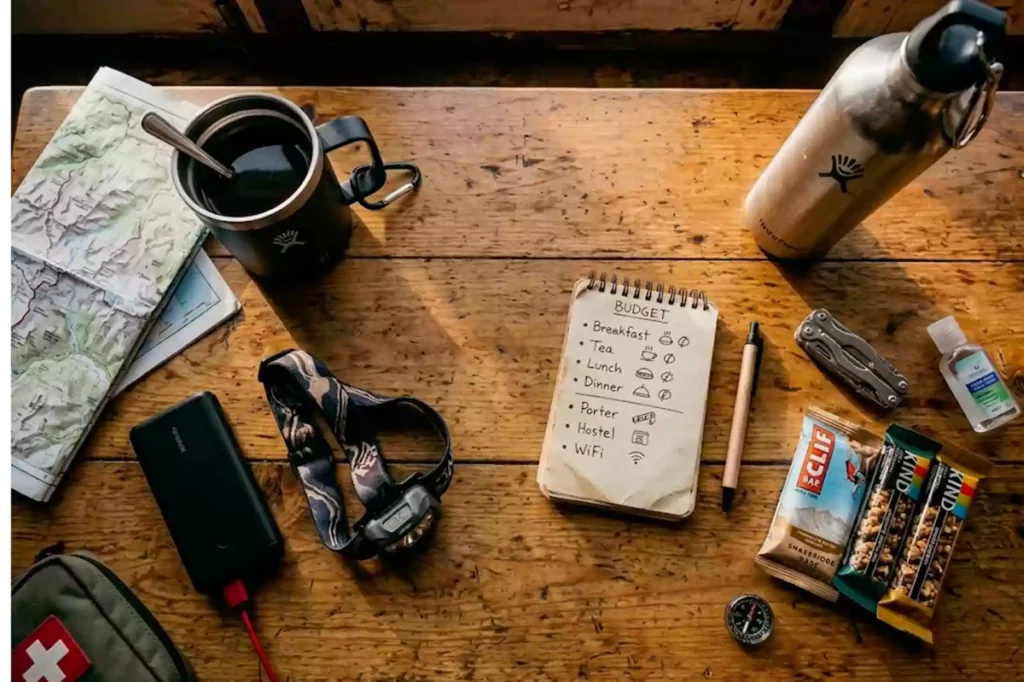
You don’t necessarily spend every category every day. A trekker who skips Wi-Fi and hot showers can spend less, while someone buying coffee, chocolate, bottled drinks, and Western meals can spend considerably more.
How Do You Calculate Your Daily Trekking Budget in Nepal?
To calculate your daily trekking budget in Nepal:
- Start with your expected teahouse room cost.
- Add breakfast, lunch, and dinner.
- Add drinking water and hot drinks.
- Allow for charging, Wi-Fi, or a hot shower if you want them.
- Add snacks and other personal purchases.
- Multiply the daily amount by the number of trekking days.
- Add approximately 20% for unexpected expenses and delays.
For example, if you plan to spend NPR 4,500 per day for 12 days:
NPR 4,500 × 12 = NPR 54,000
Add a 20% buffer:
NPR 54,000 + NPR 10,800 = NPR 64,800
So you would plan to have roughly NPR 65,000 available for daily trail expenses, before adding permits, transportation, guide, or porter costs.
This is more useful than simply carrying a rounded dollar amount because most trail purchases are made in Nepali rupees.
Why Does Trekking Cost More at Higher Altitude?
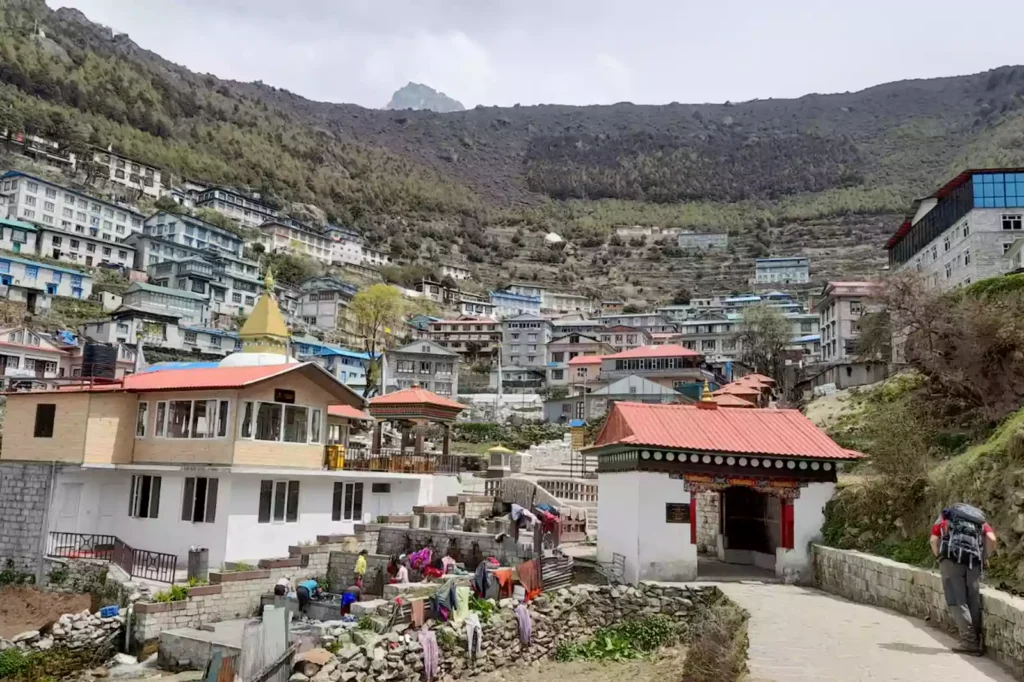
Trekking costs more at higher altitude because food, fuel, bottled drinks, construction materials and other supplies become harder to transport.
A meal in Kathmandu does not have the same supply chain as a meal in Dingboche, Lobuche or another high-altitude settlement. As roads disappear and transport depends more heavily on porters, pack animals and limited supply routes, operating costs increase.
This is why a trekker shouldn’t use the same daily budget for the entire itinerary.
A useful way to think about it is:
Lower trail → normal daily budget
Higher trail → larger food and services budget
Remote/high-altitude section → larger cash buffer
That altitude effect is one of the most important differences between a city travel budget and a trekking budget.
What Does a Teahouse Cost Per Night in Nepal?
A teahouse room in Nepal can cost roughly NPR 500–1,000 in lower or mid-altitude areas and around NPR 800–1,500 or more at higher elevations, depending on the route, lodge and season.
The room itself is often not the biggest expense.
Many teahouses keep basic rooms relatively inexpensive because food sales are an important part of their business. A lodge may offer a low room price when trekkers take their meals there.
This arrangement varies between lodges, so ask before checking in:
“How much is the room, and is the room price different if I don’t eat here?”
That one question can make your daily budget much more predictable.
What Is the Teahouse Meal Rule?
The teahouse meal rule is a common pricing practice where a lodge may offer a cheaper room when guests eat their meals at the same property. It isn’t a universal government rule, and individual lodges can set their own arrangements.
Don’t assume that a room advertised at NPR 500 will remain NPR 500 if you eat elsewhere.
How Much Does Food Cost on a Nepal Trek?
Food on a Nepal trek usually costs around NPR 1,500–2,600 per day at lower and mid elevations and approximately NPR 2,000–4,000 or more at higher elevations, depending on what you order.
Food normally represents the largest part of a trekker’s daily personal spending.
Dal Bhat: The Budget-Friendly Trail Meal
Dal bhat remains one of the most practical meals for trekking.
A typical serving includes rice, lentil soup, vegetable curry and accompaniments. Refills of rice and dal are commonly available, although individual lodge policies differ.
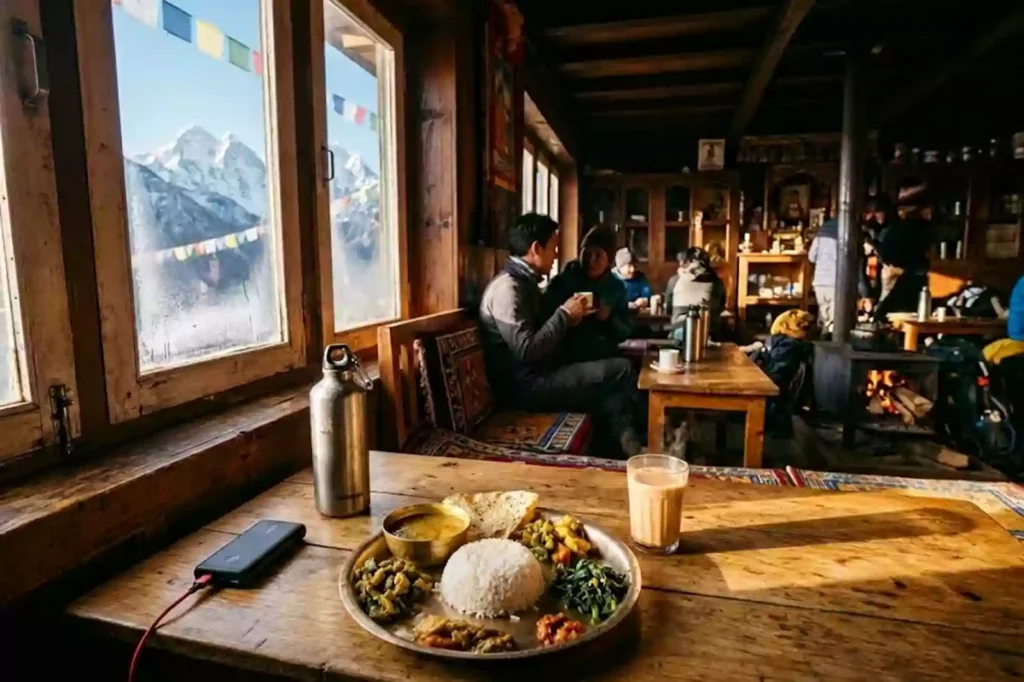
Depending on location, dal bhat can range from around NPR 600 in lower areas to NPR 1,200 or more at higher elevations.
For someone watching their budget, it’s usually more economical than ordering several separate Western dishes.
What Other Food Can You Buy?
Teahouse menus commonly include:
- Porridge
- Eggs
- Pancakes
- Tibetan bread
- Momos
- Noodles
- Fried rice
- Pasta
- Pizza on some popular routes
- Soup
- Dal bhat
Prices increase according to altitude and supply conditions.
Imported chocolate, energy bars and packaged snacks can also become surprisingly expensive.
A simple way to reduce daily spending is to buy some durable snacks in Kathmandu or Pokhara before starting the trek.
What Are the Hidden Daily Trekking Expenses?
The hidden daily trekking expenses are usually water, hot showers, electricity, Wi-Fi, snacks and occasional drinks. Each item may seem small, but several of them together can add NPR 500–1,500 to a trekking day.
Drinking Water
Water deserves its own budget.
You can encounter:
- Boiled water
- Filtered refill stations
- Bottled water
- Purification tablets
- UV purification
- Portable filtration systems
Buying bottled water every day is convenient, but it creates more waste and becomes increasingly expensive at altitude.
Carrying a reusable bottle and using a reliable purification method can reduce both cost and plastic use.
Hot Showers
Hot showers are a comfort rather than a necessity.
Lower villages may offer solar or heated-water showers at relatively modest prices. At higher elevations, heating water requires more fuel, so prices generally rise.
If you shower frequently, include it in your daily budget. If not, this is an easy expense to eliminate.
Charging Electronics
Charging fees vary by lodge and altitude.
You may pay separately for:
- Phone charging
- Camera batteries
- Headlamps
- GPS devices
- Power banks
A 20,000mAh power bank can reduce the number of times you need to pay for charging, although you should still keep your devices charged for navigation and emergency communication.
Wi-Fi
Wi-Fi is increasingly available on popular trekking routes, but it shouldn’t be treated as guaranteed.
Some teahouses sell access directly. Other routes have dedicated connectivity services, while NTC or Ncell coverage may work in selected areas.
If internet access is important to you, keep a separate daily allowance rather than assuming it will be free.
Where Is Daily Trekking Cost Lowest in Nepal?
Daily trekking cost is generally lowest on routes with easier road access, shorter supply chains and lower accommodation costs, although individual lodge prices vary.
For Nepal Footprint Holiday’s main trekking regions, the broad planning picture looks like this:
These are personal on-trail expenses, not total trek prices.
For route-specific planning, you can also compare the Poon Hill Trek budget guide for a shorter and generally simpler trekking experience.
How Much Does the Daily Cost Differ by Major Trek?
Everest Base Camp Trek
Everest Base Camp daily trekking cost is usually higher because the route reaches greater elevations and many supplies must travel farther into the Khumbu.
A practical personal budget is around NPR 4,000–7,000 per day, excluding the Lukla or Ramechhap flight, permits, guide, porter and other major logistics.
Use our detailed Everest Base Camp Trek Cost guide for the complete trip calculation.
Annapurna Circuit and Annapurna Base Camp
Annapurna daily trekking costs can be relatively moderate because several parts of the region have better road access and established lodge infrastructure.
A personal budget of around NPR 3,000–5,000 per day is a reasonable starting point for basic teahouse travel, with higher spending possible at altitude or with more Western food and services.
You can review the Annapurna Circuit Trek and Annapurna Base Camp Trek itineraries for route-specific planning.
Langtang Valley
Langtang daily trekking costs can be relatively manageable because the trailhead is accessible from Kathmandu and the route doesn’t require a mountain flight like the classic Everest itinerary.
A planning range of approximately NPR 3,000–4,500 per day works for basic accommodation, meals and ordinary personal expenses.
See the Langtang Valley Trek itinerary for more information about the route.
Should You Carry Cash on a Nepal Trek?
Yes, you should carry enough Nepali cash for your trekking days plus an emergency buffer. Many teahouses, shops and small service providers primarily use cash, while ATM access can be limited or unreliable outside larger settlements.
Don’t build your entire plan around finding an ATM at the next major village.
A simple formula is:
Daily cash budget × trekking days + 20% emergency buffer = trail cash requirement
For routes with unreliable transport, extra nights or weather exposure, consider a larger reserve.
Keep your cash divided between secure locations rather than putting the entire amount in one wallet.
What Costs Are Not Included in the Daily Budget?
The daily trekking budget does not include permits, flights, major transportation, guide or porter fees, insurance, equipment purchases or emergency evacuation.
This distinction matters because a trek advertised at US35perdayisn’tnecessarilyaUS35-per-day trip.
Your overall trekking budget has several layers.
Daily trail expenses
- Food
- Teahouse
- Water
- Charging
- Wi-Fi
- Showers
- Snacks
Fixed or major trip expenses
- Permits
- TIMS where applicable
- Transportation
- Domestic flights
- Guide
- Porter
- Travel insurance
- Equipment
- Tips
For current permit-related planning, see our guide to ACAP and TIMS.
NFH’s broader Nepal Trekking Cost 2027 guide covers these total-trip expenses separately, so this page can remain focused on the money you actually spend while walking.
How Can You Reduce Your Daily Trekking Cost?
To reduce your daily trekking cost, focus on the expenses that repeat every day rather than trying to save a few rupees on one room.
1. Eat Local Meals
Dal bhat, noodles, soup and other simple meals can be more economical than ordering several Western dishes.
2. Carry Reusable Water Equipment
A good bottle and reliable purification system can reduce your dependence on expensive bottled water.
3. Limit Paid Extras
Hot showers, Wi-Fi, charging, coffee, soft drinks and packaged snacks can add up quickly.
4. Buy Selected Snacks Before the Trek
Purchase durable items in Kathmandu or Pokhara where practical, but don’t overload your pack.
5. Carry a Power Bank
A reliable power bank can reduce repeated charging fees.
6. Don’t Confuse Cheap With Good Value
Saving NPR 200 on accommodation isn’t useful if the lodge has poor food, unreliable heating or limited access to the facilities you actually need.
The goal should be a predictable daily budget, not the lowest possible number.
When Should You Carry More Cash?
You should carry more cash before entering higher, remote or flight-dependent sections of a trek, especially when an extra night could be caused by weather or transport disruption.
An additional 20% is a useful general buffer for ordinary unexpected spending. For routes where flights or remote transport can disrupt the itinerary, keep additional emergency funds beyond your normal daily budget.
This is particularly important on longer itineraries where one unexpected night becomes several extra meals, accommodation and service charges.
Frequently Asked Questions
What Is the Cheapest Daily Budget for Trekking in Nepal?
The cheapest practical daily budget for trekking in Nepal is around NPR 3,000 per person, although spending at this level requires basic accommodation, simple meals and very few paid extras. It is more realistic on lower-cost routes than on high-altitude sections of Everest, Manaslu or other remote trekking areas.
How Much Cash Should I Carry Per Day on a Nepal Trek?
You should carry around NPR 3,000–5,500 per day for basic trekking expenses, with approximately NPR 4,500–7,000 being safer for higher-altitude sections. Add a 20% emergency buffer and keep separate funds for permits, transportation, guide or porter payments and tips.
Can I Trek in Nepal Without Spending Money on Wi-Fi, Showers and Charging?
Yes, you can trek in Nepal without spending money on Wi-Fi, showers, and frequent charging, provided you prepare for it. A power bank, offline maps, appropriate hygiene supplies and a charging plan can reduce these optional daily expenses considerably.
Why Is Food More Expensive on the Nepal Trekking Trail?
Food is more expensive on the Nepal trekking trail because ingredients, fuel and other supplies become more difficult to transport as altitude and distance from road access increase. High-altitude lodges have higher operating and supply costs, which are reflected in menu prices.
Where Should I Get My Trekking Cash Before Leaving?
You should get most of your trekking cash in Kathmandu or Pokhara before leaving for remote sections, where banking and ATM facilities become less reliable. Carry Nepali rupees in secure locations and keep an emergency reserve separate from your everyday spending money.
When Should I Update My Nepal Trekking Budget?
You should update your Nepal trekking budget before departure, particularly if you’re travelling in 2027. Government fees, transportation prices, lodge rates, exchange rates and route conditions can change, so published estimates should be treated as planning figures rather than guaranteed prices.
Final Takeaway: Nepal Trekking Daily Cost 2027
The Nepal trekking daily cost is easier to understand when you separate money spent on the trail from the total price of the trek.
For a basic teahouse trek, plan around NPR 3,000–5,500 per person per day. For higher and more remote sections, NPR 4,500–7,000 per day is a more comfortable planning range.
The largest daily expenses are normally food and accommodation. Water, snacks, showers, charging and Wi-Fi are smaller costs, but they can add up over a long trek.
Most importantly, calculate your cash requirement before leaving Kathmandu or Pokhara. Multiply your expected daily spending by the number of trekking days, add an emergency buffer, and keep permits, transport, guides, porters, insurance and tips in separate parts of your overall budget.
For broader route planning, start with the complete Nepal trekking guide, then use the relevant route and cost guides to build your itinerary.
If you want a route-specific calculation, Nepal Footprint Holiday can prepare an itinerary with the major costs separated clearly, so you know what is included in the package and what you should expect to pay personally on the trail.
Plan Your Nepal Trek With Nepal Footprint Holiday
Know your daily trekking cost, accommodation, meals, permits and transportation before you hit the trail. Nepal Footprint Holiday can help you build a practical trekking itinerary with the major expenses clearly separated.
👉 Get Your Personalized Trekking Plan from Nepal Footprint Holiday →
Tell Nepal Footprint Holiday your preferred route, travel dates and trekking style, and we’ll help you plan your trip and expected costs.