

Namche Bazaar is the unofficial capital of the Khumbu region and the busiest trekking hub on the way to Everest Base Camp. Sitting at 3,440 meters on a horseshoe-shaped hillside, it is where trekkers rest, shop, and let their bodies adjust to thin mountain air before pushing higher. This guide covers everything a first-time visitor needs, from getting there and acclimatizing safely to the best things to do, where to sleep, and what to pack.
What Is Namche Bazaar
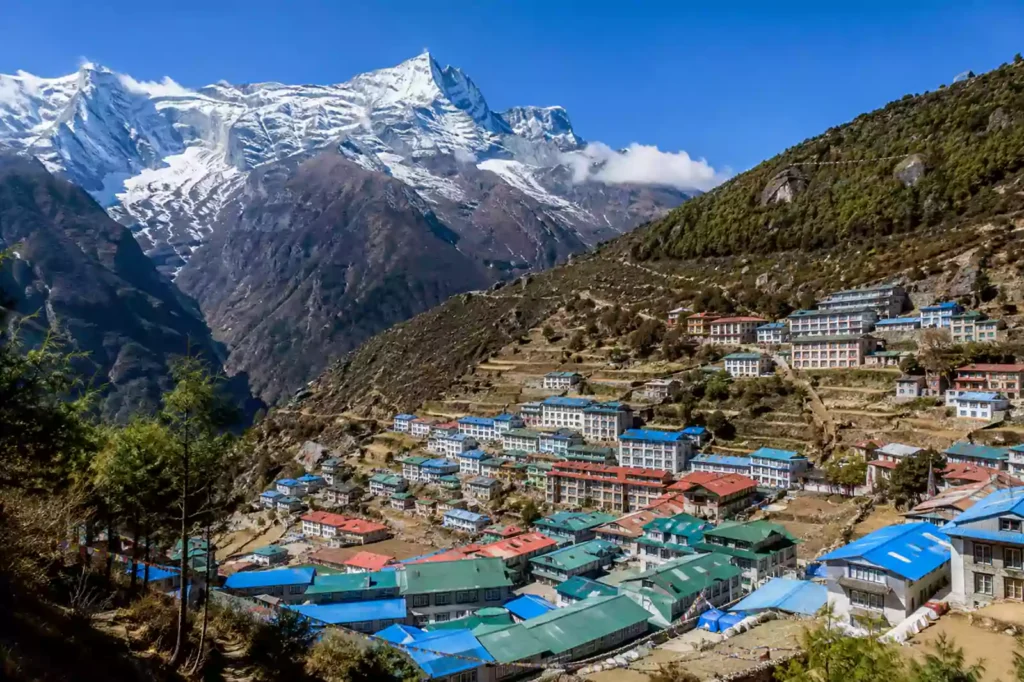
Namche Bazaar sits inside Sagarmatha National Park, a UNESCO World Heritage Site, and functions as the trading and cultural heart of the Sherpa community. Long before trekking tourism existed, it was a barter market where salt, wool, and grain moved between Tibet and the lower Solu valleys. That trading history still shapes the town today. The weekly Saturday market draws traders down from surrounding villages, and the main street is lined with gear shops, bakeries, and stalls selling handwoven textiles.
Most travelers know Namche as the last major stop before the high Khumbu wilderness. Almost every route toward Everest Base Camp, Gokyo, or the Everest three passes circuit runs directly through it, which makes the town feel less like a quiet mountain village and more like a small alpine city with hot showers, bakeries, and even a couple of pubs.
Where Is Namche Bazaar Located
Namche Bazaar lies in the Khumbu region of Solukhumbu district in northeastern Nepal, roughly 3,440 meters above sea level. It sits a short walk from the confluence of the Dudh Koshi and Bhote Koshi rivers, cradled in a natural amphitheater of hillside that shelters it from the harshest mountain winds. The town is reached almost entirely on foot, since no road currently connects it to the rest of Nepal.
How to Get to Namche Bazaar
Nearly every trekker reaches Namche the same way, by flying into Lukla and walking north.
- Fly from Kathmandu to Lukla. This short 30 to 40 minute mountain flight lands at Tenzing Hillary Airport, one of the most dramatic runways in the world.
- Trek from Lukla to Phakding. A gentle first day of walking, roughly three hours, that helps your body ease into the trail.
- Trek from Phakding to Namche Bazaar. This is the tough stretch. Expect five to six hours of walking, including a long, steady climb through pine forest after crossing the Hillary Suspension Bridge.
Travelers with more time can also skip the flight entirely and start walking from Jiri or Phaplu, following the classic overland approach used before the Lukla airstrip existed. It adds several extra days but lets you pass through lower Sherpa and Rai villages that most flight in trekkers never see. For those short on time or unable to trek the full distance, a helicopter tour to Everest Base Camp is also an option, with some itineraries touching down near Namche or Syangboche.
Best Time to Visit Namche Bazaar
Autumn (late September to November) and spring (March to May) offer the clearest skies, the most stable trails, and the best mountain visibility. Winter brings cold, quiet trails and occasional snow at higher points, while the summer monsoon months bring cloud cover, leeches on the lower trail, and a higher chance of flight delays into Lukla. Read our full breakdown of the best time to trek in Nepal before booking your dates.
Altitude and Acclimatization
Namche Bazaar sits at an altitude where mountain sickness becomes a real risk, and it is the standard acclimatization stop on every Everest region itinerary. Most trekking companies build in two nights here rather than one, using the extra day for a short hike up to Everest View Hotel or the Sherpa Culture Museum rather than complete rest.
The golden rule at this altitude is simple: climb high, sleep low. Walk a little higher during the day, then return to sleep at a lower point if possible. Drink more water than feels necessary, avoid alcohol on acclimatization days, and pay attention to headaches, nausea, or unusual fatigue. Our guide to altitude sickness covers symptoms, prevention, and what to do if they appear.
Top Things to Do in Namche Bazaar
Visit the Sherpa Culture Museum
Set on a ridge above town, this small museum traces Sherpa history, religious traditions, and the mountaineering story of the Khumbu, including photographs connected to Tenzing Norgay.
Hike to Everest View Hotel
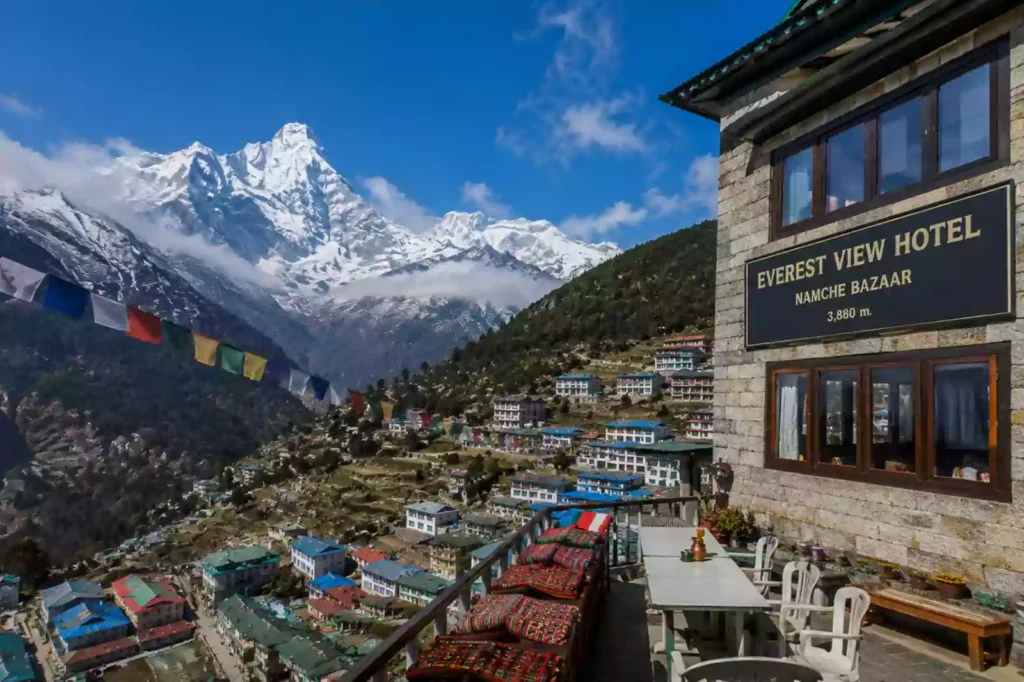
A short, steep climb above Namche leads to one of the highest-placed hotels in the world, with a terrace that offers a genuine first glimpse of Everest on a clear day. It doubles perfectly as an acclimatization walk.
Explore the Saturday Market
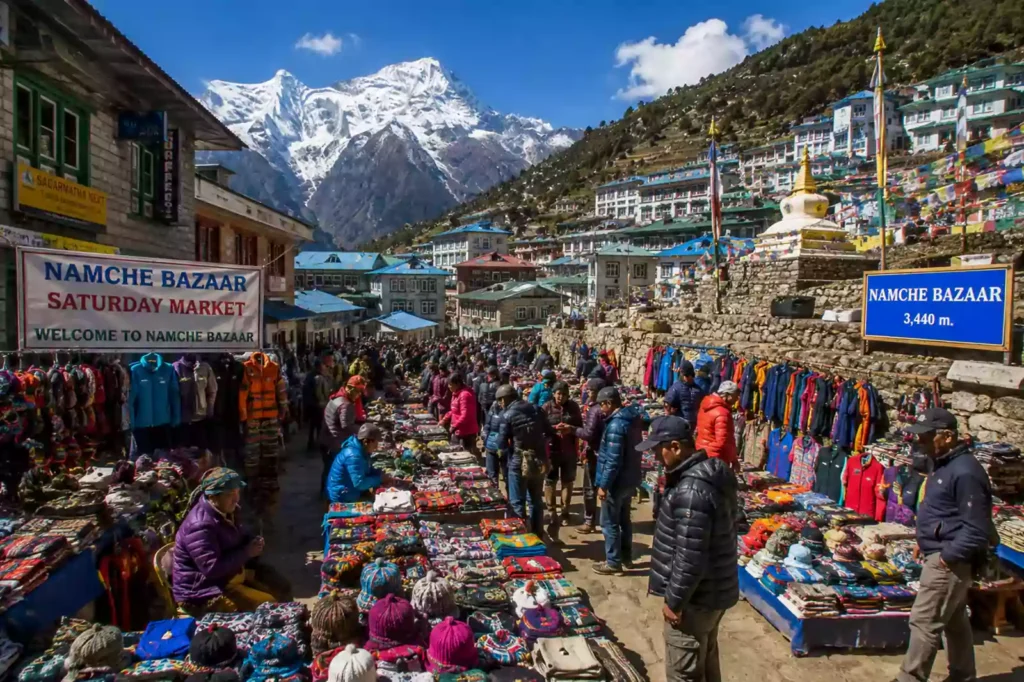
If your schedule lines up with a Saturday, the weekly market is worth timing your visit around. Traders from nearby villages bring produce, textiles, and household goods, giving a real sense of how the town functioned long before trekking tourism arrived.
Browse the Gear and Handicraft Shops
Namche has the widest selection of trekking gear and souvenirs in the entire Khumbu, from genuine down jackets to woven Tibetan-style rugs and prayer flags.
Visit the Namche Monastery and Stupa
A quiet, unhurried stop for those interested in Sherpa Buddhist practice, with prayer wheels and mani stones lining the paths nearby.
Warm Up at a Local Bakery or Pub
After a day of walking, Namche’s bakeries and cafes serve fresh bread, pastries, and coffee that feel unexpectedly good at 3,440 meters.
Where to Stay
Namche runs on the tea house model: small families run lodges with basic private rooms, shared bathrooms, and simple hot meals. Rooms fill quickly during autumn and spring, so booking ahead through a local operator is worth doing rather than arriving and hoping for space. Lodges here tend to have better facilities than those higher up the trail, including hot showers and, in some cases, reliable Wi-Fi.
What to Eat
Namche has the best food variety anywhere on the Everest trekking route. Dal bhat remains the trekker’s staple, a filling plate of lentils, rice, and vegetables that most lodges refill for free. Alongside it, you will find noodle soups, momos, and simple potato dishes that sit well at altitude. The bakeries add an unusual bonus: fresh bread, apple pie, and brewed coffee that few other Himalayan villages can match.
Permits You Will Need
Two permits cover travel through Namche Bazaar and the wider Khumbu region: the Sagarmatha National Park entry permit and the Khumbu Pasang Lhamu Rural Municipality entry permit. Both are checked at posts along the trail, so keep them accessible rather than buried in your pack. Full details on where and how to apply are covered in our trekking permit guide, and international visitors should also confirm their Nepal visa requirements before arrival.
Trekking Difficulty and Fitness
The walk from Lukla to Namche is rated moderate, mainly because of the long climb on day two rather than technical difficulty. No climbing skills are required, but a reasonable level of fitness makes the ascent far more enjoyable. Our trekking grades guide explains how Namche fits within the wider difficulty scale used across Nepal’s trekking routes.
What to Pack
- Layered clothing for temperature swings between valley and altitude
- A warm down jacket for evenings
- Sturdy, broken in trekking boots
- Water purification tablets or a filter
- Sunscreen and UV protective sunglasses
- A basic first aid kit with altitude medication if prescribed
- Cash in Nepali rupees, since Namche is one of the few places with money changing services
For the complete packing checklist, see our full guide to trekking equipment for Nepal.
Namche Bazaar FAQ
How high is Namche Bazaar?
Namche Bazaar sits at approximately 3,440 meters (11,286 feet) above sea level.
How many days should I spend in Namche Bazaar?
Most itineraries include two nights for acclimatization before continuing higher into the Khumbu.
Can I reach Namche Bazaar without flying to Lukla?
Yes. Trekkers can walk in from Jiri or Phaplu on the classic overland route, though it adds several extra trekking days.
Is Namche Bazaar suitable for beginners?
Yes, with reasonable preparation. The trail is non-technical, though the altitude and the climb from Phakding require steady pacing and proper acclimatization.
What is Namche Bazaar known for?
It is known as the Sherpa capital of the Khumbu, a historic trading hub, and the main acclimatization stop for Everest Base Camp trekkers.
Is there Wi-Fi and mobile signal in Namche Bazaar?
Most lodges offer paid Wi-Fi, and Nepali mobile networks generally have coverage in town, though speeds can be inconsistent.
What is the weekly market day in Namche Bazaar?
The main trading market takes place every Saturday, when villagers from surrounding areas bring goods to sell.
Do I need a guide to visit Namche Bazaar?
While independent trekking is possible, a licensed guide adds safety, local insight, and smoother permit handling, particularly for first-time visitors to the Himalayas.
Key Takeaways
- Namche Bazaar (3,440 m) is the cultural and trading capital of the Sherpa Khumbu region.
- Most trekkers arrive by flying into Lukla, then walking two days through Phakding.
- Two acclimatization nights are strongly recommended before continuing higher.
- Highlights include the Sherpa Culture Museum, Everest View Hotel, and the Saturday market.
- Two permits (Sagarmatha National Park and Khumbu Rural Municipality) are required.
- Autumn and spring offer the most reliable weather for visiting.
Namche Bazaar sets the tone for everything that follows on an Everest region trek. It is where the trail turns serious, where the mountains start to feel close, and where a little patience with acclimatization pays off for the rest of the journey. If you are planning a trip through the Khumbu, our Everest Base Camp Trek and Everest Panorama Trek itineraries both route through Namche and can be tailored to your available time and fitness level. Reach out to our team to start planning your Khumbu adventure.
Government of Nepal registered · Kathmandu-based · 10+ years guiding experience