

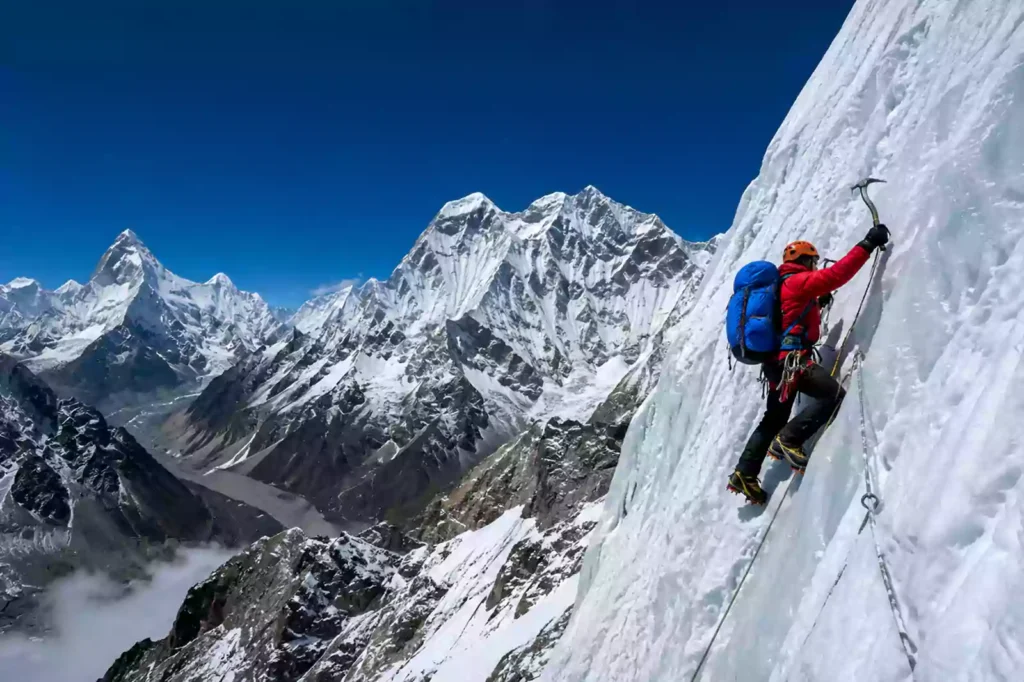
Island Peak (6,189m) is a shorter, technical climb inside the busy Everest Base Camp corridor. Mera Peak (6,476m) is Nepal’s highest trekking peak, a longer, non-technical snow climb through the quiet Hinku Valley.
Island Peak vs Mera Peak is the question we hear most from trekkers ready to move past the Everest Base Camp Trek and into real climbing. Both are Nepal Mountaineering Association trekking peaks above 6,000 metres. However, they test very different skills, and picking the wrong one can turn a dream summit into a hard retreat. Our guides have led both climbs for years. Here is how they compare.
The Core Difference
Island Peak, or Imja Tse, sits inside the Khumbu on the same trail as EBC. It ends in a genuinely steep, fixed-rope summit headwall. Mera Peak climbs through the quieter Hinku Valley to the southeast. The route is a long, gradual snow slope, but it sits 287 metres higher, which makes altitude the bigger challenge.
In short:
- Island Peak: shorter, technical, crowded, inside the EBC corridor
- Mera Peak: longer, non-technical, remote, higher summit
At a Glance
Which Peak Is Harder?
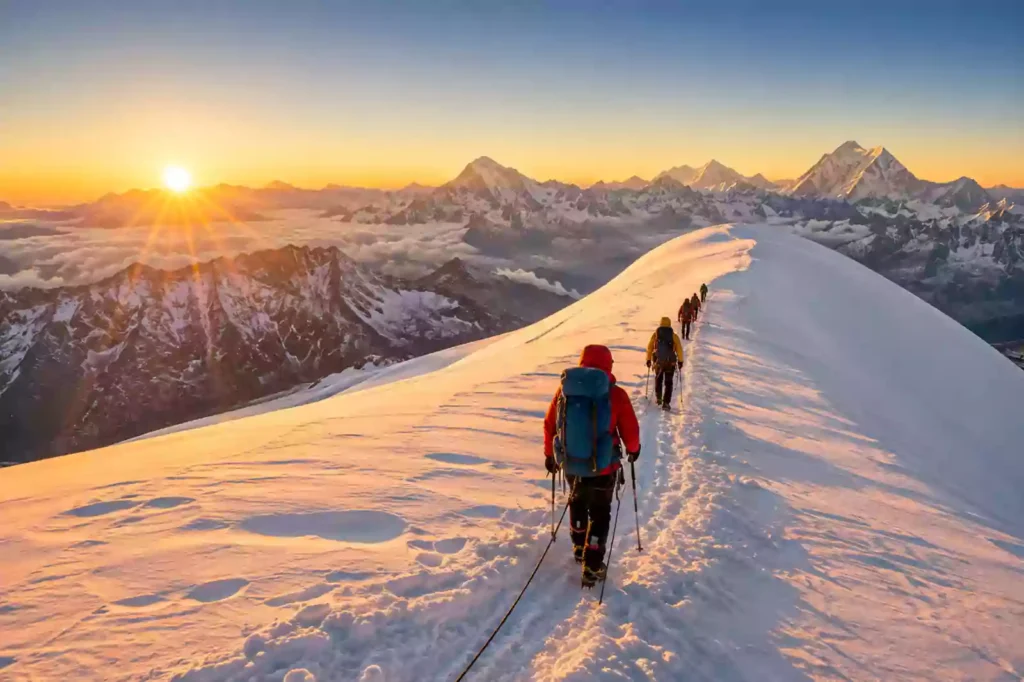
Island Peak is technically harder day-to-day. The final 200 metres involve a steep snow and ice headwall, sometimes 60 to 70 degrees, fixed with rope. You will use crampons, a harness, and an ice axe under real exposure. Mera Peak asks for less technical skill, but at 6,476 metres the air is thinner, and the summit push runs 8 to 9 hours round trip. Altitude, not terrain, is what breaks most Mera Peak attempts.
Prepare for either climb by:
- Training 8 to 10 weeks beforehand with loaded pack hikes
- Completing one trek above 4,000 metres first; our trekking grades guide can help you assess this
- Reading our altitude sickness guide so you know the early symptoms
Permits and Cost
Both peaks are NMA Group B trekking peaks with a similar permit structure, though conservation area fees differ since Island Peak sits in Sagarmatha National Park and Mera Peak sits in the Makalu-Barun region. A licensed guide is compulsory for both; solo ascents are not permitted. Our trekking permit guide covers current fees, or confirm directly with the Nepal Mountaineering Association.
Both climbs are priced the same with Nepal Footprint Holiday, from USD 2,500 per person, including Lukla flights, permits, and all meals and lodging on the trail. Personal climbing gear rental runs USD 150 to 250 per person on either route. Travel and rescue insurance covering helicopter evacuation is mandatory for both and is not included in the package price.
Scenery and Crowds
Island Peak delivers the classic Everest skyline plus a glaciated summit view of Lhotse, Nuptse, and Ama Dablam, alongside the famous EBC trail through Namche Bazaar and Tengboche. It is also the busier route, since it shares the EBC corridor. Mera Peak’s Hinku Valley is quieter and greener at first, opening onto high alpine terrain near Khare. On a clear day, the summit shows five 8,000 metre peaks at once: Everest, Lhotse, Makalu, Kanchenjunga, and Cho Oyu.
Worth knowing:
- Best season for clear views on either peak: late October and November
- Island Peak lodges are more established, with better food variety
- Mera Peak’s teahouses are simpler, with basic dal bhat in the higher villages
Which Should Be Your First Himalayan Summit?
Choose Island Peak if you want a real mountaineering pitch, a fixed-rope headwall, and the classic EBC trail along the way. Choose Mera Peak if your priority is the highest trekking-peak summit in Nepal, with a quieter trail and a gentler technical grade, even though the altitude asks more of your body.
Many climbers use one as a stepping stone to the other. Those who complete Mera Peak often return for Island Peak’s technical challenge once they know how their body handles 6,000 metres. Those who enjoy Island Peak’s headwall often look to Lobuche Peak next. There is no universally better choice, only the one that matches where you are as a climber. Reach out through our inquiry page, and we will help you plan the climb.
Island Peak teaches you to trust a rope and your crampons. Mera Peak teaches you to trust your lungs and your patience — Nepal Footprint Holiday senior climbing guide.
FAQ: Island Peak vs Mera Peak
Which is easier, Island Peak or Mera Peak?
Mera Peak is technically easier, with a gradual, non-technical summit slope. Island Peak is harder, with a steep, fixed-rope headwall. However, Mera Peak is higher at 6,476m against Island Peak’s 6,189m, so it carries greater altitude risk.
Which peak is higher?
Mera Peak is higher at 6,476 metres, the highest trekking peak in Nepal. Island Peak stands at 6,189 metres, a 287 metre difference that makes Mera Peak’s summit day feel longer and more demanding.
Can a beginner attempt either peak?
Fit beginners with trekking experience above 4,000 metres can attempt either with a licensed guide, though Mera Peak is the more forgiving first summit due to its non-technical route.
Government of Nepal registered · Kathmandu-based · 10+ years guiding experience