

How Much Do Guides and Porters Cost in Nepal in 2027?
The guide and porter cost in Nepal for 2027 depends on your trekking route, trip duration, staff experience, group size, and the services included in the quotation. For budget planning, a trekking guide may cost around US 25 to US 45 per day, while a porter may cost around US$30 per day. A porter-guide who both guides and carries a lighter load may cost around US 22 to US 35 per day.
These are indicative planning ranges based on published trekking-operator prices available in 2026, not official fixed rates for 2027. Actual quotations can fall outside these ranges, especially for specialist guides, remote routes, and arrangements that include additional services.
The daily rate is only one part of your budget. Before hiring anyone, confirm whether meals, accommodation, insurance, transport, agency service charges, and other staff expenses are included.
If you are planning the Everest Base Camp Trek, Annapurna Circuit, Langtang Valley Trek, Mardi Himal Trek, or Manaslu Circuit, this guide explains how to estimate staff costs and compare quotations fairly.
Guide and Porter Cost in Nepal: 2027 Daily Rate Table
The following table gives you a starting point for estimating the cost of hiring trekking staff in Nepal.
These are indicative market estimates for planning, not guaranteed 2027 prices. The final cost depends on the itinerary, experience, route conditions, staff arrangements, and what the quotation includes.
A higher daily rate does not automatically mean a better service. Ask about the guide’s experience on your chosen route, language ability, licence, safety preparation, and familiarity with local conditions.
Likewise, do not compare two porter quotations based only on the headline price. One may include meals, accommodation, insurance, and transport, while another may charge for those separately.
What Is the Difference Between a Trekking Guide, Porter, and Porter-Guide?
Choosing the right type of support can make your trek more comfortable and help you avoid paying for services you do not need.
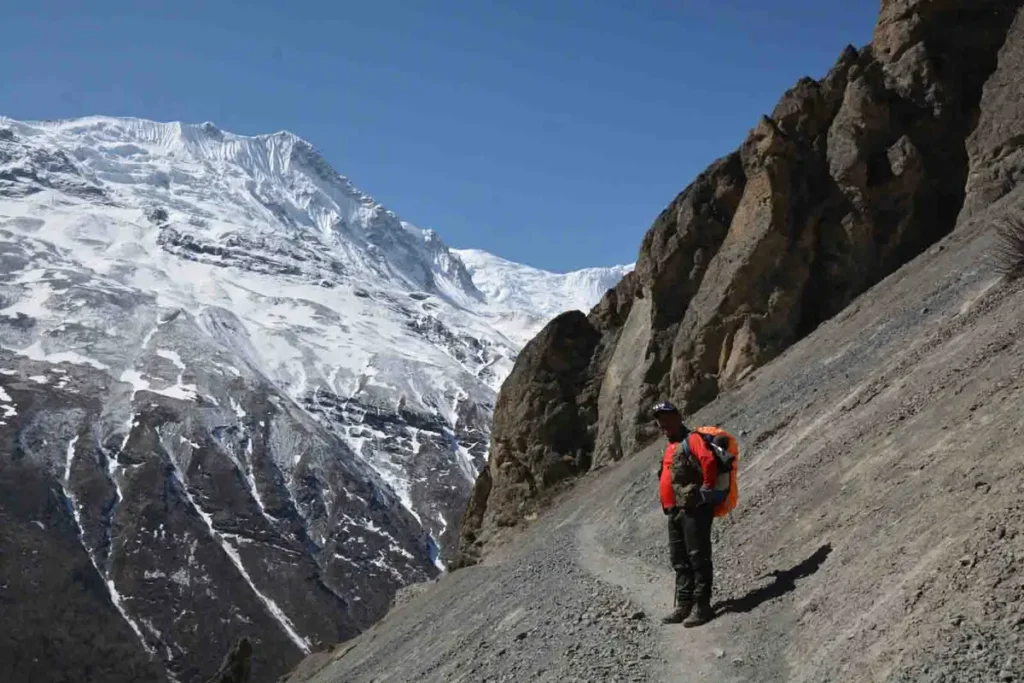
1. Trekking guide
A trekking guide leads your journey and helps coordinate the practical details of the trek. Depending on the route and arrangement, responsibilities may include:
- Explaining local culture, landscapes, and mountain conditions.
- Helping coordinate accommodation and daily walking plans.
- Assisting with permits, checkpoints, and route logistics.
- Monitoring the group’s condition and recognising possible altitude-related problems.
- Communicating with local communities and arranging help when necessary.
For remote routes, high passes, or challenging itineraries, ask whether the guide has specific experience in that region. A guide familiar with the Everest region may not automatically have the same experience on Manaslu or Upper Dolpo.
2. Porter
A porter carries your main trekking luggage so you can walk with a lighter daypack. This can be particularly helpful on long ascents, steep trails, and multi-day treks.
A porter does not automatically provide guiding services. If you need someone to lead the route, coordinate the itinerary, or explain local surroundings, arrange a qualified guide as well.
Before the trek begins, agree on the total load, the number of trekkers sharing the porter, and the luggage limit set by your operator. Use a sensible load limit and ensure the porter has suitable clothing, footwear, and equipment for the conditions.
3. Porter-guide
A porter-guide combines some guiding responsibilities with carrying a lighter amount of luggage. This option may suit trekkers on straightforward, established routes when the person has the appropriate qualifications and experience.
However, it is not automatically the best choice for every trek. On demanding high-altitude routes, restricted-area treks, or itineraries requiring specialist knowledge, an experienced dedicated guide may be more suitable.
Check that the porter-guide is properly qualified for the route and can manage both responsibilities safely.
Guide and Porter Cost by Trekking Region
Rates can differ by region because of transport, remoteness, altitude, itinerary length, availability of staff, and the experience required.
The regional figures below are broad planning estimates. They are not verified fixed rates for every destination.
These estimates are informed by published operator pricing, which varies by company and service package. Confirm the current rate directly before booking.
Everest Base Camp Trek
The Everest Base Camp Trek involves high-altitude walking and additional logistics around the Khumbu region. If your itinerary includes flights to or from Lukla, ask how the guide’s and porter’s transport is arranged and whether those expenses are part of the quote.
Staff costs may also differ depending on whether you hire through an agency, arrange services locally where permitted, or book a complete trekking package.
Explore the Everest Base Camp Trek to compare the itinerary and other trip-planning details.
Annapurna and Mardi Himal
Annapurna routes offer several itinerary choices, from shorter walks to longer high-altitude circuits. Your staff requirements depend on the route, walking duration, group size, and the level of support you prefer.
For example, two trekkers may choose to share one porter if the combined luggage stays within the agreed load limit. Each trekker can then pay a share of the porter cost rather than hiring one porter each.
You can explore the Annapurna trekking options before deciding which level of support suits your plan.
Langtang Valley Trek
The Langtang Valley Trek is a popular option for trekkers looking for Himalayan scenery and local Tamang culture without taking a domestic flight to Lukla. Guide and porter costs still depend on the number of staff days, the selected itinerary, and the services included.
See the Langtang Valley Trek for route information and planning options.
Manaslu and other restricted-area routes
Remote and restricted-area treks require more careful preparation. Depending on the route, trekkers may need permits, a registered trekking agency, and a licensed guide under the applicable rules.
Confirm the current requirements before booking. Do not assume that a guide arrangement suitable for a popular trekking route will meet the requirements of a restricted area.
What Is Included in the Guide and Porter Daily Rate?
There is no single inclusion list that applies to every trekking company. One operator may quote a staff rate that covers several expenses, while another may show a lower daily fee and list those expenses separately.
Ask the company to confirm each item in writing.
A clear quotation helps you compare the real cost rather than choosing a service based on the lowest advertised daily rate.
Also confirm whether the staff cost is calculated by trekking days, total days away from their home or office, or another arrangement. These calculations can differ, especially when a route includes transport days, flights, or additional nights.
How to Calculate Your Total Guide and Porter Cost
To estimate the basic staff budget, multiply the daily rate by the number of chargeable days for each staff member. Then add any expenses not covered by those rates.
Basic calculation:
- Guide cost = guide daily rate × chargeable guide days.
- Porter cost = porter daily rate × chargeable porter days.
- Combined staff cost = guide cost + porter cost.
- Total hiring budget = combined staff cost + any excluded meals, accommodation, transport, insurance, agency charges, and tips
The number of chargeable days may not be the same as the total number of days you spend in Nepal. Ask your operator to confirm the exact staff-day calculation.
Example: Seven-day trek
Suppose you hire one guide at US$ 25–45 per day and one porter at US$ 16–30 per day for seven chargeable days.
This example is a calculation of the quoted daily rates only. It is not a guaranteed all-inclusive hiring price. Add any excluded staff meals, accommodation, insurance, transport, service charges, or tips.
How group size changes the cost per person
A guide’s daily fee is usually charged for the service, not separately for each trekker. When a group shares one guide, the cost per person can decrease.
For example, if a guide costs US$ 35 per day for seven days,the guide’s quoted daily-rate to talis US$ 245. If two trekkers share that cost equally, each pays US$ 122.50 toward the guide’s rate.If four trekkers share the same service and the price remains unchanged, each share is US$ 61.25.
This is an illustration of cost sharing, not a promise that every group will be charged the same total. Group size, required staff numbers, route rules, and the operator’s terms may change the quotation.
Porters can also be shared when the luggage load and arrangement are appropriate. Do not reduce staff numbers simply to lower the price if doing so creates an unsafe workload.
For a broader overview of accommodation, meals, permits, transport, and other expenses, see our Nepal trekking daily cost guide.
Hiring Through a Trekking Agency or Independently
Both approaches may be available depending on the route and applicable regulations, but they do not always offer the same level of coordination.
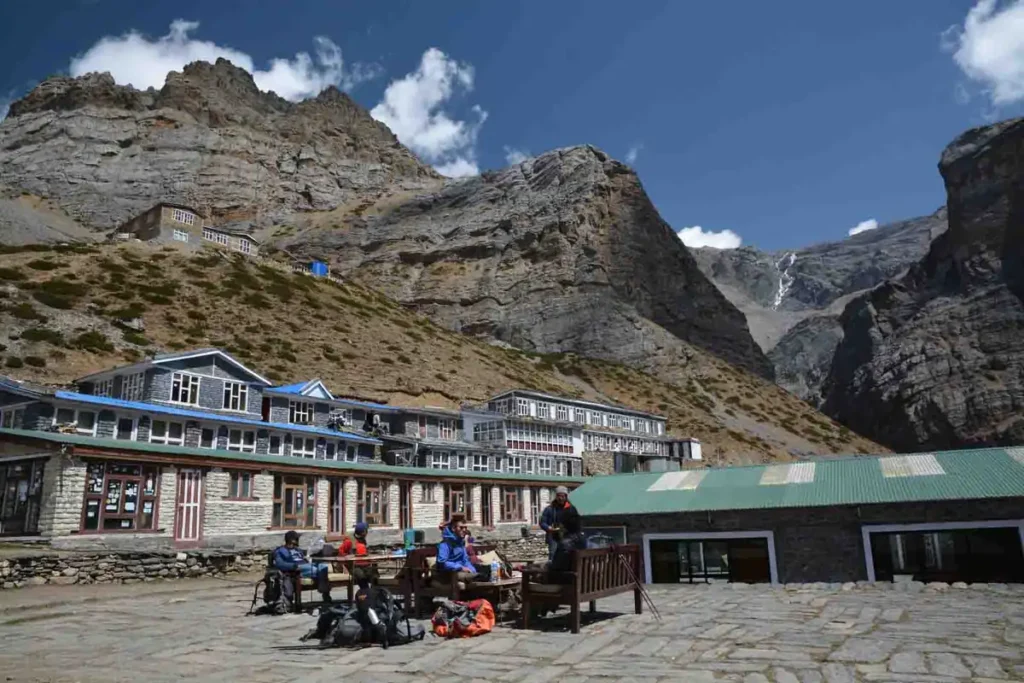
Hiring through a trekking agency
A registered trekking agency can help coordinate a guide, porter, itinerary, required permits, transport, and other arrangements. A complete package may also include staff meals, accommodation, insurance, and logistics, depending on the terms.
The benefit is having one point of contact and a clearer plan for the trip. However, you should still read the inclusions carefully rather than assuming every package covers the same services.
Ask for a written breakdown of staff costs and other trip expenses.
Arranging services independently
Independent arrangements may offer flexibility on suitable routes, but they require more checking. You need to understand which regulations apply, verify the person’s qualifications, agree on payment and inclusions, and establish who is responsible for transport, accommodation, insurance, and unexpected changes.
For routes where a licensed guide and agency-issued documentation are required, follow the applicable rules rather than relying on informal arrangements.
The Nepal Tourism Board’s TIMS guidance lists routes covered by its revised provisions and advises trekkers to check whether their chosen route requires a licensed guide and TIMS card. Rules and route requirements should be reconfirmed before departure.
Do You Need a Guide for Trekking in Nepal?
For many major trekking routes, a licensed guide is required under the applicable trekking rules. Nepal Tourism Board guidance lists routes in regions including Everest, Annapurna, Langtang, Manaslu, Kanchenjunga, Mustang, and Dolpo under its guide and TIMS provisions.
However, do not assume the same rule applies identically to every trail or that every local exception remains unchanged. Check the current requirements for your exact route and nationality before making a booking.
A porter is different from a guide. Hiring a porter does not automatically satisfy a guide requirement. If you want one person to perform both roles, confirm that the person is appropriately qualified and accepted for the route.
Before departure, verify permits, guide arrangements, and any required documents with your registered trekking agency or the relevant official authority.
How Much Should You Tip a Trekking Guide and Porter?
Tipping is a common way to recognise good service on treks in Nepal, but there is no single mandatory tip amount that fits every itinerary.
The amount depends on the trek’s length, the quality of service, group size, the number of staff, and your budget. Decide on a reasonable amount before the trip so it does not become an unexpected expense at the end.
When travelling in a group, agree on the contribution beforehand. Give each staff member their share directly where practical, and make sure the porter receives the tip intended for them rather than assuming it will be passed on by someone else.
Tips should be budgeted separately unless your written quotation explicitly states otherwise.
How to Hire a Reliable Guide or Porter
Before confirming a booking, use this checklist to compare your options.
- Verify qualifications: Ask whether the guide has the appropriate licence and experience for your route.
- Ask about local experience: Find out how often the guide has completed the trek and whether they know the route and its seasonal conditions.
- Confirm the daily rate: Establish the price, currency, chargeable days, and payment schedule.
- Get the inclusions in writing: Check meals, accommodation, insurance, transport, taxes, and agency charges.
- Agree on the workload: Confirm the number of trekkers, the porter-to-trekker arrangement, and a sensible luggage limit.
- Discuss extra days: Agree on how weather delays, illness, route changes, or additional nights will be charged.
- Check emergency arrangements: Ask how the guide will communicate, seek assistance, and respond if a trekker becomes unwell.
- Treat staff fairly: Ensure the guide and porter have suitable equipment, clothing, insurance arrangements, and rest opportunities for the conditions.
A reliable service should make the arrangements clear before you set off. If the quotation is unusually low, ask which costs have been excluded and how the staff will be supported.
Plan Your Nepal Trek Around Your Budget
Planning your Nepal trekking cost for 2027 starts with choosing a route that fits your time and budget. Account for permits, transportation, accommodation, meals, guide and porter services, travel insurance, and personal expenses.
Trekking package prices vary depending on the route, group size, service level, and inclusions. Compare what each package covers before booking. Share your travel month, available days, and approximate budget to discuss a suitable itinerary with Nepal Footprint Holiday.
Not sure which trek fits your budget? Tell us your preferred route, travel dates, available days, and approximate spending limit so we can help you compare suitable options.
Frequently Asked Questions About Guide and Porter Cost in Nepal
1. How much does a trekking guide cost per day in Nepal in 2027?
For initial budgeting, allow approximately US$25–45 per day for a trekking guide. Specialist, multilingual, or remote-route guides may charge more. These are planning estimates based on published operator rates available in 2026, not official 2027 tariffs. Ask for a current written quotation that states the daily rate and all additional expenses.
2. How much does a porter cost per day in Nepal?
A porter may cost around US$16–30 per day, depending on the route, arrangement, and included services. Confirm whether the rate covers wages only or also meals, accommodation, insurance, and transport. If two trekkers share a porter, they may divide the cost, provided the combined luggage remains within the agreed load limit.
3. Is a guide mandatory for trekking in Nepal?
A licensed guide is required on many major trekking routes under Nepal’s applicable guide and TIMS provisions. Requirements can vary by route, so check the current rules for your exact itinerary before departure. A porter does not automatically count as a guide. Confirm the necessary qualifications and documentation with a registered trekking agency.
4. Is food and accommodation included in the guide and porter rate?
Not always. Some trekking companies include staff meals, accommodation, insurance, and transport in their quoted rates or packages, while others list these expenses separately. Ask for a written breakdown before booking. Comparing the full cost is more useful than comparing daily rates alone, particularly when one quotation includes several staff expenses and another does not.
5. Can two trekkers share one porter in Nepal?
Yes, sharing one porter is common when the combined luggage is manageable, and the operator agrees to the arrangement. Sharing can reduce the cost per person, but the porter should not be overloaded. Confirm the total load limit, the number of bags, and what happens if you need extra luggage support during the trek.
6. How much should I budget for guide and porter tips?
There is no fixed mandatory tip amount for every trek. Plan a separate amount based on the trek’s duration, group size, service quality, and number of staff. Discuss the contribution with your group before the final day, and distribute tips fairly. Unless your quotation explicitly includes tips, treat them as an additional expense.
Final Advice: Compare the Full Cost, Not Just the Daily Rate
The guide and porter cost in Nepal for 2027 will depend on the route, number of chargeable days, staff experience, group size, and what the operator includes. A guide may be essential for route leadership and local support, while a porter can make long walking days more comfortable by carrying your main luggage.
Before booking, ask for a written quotation, confirm the current guide requirements for your route, and check staff transport, meals, accommodation, insurance, extra-day charges, and tips. These details help you budget more accurately and choose a service that treats both trekkers and trekking staff fairly.
Nepal Footprint Holiday offers trekking options across Nepal, including the Everest, Annapurna, Langtang, and remote trekking regions. Share your preferred route, travel dates, group size, and budget to discuss a suitable itinerary.
About the author: Bashu Dev Thapaliya is the Founder and Director of Nepal Footprint Holiday, a Kathmandu-based trekking and travel company. He contributes to practical trekking information to help travellers plan routes, compare costs, and prepare for journeys in Nepal.