


The Mardi Himal trek cost in 2027 is approximately US 600–1,100 per person for a guided 5 to 7-day trek, including permits, a licensed guide, teahouse accommodation, meals, and road transport. The final price depends on group size, season, comfort level, and what your package includes. This is a planning estimate, not a fixed quotation.
Mardi Himal is one of the most popular short treks in Nepal. It offers rhododendron forest, simple mountain lodges, and close views of Machhapuchhre and Annapurna South. If you still need the route, itinerary, and difficulty, read our complete Mardi Himal trek guide first. This page covers only what the trek costs.
How Much Does the Mardi Himal Trek Cost in 2027?
These figures cover a trek of around 5 to 7 days. They exclude international flights, Nepal visa fees, personal equipment and expenses before or after the trek.
Before booking, compare what each company includes. A lower advertised price may leave out permits, meals, transport, or guide costs.
Mardi Himal Trek Cost Per Day
Many trekkers search for a daily figure. A simple rule for 2027 is about US$ 180 per person per day for a guided package, and roughly US$ 85 per day for on-trail costs alone (guide share, food, and lodging).
The table below shows how the on-trail costs add up for a 6-day trek when two trekkers share one guide and one vehicle. These are illustrative estimates, not operator prices.
Packages cost more than this component total because they usually also bundle Pokhara hotel nights, airport pickup, private transfers, staff insurance, equipment, trip management and the operator’s margin. A porter adds roughly US54–75 per person when shared. This is why you should always ask for an itemised quotation instead of comparing headline prices.
Mardi Himal Trek Permit Cost in 2027
Mardi Himal lies within the Annapurna Conservation Area, so trekkers need the Annapurna Conservation Area Permit (ACAP). The Nepal Tourism Board also lists Mardi Himal among the routes that require a licensed trekking guide and a TIMS card issued through a registered trekking agency. Check the current requirements before departure, because regulations and fees can change.
These are the published rates used for this planning guide. Confirm the fee for your nationality and travel dates before paying.
For Indian and other SAARC trekkers: the reduced rates above apply, so the permit portion of your budget is considerably lower. Carry a valid passport or other accepted ID and confirm the current rules with your agency.
Official resources:
If you book a package, ask whether both permits are included in the quoted price so you don’t budget for them twice. Permit costs for other regions work differently. For example, see our Upper Mustang permit cost guide.
Guide and Porter Cost
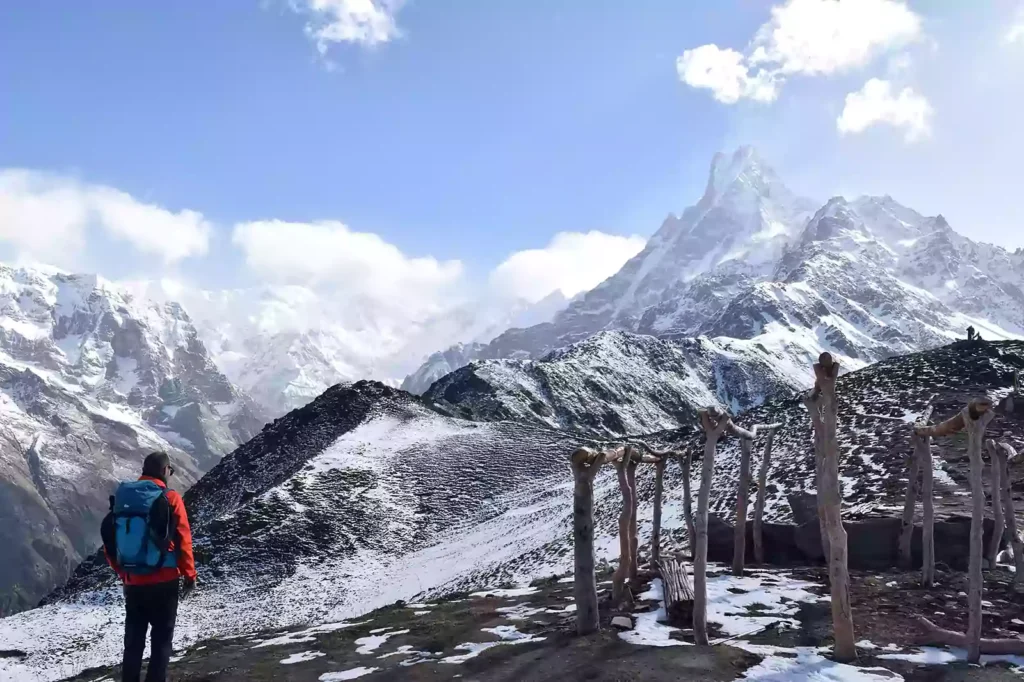
Under the published trekking provisions, Mardi Himal requires a licensed guide and agency-arranged TIMS. If you were hoping to go independently, read our article on solo trekking in Nepal and whether it is safe and legal for the wider picture.
A porter is optional but makes the trek more comfortable if you do not want to carry a full backpack.
These are indicative planning rates, not official government tariffs. For a 6-day trek, a guide alone adds around US150–210 and a porter another US108–150, before additional staff expenses or tips
Ask your operator to clarify the guide’s and porter’s wages, insurance, meals, accommodation, transport and equipment arrangements.
Food and Accommodation Costs on the Trail
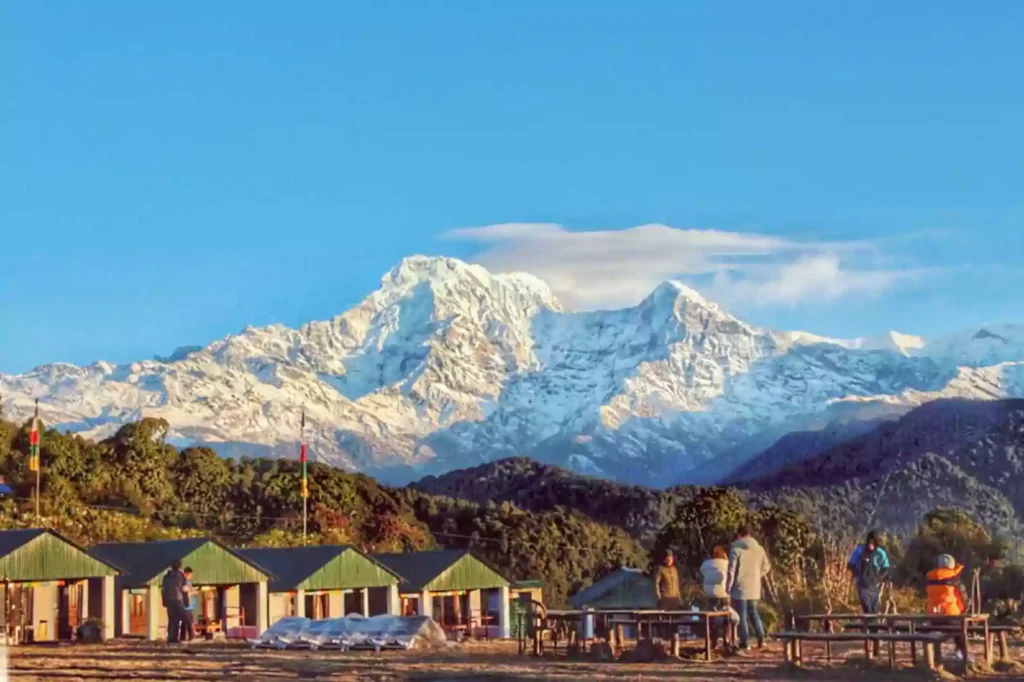
Most trekkers stay in local teahouses along the route. Rooms are simple, and facilities become more basic at higher elevations. If you are new to this style of trekking, our guide to tea house trekking in Nepal explains what to expect.
For budgeting, allow approximately US25–35 per person per day for food and basic accommodation if these are paid separately.
Prices rise with altitude because supplies are carried up on foot. The ladder below is indicative and varies by lodge and season.
Typical expenses include breakfast, lunch and dinner, tea, coffee and drinking water, teahouse rooms, and snacks. A full-board package makes your budget easier to manage. Check whether drinks, snacks, hot showers, Wi-Fi, and device charging are excluded.
Transportation Cost: Kathmandu, Pokhara and the Trailhead
The trek usually begins with travel to Pokhara, followed by a road transfer to a trailhead such as Kande or Phedi, depending on your itinerary.
Confirm whether transport covers both the outward and return journeys. During busy seasons, allow flexibility for delays.
Does the Season Change the Cost?
Package prices can shift with demand, and the season also changes what you spend on the trail.
Extra Expenses to Include in Your Budget
Do not assume standard travel insurance covers high-altitude trekking or helicopter evacuation. Read the policy carefully.
Gear rental in Kathmandu and Pokhara. Renting is usually cheaper than buying for a single trip. Typical daily rental items include a down jacket, sleeping bag, and trekking poles. Rates vary by shop, so ask for a daily price and confirm the deposit.
Cash on the trail. Withdraw enough Nepali rupees in Pokhara before you start. ATMs and card payments are unreliable on the trail, and most teahouses expect cash.
Mardi Himal vs Other Treks: How the Budget Compares
If you are deciding between treks, trip length is the biggest driver of cost, because every extra day adds guide, food, and lodging costs.
How to Reduce Your Mardi Himal Trek Cost
You can keep the trek affordable without cutting corners on safety.
- Choose a group departure. Sharing guide and transport costs lowers the price per person.
- Compare complete packages. Check permits, meals, accommodation, guide services, and transport instead of headline prices.
- Rent equipment you rarely use. Renting in Kathmandu or Pokhara is often cheaper than buying.
- Use a shared vehicle where possible. Private transfers cost more than shared ones.
- Keep a realistic itinerary. A rushed plan can create extra transport costs and make the trek harder.
- Bring your own water purification. Buying bottled water at altitude adds up quickly.
Is a Guided Mardi Himal Trek Worth the Cost?
For most travellers, the guide requirement makes a guided trek the practical option. A licensed guide helps manage the itinerary, explain local culture, coordinate teahouse stays, and respond to changes in weather or trail conditions. A package can also simplify permits, transport, meals, and accommodation.
The value depends on what the company actually provides, so request a written list of inclusions and exclusions before booking.
Nepal Footprint Holiday offers a Mardi Himal Trek package for travellers who want help arranging their trek. The website currently lists a longer itinerary, so confirm the duration, departure date, group size and inclusions when requesting a quote. Do not compare its full itinerary directly with a shorter 5 to 7-day budget.
Plan Your Mardi Himal Trek with Nepal Footprint Holiday
The best way to estimate your 2027 cost is to match the itinerary and service level to your budget. Ask for a clear breakdown of permits, guide and porter services, accommodation, meals, transport and extras.
For a personalised quotation, contact Nepal Footprint Holiday with your preferred dates, number of trekkers, and whether you need a porter or private transport.
Government of Nepal registered · Kathmandu-based · 10+ years guiding experience
Frequently Asked Questions
How much does the Mardi Himal Trek cost in 2027?
A guided Mardi Himal trek of around 5 to 7 days may cost approximately US600–1,100 per person, depending on group size, services, transport and accommodation. Treat this as a planning estimate and request a written quotation to confirm current rates and inclusions.
How much does the Mardi Himal Trek cost per day?
Plan on roughly US100–180 per person per day for a guided package. On-trail costs alone (guide share, food and lodging) are closer to US55–85 per day.
What permits are required for the Mardi Himal Trek?
Trekkers need an Annapurna Conservation Area Permit (ACAP), and the published trekking provisions require a licensed guide and agency-issued TIMS for Mardi Himal. The planning total used here is NPR 5,000 for foreign nationals and NPR 2,000 for SAARC nationals. Confirm current requirements before travelling.
Can I trek Mardi Himal without a guide?
Mardi Himal is listed by the Nepal Tourism Board among routes that require a licensed trekking guide and an agency-issued TIMS card under the published provisions. Arrange these through a registered trekking agency and check the latest rules before your trip.
How many days are needed for the Mardi Himal Trek?
Many itineraries take around 5 to 7 days on the trail, depending on the starting point, walking pace, and route. Allow extra time for travel between Kathmandu and Pokhara, rest days or schedule flexibility.
Is a porter necessary for the Mardi Himal Trek?
A porter is optional, but useful if you prefer to carry a lighter daypack. If you carry your own luggage, make sure you can manage it comfortably on steep trails over several consecutive days.
What is the best time to trek Mardi Himal?
Spring and autumn are generally popular seasons because conditions are often more favourable for mountain views and trekking. Weather can still change quickly at higher elevations, so check current conditions and pack suitable layers.
Is Mardi Himal cheaper than Annapurna Base Camp?
Usually yes, because it is shorter and each extra trekking day adds guide, food, and lodging costs. Compare itineraries and inclusions rather than price alone.
Author: Bashu Dev Thapaliya, Founder of Nepal Footprint Holiday. Working in Himalayan trekking and mountain biking since 1999.
Cost note: The 2027 prices in this article are estimates for planning. Permit rules, service rates, transport costs, and package inclusions may change. Confirm the latest details with official sources and your trekking operator before booking.