

The Everest Base Camp (EBC) trek total cost in 2026 typically falls between US$1,300 and US$2,500 per person for a standard 14–16 day guided teahouse trek with a registered Nepali operator, and can climb toward US$4,000+ for luxury lodges or helicopter add-ons. The final figure depends on package inclusions, group size, season, and how many optional extras (tips, gear, insurance, Kathmandu extensions) a trekker adds on top of the base package price.
If you’re planning your 2026 trip and want a single number to budget around: a well-run, all-inclusive package priced near US$1,800–US$2,000 per person covers the bulk of your trip costs — flights, permits, guide, porter, food, and lodging — and is the range most first-time trekkers should expect to pay when booking with a government-registered local agency.
What’s Actually Included in an EBC Package Price
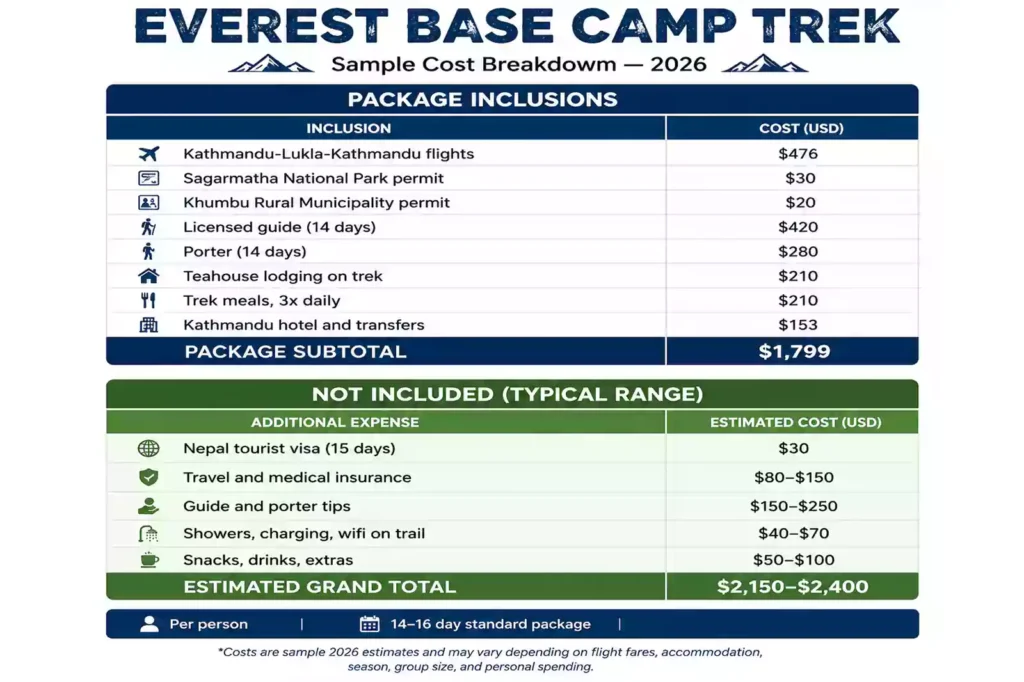
Before breaking down individual cost items, it helps to understand what a typical all-inclusive EBC package covers, since this is where most of the “total cost” confusion happens. A properly built package should include:
- Kathmandu–Lukla–Kathmandu flights (or Ramechhap–Lukla during peak season rerouting)
- Sagarmatha National Park entry permit and Khumbu Pasang Lhamu Rural Municipality permit
- Teahouse accommodation for the full trekking duration
- Three meals a day (breakfast, lunch, dinner) while on trek
- A licensed, English-speaking guide and a porter (usually shared between two trekkers)
- Airport transfers and a standard hotel stay in Kathmandu
- Government taxes and basic first-aid support
Everything outside this list is where the real “extra cost” surprises tend to show up.
Cost Breakdown by Category
1. Domestic Flights (Kathmandu–Lukla)
Round-trip Lukla flights are one of the largest single line items, generally running US$400–US$500 per person when booked independently. Package deals typically fold this into the total price rather than listing it separately, which is one reason bundled packages can work out cheaper than piecing a trip together yourself.
2. Permits and Entry Fees
Permit costs are fixed by the Government of Nepal and don’t fluctuate much year to year:
- Sagarmatha National Park Entry Permit: approximately US$30 per foreign trekker
- Khumbu Pasang Lhamu Rural Municipality Entrance Permit: roughly US$15–20 per person
These are non-negotiable government fees, and any legitimate operator will already have them factored into the quoted package price.
3. Guide and Porter Fees
A licensed guide and porter form the backbone of a safe EBC trek. Full-package prices usually bundle their daily costs, including salaries, food, accommodation, and insurance, rather than charging these expenses separately. Budget travelers who hire guides and porters independently in Kathmandu should still expect these costs to make up a significant portion of a DIY trip. Once you factor in their food and accommodation, the total can approach the cost already included in a full package.
4. Accommodation and Meals
Teahouse rooms on the EBC trail are inexpensive on their own — often just a few dollars a night, since lodges make most of their margin on food. Meals (dal bhat, noodles, soups, hot drinks) get progressively pricier at higher altitude due to portering costs. In an all-inclusive package, this variability disappears since it’s priced into the package rate.
5. Kathmandu Extras
Meals in Kathmandu outside of breakfast, sightseeing entrance fees, and any extra hotel nights before or after the trek are usually excluded from trek packages and paid out of pocket.
Hidden and Optional Costs Trekkers Often Forget
- Nepal tourist visa — around US$30 for a 15-day visa on arrival, separate from the trek cost
- Travel and medical insurance with high-altitude and helicopter evacuation coverage — essential, not optional, and priced by the insurer, not the trek operator
- Hot showers, device charging, and Wi-Fi on the trail — small per-use fees that add up over two weeks
- Bottled or purified drinking water, alcoholic drinks, and desserts — all excluded from standard packages
- Tips for guide and porter — customary and expected, often the single largest “extra” trekkers underestimate
- Excess baggage on Lukla flights beyond the standard 12kg allowance, typically charged around US$3 per kg over the limit
- Personal trekking gear not already owned — down jacket, sleeping bag, boots
Budgeting an additional US$200–US$400 on top of the package price for these combined extras is a realistic planning number for most trekkers.
Budget vs. Mid-Range vs. Premium: What Changes the Total
| Package Tier | Typical Total Cost (per person) | What’s Different |
| Budget/independent | US$1,000–US$1,300 | Shared guide/porter, basic teahouses, no buffer days |
| Standard all-inclusive | US$1,800–US$2,000 | Full board, licensed guide, fixed departures, no hidden fees |
| Premium/private | US$2,500–US$4,000+ | Private guide, upgraded lodges, flexible dates, heli-return option |
Group size also directly affects the per-person cost. Joining a fixed-departure group usually costs less than booking a fully private trek because the group shares flight and guide costs.
Best Time to Trek Everest Base Camp (and How It Affects Cost)
Spring (March–May): The most popular season, with stable weather and clear mountain views. High demand can fill accommodation and flights quickly, so reserve early. However, package prices usually remain consistent with the published rates.
Autumn (September–November): Widely considered the best trekking window, with dry trails, clear skies, and views of Everest, Lhotse, and Ama Dablam. Like spring, this is peak season, so booking a few months ahead secures both dates and the advertised price.
Winter (December–February): Fewer trekkers on the trail and sometimes lower package rates, but cold temperatures and snow require more experience and possibly extra gear costs.
Monsoon/Summer (June–August): The least recommended season due to rain, leeches at lower elevation, and a higher risk of flight delays or cancellations, which can add unplanned hotel nights in Kathmandu or Lukla to the total cost.
Tips to Manage Your EBC Trek Budget
- Book an all-inclusive package rather than arranging flights, permits, and staff separately — bundling almost always costs less than a DIY approach.
- Travel in a small group or join a scheduled departure instead of going fully private.
- Bring or rent gear rather than buying everything new.
- Carry enough Nepalese rupees from Kathmandu, since ATMs become unreliable past Namche Bazaar.
- Set aside a fixed daily cash budget for showers, charging, and snacks so trail extras don’t creep up unnoticed.
Frequently Asked Questions
How much does the Everest Base Camp trek cost in total for 2026?
Most trekkers should budget US$1,800–US$2,500 total per person, including an all-inclusive package plus visa, insurance, tips, and personal extras.
Does the EBC package price include flights to Lukla?
Yes, a properly built all-inclusive package includes round-trip Kathmandu–Lukla flights; only add-ons like helicopter charters or excess baggage cost extra.
What is the highest hidden cost on the Everest Base Camp trek?
Trekkers often underestimate guide and porter tips because the package price excludes them, even though tipping is a well-established practice on the trail.
Government of Nepal registered · Kathmandu-based · 10+ years guiding experience
For trekkers who want the Lukla flights, permits, guide, porter, food, and lodging locked into one transparent number rather than adding it up line by line, our 16-day Everest Base Camp package is priced all-inclusive with no surprises at checkout. Trekkers weighing a shorter, lower-altitude alternative can compare it against the Everest Panorama Trek, while those wanting a scenic detour can look at the Gokyo Lake Trek. If a faster descent matters more than budget, our helicopter return option is worth pricing out before you book. For the exact permit requirements behind these numbers, see our trekking permit guide, and permit fees are set and published by the Nepal Tourism Board, while Lukla flight operations fall under the oversight of the Civil Aviation Authority of Nepal.
Every trekker’s budget looks a little different once boots hit the trail — the fastest way to get a number built around your dates, group size, and comfort level is to talk to the team directly. Inquire Now and Nepal Footprint Holiday will send back a full, itemized quote with nothing left off the page.