

Kathmandu day hiking and heritage tours let first-time visitors combine forest walks, Himalayan viewpoints and historic temples without travelling far from the capital. You can hike from Nagarkot towards Changu Narayan, climb the stone steps to Jamacho Peak, or walk the Shivapuri foothills before visiting a UNESCO World Heritage site.
I recommend choosing one main hike and one nearby cultural area rather than trying to see everything in a single day. Traffic, walking pace, and time spent at temples can change your schedule considerably.
I’m Bashu Dev Thapaliya, founder of Nepal Footprint Holiday. Our Kathmandu-based team organizes walking holidays and cultural tours across Nepal. This guide explains four practical combinations, their altitude, distance, and fees, and how to plan a balanced three-day stay. If you want a longer list of options first, see our guide to the best hiking trips in Kathmandu.
Why combine Kathmandu day hiking and heritage tours?
A morning on a forest trail offers a break from city traffic, while an afternoon among historic temples introduces the religious traditions and craftsmanship of the Kathmandu Valley.
There are three practical benefits:
- Ease into walking: Test your footwear and general fitness before a longer trek. If a bigger trek is next, our Everest Base Camp trek training plan shows how to build on these walks. They do not replace proper acclimatization for high-altitude travel.
- Understand local culture: Village trails, traditional settlements and religious monuments help explain the architecture and customs you meet elsewhere in Nepal. Our guide to spiritual tourism in Nepal adds more context.
- Use your time wisely: Pairing nearby destinations can reduce unnecessary driving, although Kathmandu traffic remains unpredictable.
The Kathmandu Valley contains seven UNESCO World Heritage monument zones, including the Durbar Squares of Kathmandu, Patan and Bhaktapur, along with Swayambhu, Boudhanath, Pashupati and Changu Narayan. See the UNESCO Kathmandu Valley World Heritage listing for the official description.
What are the four best Kathmandu hike-and-heritage combinations?
Walking times below are planning estimates, not guaranteed schedules. Distances depend on the exact trailhead and route, so confirm them with your guide before departure.
1. Nagarkot to Changu Narayan and Bhaktapur Durbar Square
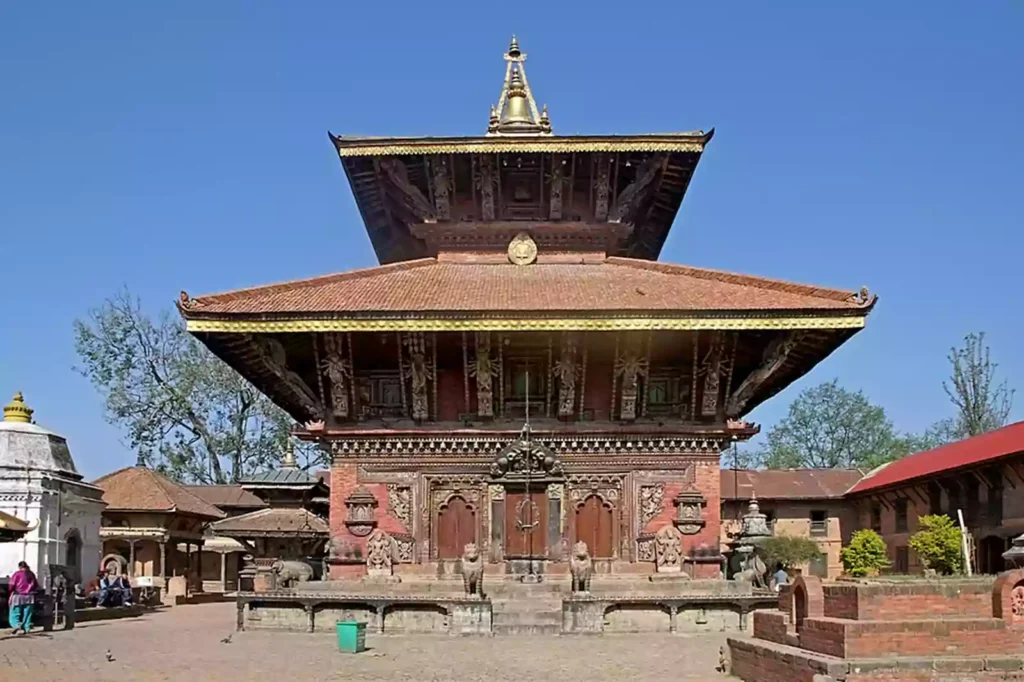
Photo: Gerd Eichmann/Wikimedia Commons
Best for: First-time visitors who want village walking, traditional architecture and a chance of Himalayan views.
Nagarkot sits on the eastern rim of the Kathmandu Valley and is known for mountain panoramas in clear weather. The walk passes terraced farmland, pine woodland and traditional villages. Expect a mix of gradual descents, uneven paths, village tracks and some uphill sections.
At Changu Narayan, explore the temple complex and its carvings. Then continue by road to Bhaktapur Durbar Square, where you can see the Nyatapola Temple and Pottery Square.
This is a one-way trail, so arrange onward transport to Bhaktapur rather than assuming a round trip. Confirm your start and finish points in advance. Winter mornings can be cold, and monsoon rain can reduce visibility and make trails slippery.
2. Jamacho Peak and Swayambhunath Stupa
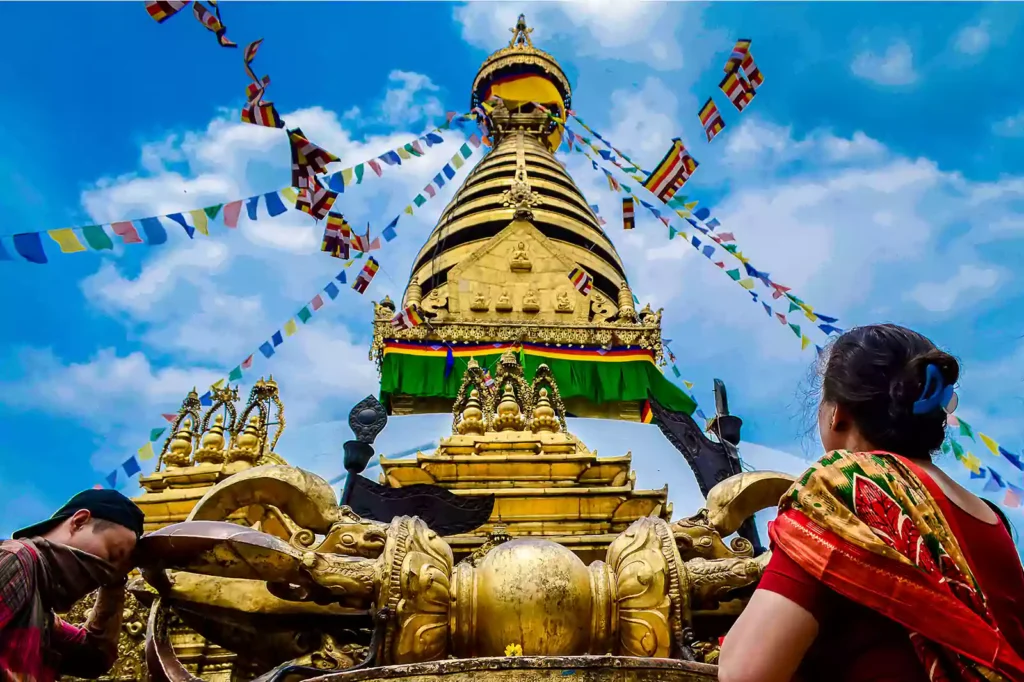
Photo: Raj Dip Lama / Wikimedia Commons
Best for: Travellers staying in Thamel who want a forest hike without a long drive.
The trail climbs through shaded forest inside Shivapuri Nagarjun National Park, with birdlife, stone steps and valley viewpoints, to Jamacho Gumba. Arrange the permit and nature guide before setting off.
If you are not used to uphill walking, finish the hike first and visit Swayambhunath only if you have time and energy left. Wear shoes with good grip, as the steps can be slippery after rain.
3. Shivapuri Forest and Nagi Gompa, followed by Boudhanath
Best for: Travellers interested in forest scenery and Buddhist culture.
Begin near Budhanilkantha and walk through forest to Nagi Gompa, a Buddhist nunnery on the southern slopes of Shivapuri, with prayer flags and valley views. Afterwards, visit Boudhanath Stupa. Walk clockwise with local pilgrims, explore the surrounding monasteries and consider a rooftop café.
Do not confuse this with a longer Shivapuri Peak trek. Routes continuing towards Bagdwar or the summit take much longer, so confirm your turnaround point before starting.
4. Champadevi Hill and Patan Durbar Square
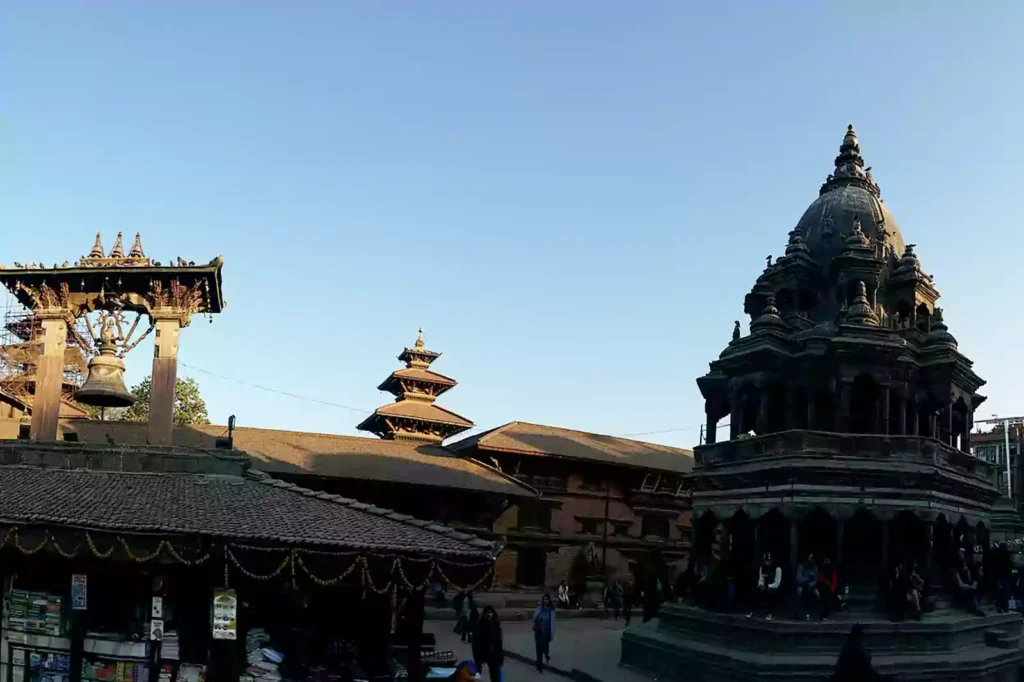
Photo: Harry Paudyal / Wikimedia Commons
Best for: Travellers seeking a forested ridge walk and traditional Newari art.
Routes climb through woodland to a ridge and hilltop shrine, with views over Kathmandu Valley and, on clear days, the Himalayan range. After the hike, visit Patan Durbar Square to see its courtyards, Krishna Mandir area, and the Patan Museum if it is open.
Start early and agree on your return transport before leaving the trailhead. If the hike runs long, prioritize Patan rather than adding more sites.
Which Kathmandu day hike and heritage tour should you choose?
These estimates cover walking only. Allow extra time for road traffic, meals, entry queues and visits to religious sites.
What can you see on a dedicated Kathmandu heritage tour?
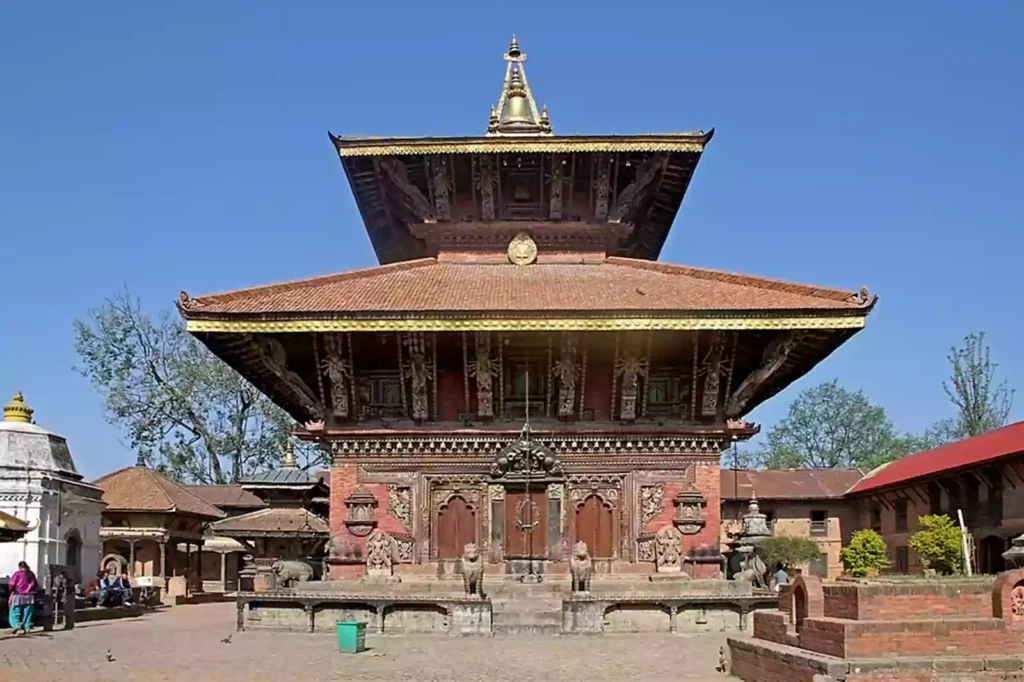
Photo: Avista / Wikimedia Commons
If you prefer not to hike, a heritage day gives a different introduction to the valley.
The Buddhist and Hindu heritage route: Visit Swayambhunath and Boudhanath, then explore the Pashupatinath temple precinct. Non-Hindus cannot enter Pashupatinath’s main temple sanctum, but designated areas outside it give views of the complex and riverside ghats.
The historic royal cities route: Choose Kathmandu Durbar Square, Patan Durbar Square or Bhaktapur Durbar Square. Each has its own architecture, courtyards, and traditions. Visiting all three can be tiring, particularly in heavy traffic.
If this is your first day in Nepal, choose fewer sites and rest after your flight.
How much do Kathmandu heritage sites cost?
Entry fees depend on the site and your nationality. These figures come from the Nepal Tourism Board’s published heritage-fee information and should be rechecked before travel.
Official source: Nepal Tourism Board heritage-site entry fees.
For Shivapuri Nagarjun National Park, the published fee for foreign visitors is NPR 1,000 per person per day, and foreign and SAARC visitors need a nature guide. Check the official national park fee page before departure.
Carry Nepalese rupees for tickets and smaller purchases. Park entry is separate from guide and transport charges.
What is a practical three-day Kathmandu itinerary?
Day 1: Kathmandu heritage.
Visit Swayambhunath, explore Kathmandu Durbar Square and walk through the surrounding historic streets. Keep the afternoon flexible if you are recovering from a long flight.
Day 2: Nagarkot, Changu Narayan and Bhaktapur.
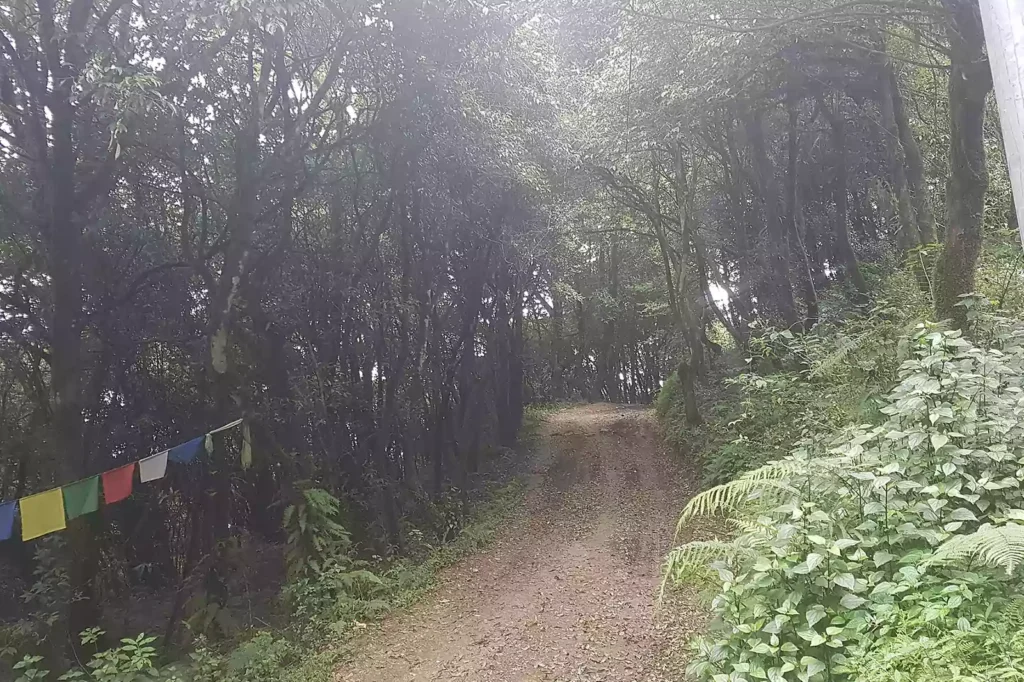
Photo: Shadow Ayush / Wikimedia Commons

Leave early for Nagarkot, walk towards Changu Narayan and continue by road to Bhaktapur. Spend the afternoon in its historic square and streets
Day 3: Forest hike and Buddhist heritage.
Choose Jamacho Peak or the Shivapuri foothills (Nagi Gompa), subject to access and park requirements. If energy permits, visit Boudhanath later in the day.
If you want a more relaxed stay, replace the Day 3 hike with Patan or Boudhanath. To go on to a longer walk, see our guide to short treks in Nepal or the Helambu trek from Kathmandu.
When is the best time for Kathmandu day hiking and heritage tours?
Autumn and spring are generally good for walking and sightseeing. Autumn often brings clearer mountain views, while spring offers warmer conditions and flowering vegetation on some forest trails.
Winter has pleasant afternoons but cold mornings and evenings. During the monsoon, rain makes steps and paths slippery and reduces mountain visibility. Check the forecast before setting out, because a clear morning at Nagarkot or Champadevi does not guarantee clear views all day.
What should you pack for a Kathmandu day hike?
- Drinking water and snacks.
- Comfortable walking shoes with good grip.
- Sunscreen, sunglasses and a hat.
- A light rain jacket or windproof layer.
- Cash for entry tickets, meals and transport.
- A modest layer of clothing for temple visits.
- Your passport or a suitable ID copy, as required for park entry.
These hikes reach roughly 2,100–2,300 m, so altitude problems are uncommon, but individual reactions vary. If you develop a headache with nausea, dizziness, or unusual fatigue, stop ascending and rest. Seek medical advice if symptoms worsen. These walks do not replace the acclimatization days needed on a high-altitude trek.
Frequently asked questions
Do I need a guide for Kathmandu day hikes?
It depends on the route. Shivapuri Nagarjun National Park (including the Jamacho and Nagi Gompa routes) requires a nature guide for foreign and SAARC visitors. Other routes, such as Nagarkot to Changu Narayan, follow village paths with limited signage, and a guide can help with transport for point-to-point walks.
Can beginners do Kathmandu Valley rim hikes?
Yes, with the right choice. Nagarkot towards Changu Narayan suits walkers comfortable spending several hours on their feet. Jamacho Peak and Champadevi involve more sustained climbing, so assess your fitness first.
Is two or three days enough in Kathmandu before an Everest trek?
Yes, for sightseeing and preparation. Use the time to recover from travel, check equipment and take a gentle walk. These activities do not replace the acclimatization days in your trekking itinerary.
Do I need a TIMS card for a day hike around Kathmandu?
Generally not for an ordinary Kathmandu Valley day walk. However, protected-area permits and guide rules may apply to specific routes, so check the requirements for your exact trail.
How far are the Kathmandu day hikes?
Planning estimates are about 8–12 km one way for Nagarkot to Changu Narayan, 8–10 km round trip for Jamacho, 6–10 km round trip for Nagi Gompa, and 10–12 km round trip for Champadevi. Confirm the exact distance for your trailhead.
What should I wear for a Kathmandu hike and temple visit?
Wear comfortable walking clothes, shoes with good grip, and a light layer for cooler hilltops. Carry clothing that covers shoulders and knees for religious sites. You may need to remove your shoes at temple buildings, so footwear that is easy to take off helps.
Plan your Kathmandu day hiking and heritage tour
A well-planned day can take you from a quiet forest trail to a historic temple courtyard, giving you a better understanding of the valley before travelling farther into Nepal.
At Nepal Footprint Holiday, we can help you choose a suitable walk, arrange transport, and combine it with cultural sightseeing based on your time and fitness.
Ready to plan your day?