

The Helambu Trek is the easiest trek in Nepal, starting just one hour from Kathmandu, reaching a maximum altitude of 3,690 m, and requiring no previous trekking experience to complete.
The Helambu Trek is the first route our team suggests to anyone who asks, “Where in the Himalayas should I start?” It sits just 72 kilometres northeast of Kathmandu. You drive to the trailhead at Sundarijal in under an hour, enter Shivapuri National Park, and you are already walking through rhododendron and oak forest with mountain views opening up by day two. There are no long domestic flights, no extreme altitude, and no weeks of preparation required. If you have ever thought about trekking in Nepal but were unsure where to begin, the Helambu Trek is almost always the right answer.
Moreover, the trail passes through some of the most culturally intact villages in the Langtang region. The Hyolmo, Tamang, and Sherpa communities here have kept their Buddhist traditions alive for centuries. For a first-time trekker, that combination of scenery, culture, and easy logistics is genuinely hard to match anywhere else in Nepal.
What Is the Helambu Trek and Why Is It Ideal for Beginners?
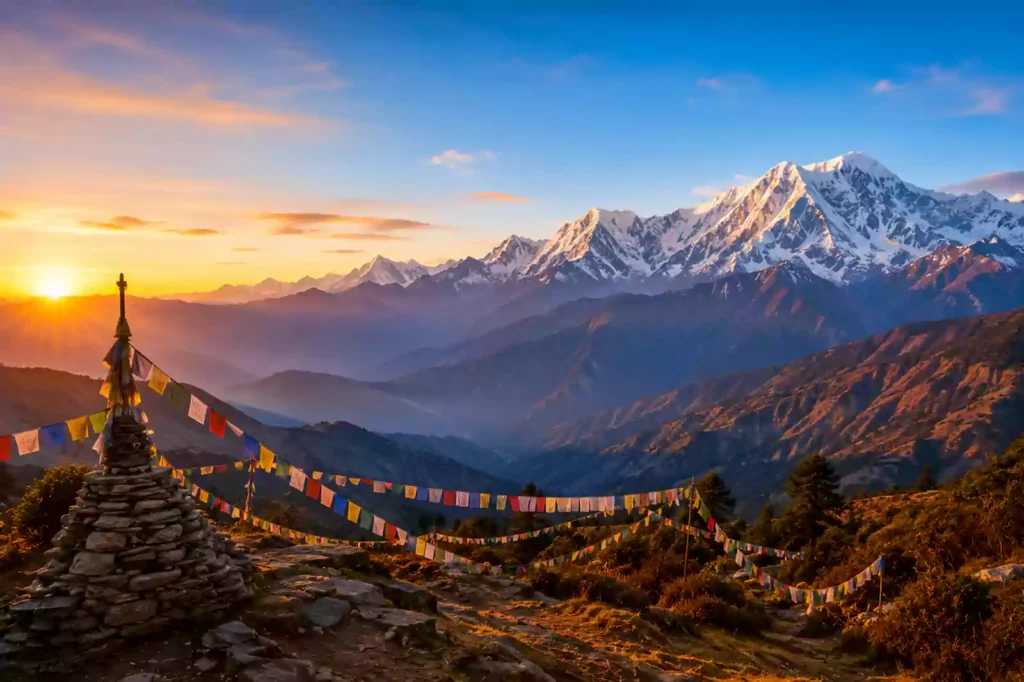
The Helambu Trek is a circular route in the Langtang region that starts at Sundarijal and finishes at Melamchi Pul Bazaar, both within easy reach of Kathmandu. It reaches its highest point at Tharepati at 3,690 m (12,106 ft), which is well below the elevation where serious acclimatisation problems begin. The trail is gradual, the daily walking distances are manageable, and it is the most welcoming entry point into the mountains for anyone doing their first Himalayan trek. Additionally, teahouses and lodges run the full length of the route, so you only need to carry a light daypack.
How Does the Helambu Trek Compare to Other Nepal Treks?
The Helambu Trek demands less time, less money, and far less preparation than its more famous neighbours. Trekkers who finish Helambu and want a bigger challenge the following season often move on to the Langtang Valley Trek, which covers the same region but adds more altitude and distance. However, for a first experience in the Himalayas, Helambu is the clear choice.
What Is the Best Helambu Trek Itinerary?
Our team recommends the full 7-day circuit at a comfortable pace:
- Day 1: Drive Kathmandu to Sundarijal (1,460 m), trek to Chisapani (2,165 m) — 4 to 5 hours
- Day 2: Trek Chisapani to Kutumsang (2,470 m) — 6 to 7 hours
- Day 3: Trek Kutumsang to Tharepati (3,690 m) — 5 to 6 hours
- Day 4: Trek Tharepati to Tarkeghyang (2,743 m) — 5 hours
- Day 5: Trek Tarkeghyang to Sermathang (2,590 m) — 3 to 4 hours
- Day 6: Trek Sermathang to Melamchi Pul Bazaar (870 m), drive to Kathmandu — 3 hours trek, 2 hours drive
- Day 7: Rest or cultural sightseeing in Kathmandu
If you are short on time, a 5-day version is achievable by combining days 4 and 5. In contrast, trekkers who prefer a more relaxed pace can spread the route over 8 days with shorter daily stages. Those who want to extend the trip and visit a sacred alpine lake can combine this with our Langtang Gosainkunda Trek, which links both circuits into one longer journey.
What Will You See and Experience on the Helambu Trek?
Shivapuri National Park and the Chisapani Sunrise
The trek begins inside Shivapuri National Park, where the forest is dense with pine, oak, and rhododendron. Chisapani sits on a broad ridge and offers views of Langtang Lirung (7,246 m), Ganesh Himal (7,422 m), and, on clear days, a distant silhouette of Manaslu. Our guides always time the departure from Kathmandu so trekkers reach the ridge before dusk and are in position for the sunrise the following morning.
Tharepati: The Highest Point on the Helambu Trek
Tharepati at 3,690 m is the highest point on the Helambu Trek and one of the finest viewpoints in the Langtang region. From here, you see Dorje Lakpa (6,988 m), the Jugal Himal, and a sweeping panorama toward the Tibetan plateau. Because the altitude is still moderate, most trekkers sleep well and feel strong the next morning. Consequently, no dedicated rest day is needed here, unlike on routes that push significantly higher.
Tarkeghyang Village and Hyolmo Buddhist Culture
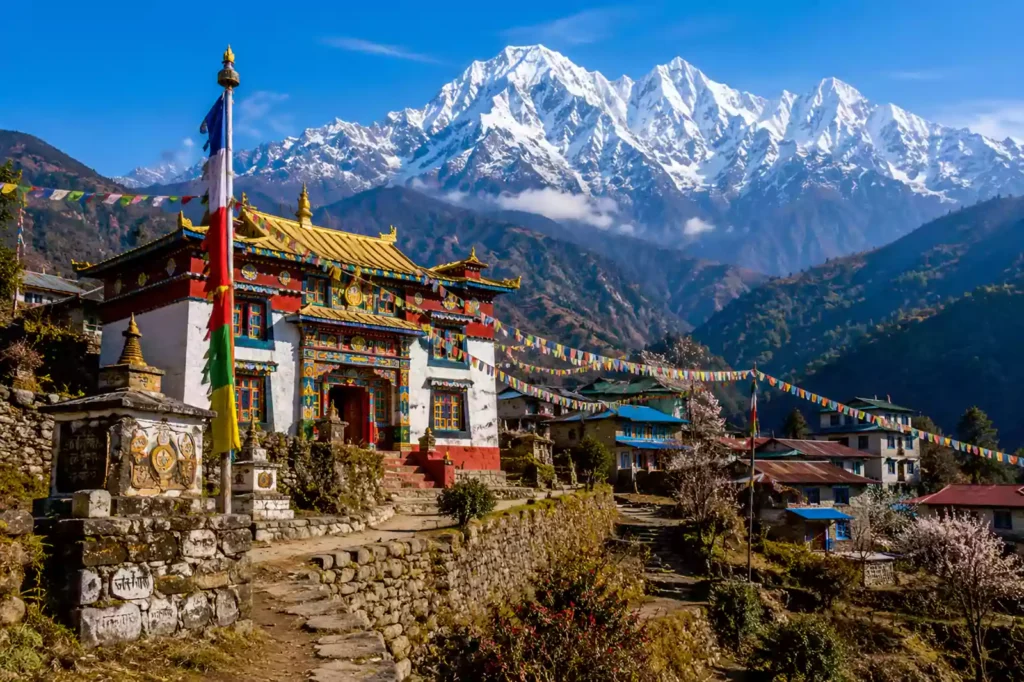
Tarkeghyang is the cultural heart of the Helambu region. The village holds the oldest and largest monastery in the area, and the resident Hyolmo community continues to practise traditional Tibetan-influenced Buddhism. We recommend spending at least one full afternoon exploring the monastery, watching the butter lamp ceremonies, and talking with local monks. Trekkers who are particularly drawn to this kind of immersion also love the Tamang Heritage Trail, which passes through similarly preserved communities in the western part of the Langtang region.
What Permits Do You Need for the Helambu Trek?
Two permits are required for the Helambu Trek. First, you need a Langtang National Park entry permit, which costs NPR 3,000 (approximately USD 22) per person. Second, you need a TIMS card, which costs NPR 2,000 (approximately USD 15) for individual trekkers or NPR 1,000 (approximately USD 8) for group trekkers. Our guides collect all permits at the Sundarijal checkpoint before the first step on the trail. Under Nepal’s 2025 mandatory licensed guide regulation, introduced by the Nepal Tourism Board and TAAN (Trekking Agencies’ Association of Nepal), all foreign trekkers inside national park areas, including the Helambu region, must trek with a licensed, government-certified guide. Our full trekking permit guide walks you through the complete process.
When Is the Best Time for the Helambu Trek?
Spring (March to May) and autumn (September to November) are the two prime seasons for the Helambu Trek. Spring brings rhododendrons in full bloom along the trail from Chisapani to Kutumsang, while autumn delivers the clearest mountain views after the monsoon clears the sky. Winter trekking from December to February is also possible here because the maximum altitude stays below 3,700 m, though temperatures at Tharepati drop to around -5°C at night. The monsoon from June to August brings heavy rain and leeches on the lower trails, and we generally advise against it. Our detailed trekking season guide covers average temperatures and trail conditions for every month across the entire Langtang region.
Is Altitude Sickness a Risk on the Helambu Trek?
Altitude sickness is unlikely on the Helambu Trek because the highest point of 3,690 m is within the range most healthy adults can manage without special acclimatisation days. According to the Nepal Tourism Board, most altitude-related symptoms begin above 2,500 m, and the Helambu Trek spends only a short time near that threshold. Nevertheless, our guides carry pulse oximeters and a basic first-aid kit on every departure. We check oxygen saturation levels at Tharepati and descend immediately if anyone shows early warning signs. Anyone with a pre-existing heart or lung condition should read our altitude sickness advice before making a booking.
How Much Does the Helambu Trek Cost?
A fully guided Helambu Trek with our team costs between USD 500 and USD 800 per person for a private trip, depending on group size and itinerary length. That price covers a licensed guide, one porter for every two trekkers, all teahouse accommodation, three meals per day on trail, national park permits, a TIMS card, and all ground transport. Trekkers who join a group departure pay less. Furthermore, those who want to explore more of Nepal at a lower cost will find several compact options on our short and easy treks page that pair well with a Helambu trip.
“The Helambu region is one of Nepal’s best-kept trekking secrets. It gives first-timers a genuine Himalayan experience without the logistical complexity of the Everest or Annapurna regions.” — Nepal Footprint Holiday senior guide, Langtang region specialist with 12 years of field experience.
Who Should Trek Helambu and What Comes Next?
The Helambu Trek suits a wide range of travellers. Families with children above 10 manage the route without difficulty. Older adults in good general health handle the trail well because the altitude stays low and the daily walking hours are reasonable. First-time trekkers who have been walking regularly for four to six weeks beforehand will find it genuinely rewarding. Moreover, photographers, birdwatchers, and anyone interested in Buddhist culture will find the trail exceptional even without strong trekking ambitions.
After completing Helambu, many of our clients are hungry for more. Those ready to cross high passes and explore glacier terrain move on to the Everest Base Camp Trek or the Annapurna Base Camp Trek, both led by our team year-round. The confidence and fitness you build on the Helambu Trek will carry you far in whichever direction you head next. Send us an inquiry today, and our team will respond within 24 hours with a personalised quote built around your dates and budget.
Frequently Asked Questions About the Helambu Trek
Q1. How difficult is the Helambu Trek for a complete beginner? The Helambu Trek is rated easy to moderate. Daily walking times range from 4 to 7 hours on well-maintained trails with no technical climbing or scrambling required. A beginner who walks regularly for four to six weeks before the trip will complete it comfortably.
Q2. Do I need a guide for the Helambu Trek in 2025? Yes. Under Nepal’s 2025 mandatory licensed guide regulation, all foreign trekkers in national park areas, including the Helambu region inside Langtang National Park, must trek with a licensed, government-certified guide. Nepal Footprint Holiday provides certified English-speaking guides on all departures.
Q3. What is the maximum altitude of the Helambu Trek? The highest point on the Helambu Trek is Tharepati at 3,690 m (12,106 ft). This altitude is low enough that acclimatisation rest days are not required for most healthy adults, making it significantly safer than treks like Everest Base Camp at 5,364 m or the Annapurna Circuit at 5,416 m.