


Bardiya National Park is the place people mean when they say Nepal still has real wilderness in the lowlands. It covers 968 sq km of sal forest, tall grassland, and braided river channels in the far west of the country, and it is home to more than a hundred wild Bengal tigers. There are no crowds of jeeps here, no strip of souvenir shops, and on most mornings the only sound on the trail is a langur coughing an alarm somewhere above you.
If you want a quick answer: Bardiya is the best place in Nepal to look for tigers on foot; it is worth at least three full days, and the best months are October to April, with March to early May giving the strongest sighting odds. The rest of this guide covers what the 2026 tiger census actually found, how to get there, what it costs, a sample itinerary and how Bardiya compares with Chitwan.
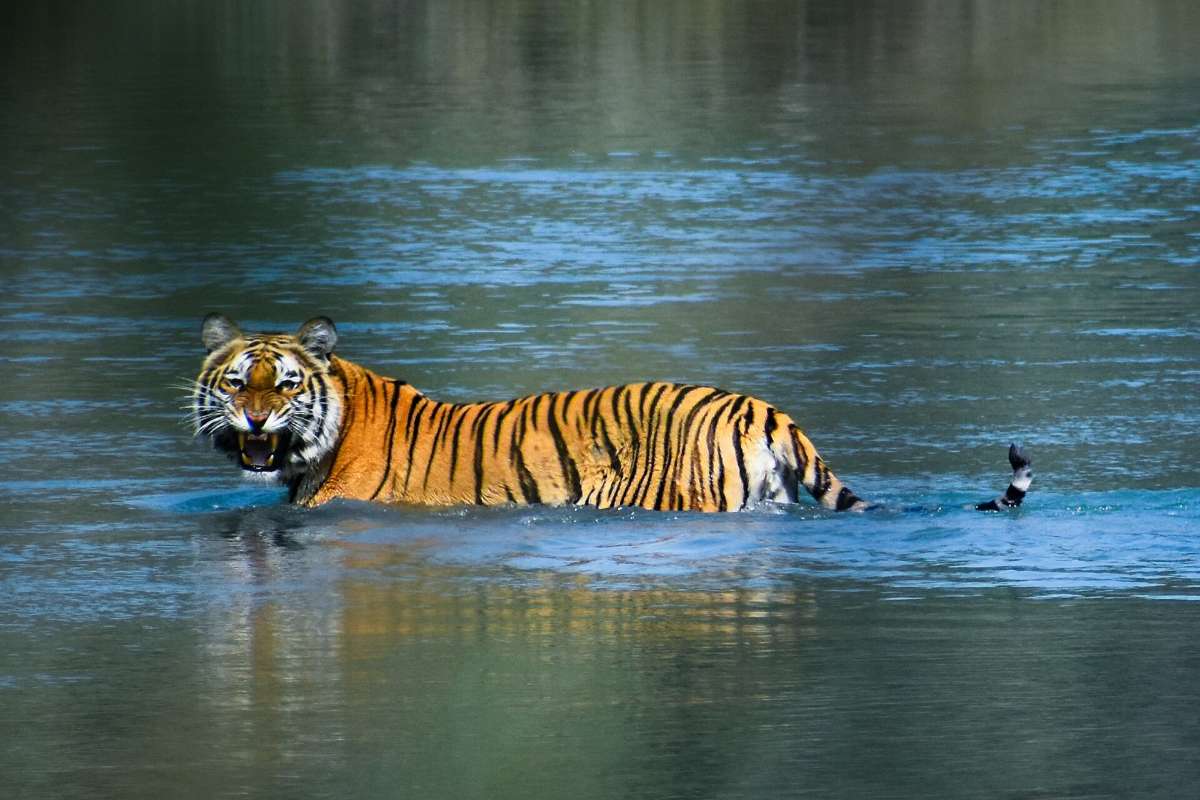
Bardiya National Park at a glance
| Location | Bardiya district, Lumbini Province, western Nepal |
| Area | 968 sq km core park, plus a 327 sq km buffer zone |
| Protected since | 1976 (wildlife reserve), national park since 1988 |
| Tigers | 112 (2026 national tiger census) |
| Gateway village | Thakurdwara, next to the park headquarters |
| Nearest airport | Nepalgunj, about 95 km away |
| Best time | October to April; March to May for tigers |
| Ideal stay | 3 to 5 days |
Where is Bardiya National Park?
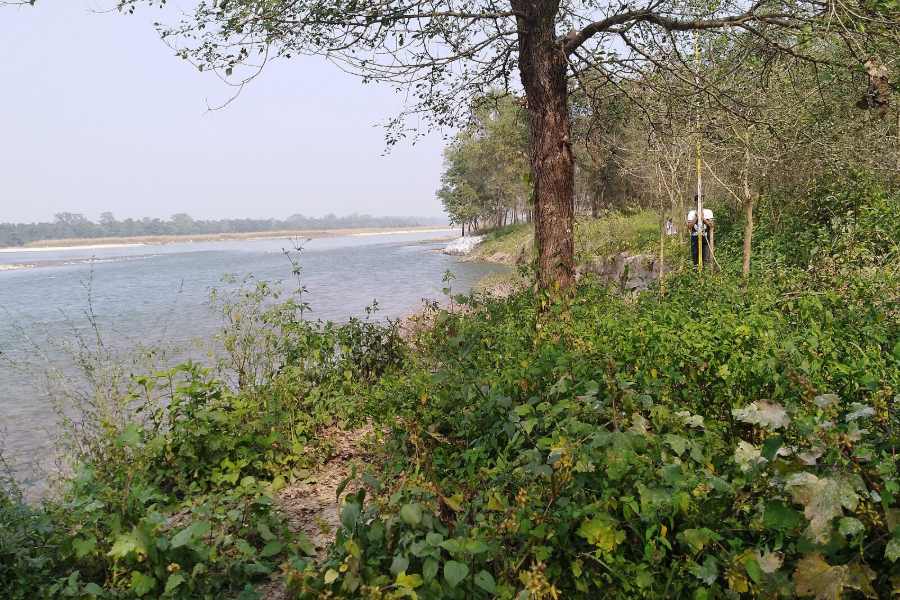
Bardiya sits in the Terai, the flat, hot strip of Nepal that runs along the Indian border. It is the largest undisturbed protected area in the western lowlands, bounded on the west by the Karnali River, Nepal’s longest, and cut through the middle by the Babai River. The northern edge climbs into the low Churia (Siwalik) hills.
The park started life as a royal hunting area. A small section was gazetted as the Karnali Wildlife Reserve in 1976, renamed Bardiya Wildlife Reserve in 1982, extended to take in the Babai valley in 1984 and upgraded to a national park in 1988.
Bardiya also shares a tiger conservation landscape with neighbouring Banke National Park to the east. That detail matters more than it sounds, as you will see in the census numbers below. If you are still getting your bearings, our guide on where Nepal is and how the country is laid out is a useful starting point.
How many tigers are in Bardiya National Park?
Nepal released its latest tiger census on Global Tiger Day, 29 July 2026. The national count rose to 429 wild tigers, up from 355 in 2022. That is close to four times the 121 counted in 2009, which is one of the best conservation stories anywhere in Asia.
Bardiya National Park, though, was the only park where the number fell: 112 tigers, down from 125 four years earlier. Before anyone cancels a trip over that, look at the neighbours. Banke National Park, which is connected to Bardiya through forest corridors, jumped from 25 to 51 tigers. Taken together, the Bardiya and Banke landscape went from 150 tigers in 2022 to 163 in 2026. Tigers do not read park signs, and young animals pushed out of crowded territories move to wherever there is room.
For comparison, the 2026 census counted 145 tigers in and around Chitwan, 71 in Parsa, 51 in Banke and 50 in Shuklaphanta. Bardiya still holds one of the densest tiger populations in the country, and the riverbeds here remain some of the most open, visible tiger habitat in South Asia.
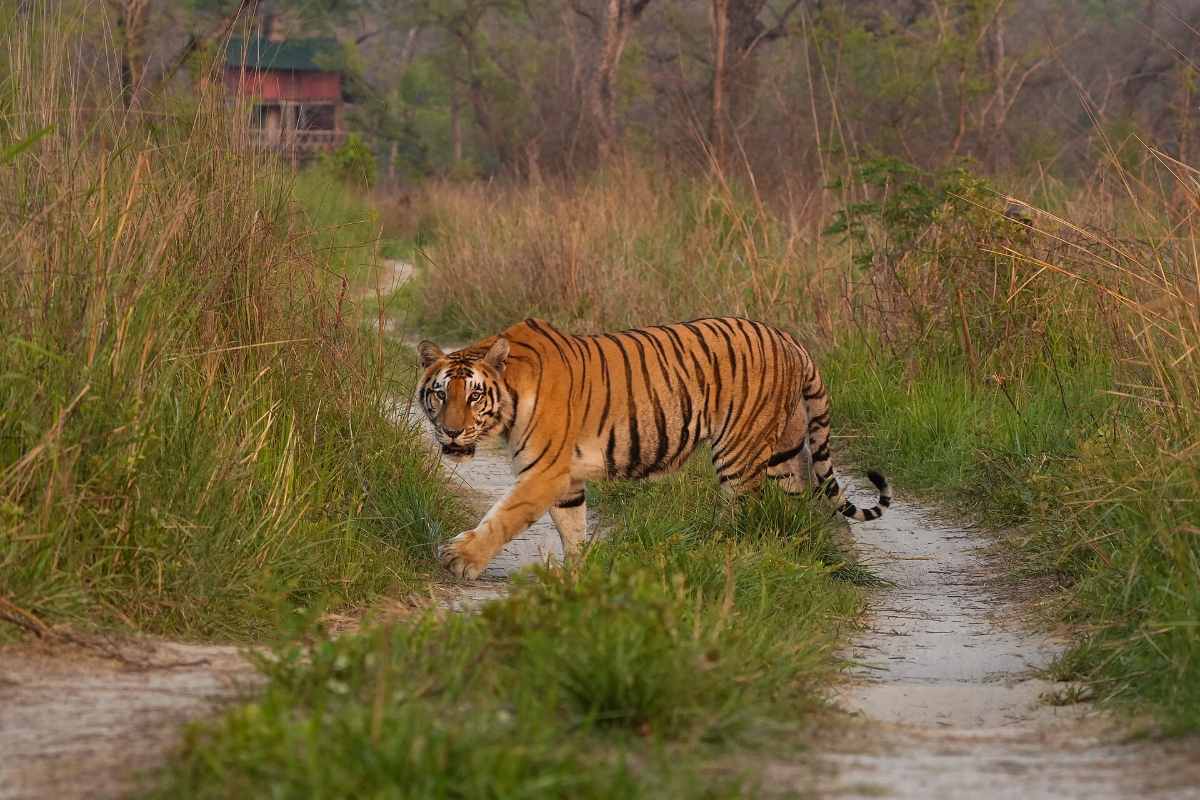
What are your real chances of seeing a tiger?
This is the question everyone asks, so here is the honest answer. A sighting is never guaranteed, and anyone who promises one is selling you something. What Bardiya offers is better-than-average odds if you put in the time.
Most visitors who see a tiger do it in one of two ways. The first is the full-day walking safari, where you spend long hours sitting quietly with your guides on a high bank above a river crossing or waterhole the tigers are known to use. The second is a lucky moment on a jeep drive. Patience is the whole game. Guests who stay two or three nights and commit to at least one full day in the jungle see tigers far more often than people who rush in for a single afternoon drive.
The dry season helps. From March onward, the tall grass is cut or burned back, water sources shrink, and tigers come down to the Karnali and Babai riverbeds to drink and cool off.
Wildlife beyond the tigers
It would be a shame to think of Bardiya only as a tiger park. The official list counts more than 30 large mammal species and over 230 bird species, and independent birding checklists put the total closer to 400. Highlights include:
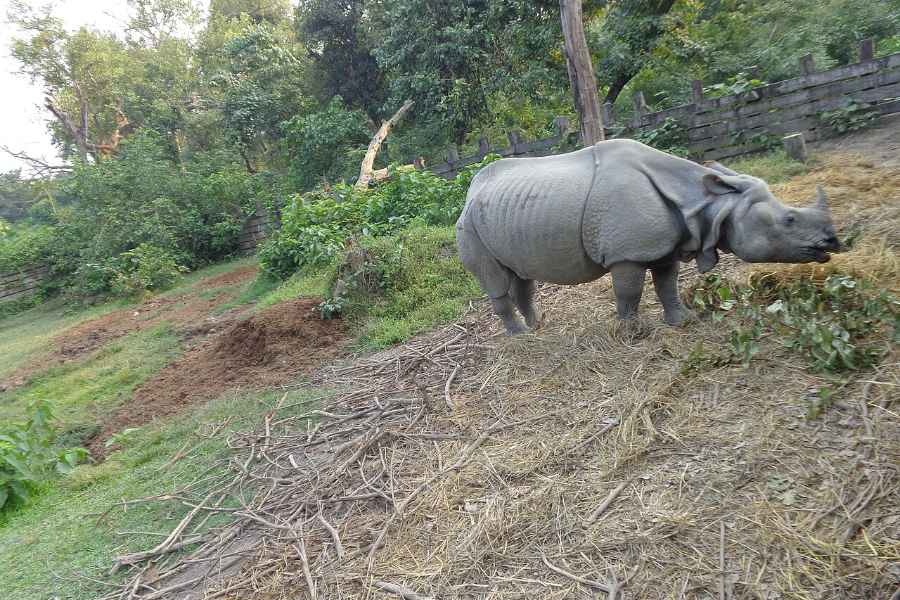
- Greater one-horned rhinoceros: Rhinos were moved here from Chitwan in several batches between 1986 and 2002. They are most often seen in the Babai valley and the grasslands near Khauraha.
- Wild Asian elephants: Bardiya has resident herds and some famously large tuskers. A herd crossing the Karnali is one of the great sights of the Terai.
- Gangetic river dolphin: A small, endangered population survives in the Karnali. Sightings are not common, but early-morning floats on the river give you a fair chance.
- Gharial and mugger crocodiles: Look for the narrow-snouted gharial basking on sandbanks along the Karnali and Geruwa channels.
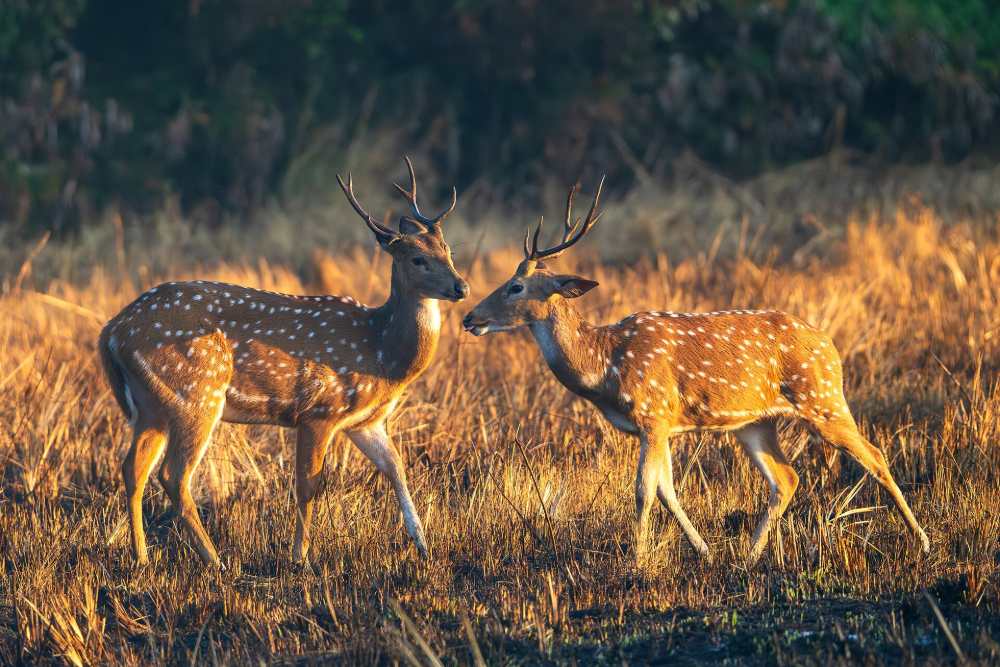
- Deer and antelope: Spotted deer (chital), sambar, hog deer, barking deer and the rarer swamp deer. Blackbuck live in a separate conservation area in the district.
- Birds: Bengal florican, sarus crane, great hornbill, several species of vulture and kingfisher, and huge flocks of migrants in winter.
Best things to do in Bardiya National Park
1. Full-day walking safari
This is what makes Bardiya special. Walking in tiger country with two trained naturalist guides, reading tracks and sitting in silence on a riverbank, is a different experience from watching from a vehicle. Expect to be out from around 7 am to 5 pm with a packed lunch. Wear muted colours, keep your voice low and follow every instruction from your guides. Half-day walks are available if a full day sounds like too much.
2. Jeep safari in the core area
A jeep drive covers more ground and reaches the Babai valley and the grasslands in the north of the park. It is the best option for families, older travellers and photographers carrying heavy lenses. Bardiya kept its jeep routes open through the 2026 monsoon, which many other parks do not, though the experience is far better in the dry months.
3. Karnali River float or rafting
A gentle float down the Karnali, or the Geruwa channel that forms the park boundary, is the best way to look for dolphins, gharials and riverside elephants. Some trips combine the last stretch of a multi-day Karnali whitewater descent with a stay in Bardiya, which makes for one of the most rewarding adventure combinations in Nepal.
4. Tharu village and culture
The Tharu are the indigenous people of the Terai, and their mud-walled homes, painted granaries, and fishing traditions are a big part of what makes a stay here feel personal. Many lodges in Thakurdwara are Tharu-run. An evening stick dance or a walk through a village to see how families live alongside the forest adds real depth to a trip. Look out for Tharu celebrations around Maghi in January, one of many festivals of Nepal worth timing a visit around.
5. Birdwatching and cycling in the buffer zone
Rent a bicycle and ride the quiet village tracks and community forests around Thakurdwara at dawn. You can easily tick off 60 or more bird species in a morning without entering the park. Keen birders can extend the trip east to the Koshi Tappu birdwatching tour for wetland species.
Best time to visit Bardiya National Park
| Season | Months | What to expect |
|---|---|---|
| Autumn | October to November | Fresh, green and pleasant (around 25 to 30°C). Grass is still tall, so sightings are harder. One of the busiest periods. |
| Winter | December to February | Cool, often foggy mornings, warm afternoons. Good for birds and comfortable walking. |
| Spring | March to May | Best tiger odds as grass is cut and animals gather at water. Gets very hot by May, up to about 45°C. |
| Monsoon | June to September | Heavy rain, high rivers, leeches, and limited walking. Very few visitors. Only for the committed. |
Our pick for most travellers is late February to mid-April: comfortable enough to spend all day outdoors and dry enough for good wildlife viewing.
How to get to Bardiya National Park
By air (recommended): Fly from Kathmandu to Nepalgunj. The flight takes about 50 minutes, and several domestic airlines run multiple daily departures. From Nepalgunj, it is roughly 95 km, or about two and a half to three hours by road, to Thakurdwara. Most lodges arrange a pickup.
By road from Kathmandu: Buses to Nepalgunj or Ambassa take 12 hours or more, sometimes much longer with traffic and roadworks. It is cheap, but it eats a whole day each way.
From Lumbini, Chitwan or Pokhara: Bardiya pairs naturally with Lumbini, roughly five to six hours east by road. A private vehicle gives you the flexibility to stop along the East–West Highway. Our Kathmandu, Chitwan and Lumbini tour can be extended west to Bardiya for a complete lowlands circuit.
Bardiya National Park entry fees and trip costs
The Nepal Tourism Board lists the park entrance fee as NPR 1,000 per person per day for foreign visitors, NPR 500 for SAARC nationals and NPR 50 for Nepali citizens. Fees for protected areas are revised from time to time and VAT may be added, so check the current rate before you travel or let your operator handle permits.
On top of the entrance fee, budget for:
- Guides: Walking safaris require licensed naturalist guides, normally two per group. Full-day rates are higher than half-day rates and are usually shared across the group.
- Jeep hire: Priced per vehicle, so it is much cheaper when split between four to six people.
- Accommodation: Thakurdwara has everything from simple family-run Tharu guesthouses to comfortable eco-lodges and a handful of high-end resorts.
- Transport: A return flight to Nepalgunj plus road transfers is the highest single cost for most visitors.
For a broader look at daily budgets across the country, see our breakdown of what a trip in Nepal really costs. If you would rather not juggle permits, guides and transfers yourself, our Bardia wildlife safari package bundles everything into one price.
Sample 4-day Bardiya safari itinerary
Day 1: Kathmandu to Bardiya. Morning flight to Nepalgunj and drive to Thakurdwara. Afternoon visit to the park headquarters and the crocodile and turtle breeding centre, then a sunset walk along the buffer zone.
Day 2: Full-day walking safari. Head into the park at first light with your guides and a packed lunch. Spend the day tracking and waiting at known tiger crossings along the Karnali and its side channels.
Day 3: Jeep safari to the Babai Valley. A full-day drive into the heart of the park, with the best chance of rhinos, elephants, and swamp deer. Evening Tharu cultural programme.
Day 4: River float and departure. Early-morning float on the Geruwa or Karnali to look for dolphins and gharials, then drive back to Nepalgunj for your flight.
Bardiya vs Chitwan: which park should you choose?
| Bardiya National Park | Chitwan National Park | |
|---|---|---|
| Tigers (2026) | 112 | 145 |
| Getting there | 50-minute flight plus a 3-hour drive | About 5 to 6 hours by road, or a short flight to Bharatpur |
| Crowds | Quiet, few vehicles | Busy, especially around Sauraha |
| Signature activity | Full-day walking safaris | Jeep safaris and canoe trips |
| Rhinos | Present, harder to find | Very easy to see |
| Best for | Serious wildlife lovers with time | First-timers and short trips |
If you only have two days and want guaranteed rhinos, Chitwan jungle safari is the easier choice. If tigers are the dream and you have at least three or four days, Bardiya wins.
Safety and responsible travel in Bardiya
Walking in tiger and elephant country is safe when it is done properly, and that means going with experienced, licensed guides and listening to them. Stay together, never wander off for a photo, and do not walk at night outside your lodge grounds. Human–wildlife conflict is a real issue for the villages around the park, so respect fences and local advice.
We also strongly recommend skipping elephant-back rides. We explain why in our article on ending elephant-back safaris in Nepal. Choose Tharu-run lodges, hire local guides and buy from village shops so that the money from your visit supports the people who live with the tigers every day. For general advice, read our guide on whether Nepal is safe to visit.
What to pack for a Bardiya safari
- Clothes in green, khaki or brown. Avoid white, red, and bright colours.
- Comfortable closed walking shoes and long trousers for the grass.
- Binoculars and a camera with a zoom lens of at least 300 mm if you are serious about photos.
- Sun hat, sunscreen, and a refillable water bottle.
- Insect repellent, especially from April onward.
- A warm layer for foggy winter mornings in December and January.
- Cash in Nepali rupees, as ATMs near the park are limited.
Do not forget to sort out your Nepal visa before you fly in.
Plan your Bardiya National Park safari with a local team
Bardiya rewards people who slow down. Give it a few days, walk with good guides, and stay open to whatever the jungle decides to show you. Our team can arrange flights, permits, naturalist guides, and a lodge that suits your style and budget. Explore the Bardia Wildlife Safari itinerary or contact us to build a custom trip.
Frequently asked questions about Bardiya National Park
Is Bardiya National Park worth visiting?
Yes, especially if wildlife is your priority. It is quieter and wilder than Chitwan and is widely considered the best place in Nepal to look for wild tigers on foot.
How many days do you need in Bardiya?
Plan on at least three nights. That gives you one full-day walking safari, one jeep safari, and time for a river float or village visit. Four or five nights improves your tiger odds noticeably.
Is Bardiya or Chitwan better for seeing tigers?
Chitwan has slightly more tigers, but Bardiya is generally considered better for sightings because of its open riverbeds, smaller visitor numbers, and focus on long walking safaris.
Can you visit Bardiya National Park in the monsoon?
You can, and jeep routes stayed open during the 2026 monsoon, but heavy rain, high rivers, and dense vegetation make wildlife viewing difficult. October to April is a far better choice.