


Larkya La Pass is the highest point of the Manaslu Circuit Trek, at approximately 5,100 metres (16,732 feet). It connects the upper Budhi Gandaki Valley with the Bimthang side of the route in the Manang region of Nepal. The crossing is not a technical climb in normal conditions, but it is a demanding day because of the altitude, cold, early start and long descent.
The pass is also known as Larke La or Larke Pass. Most trekkers cross it after spending nights in Samagaun, Samdo, and Dharamsala. Good acclimatization and suitable weather matter more than walking speed.
If you are planning this trek, understand the crossing day before choosing your itinerary. It is the most demanding part of the circuit for many trekkers.
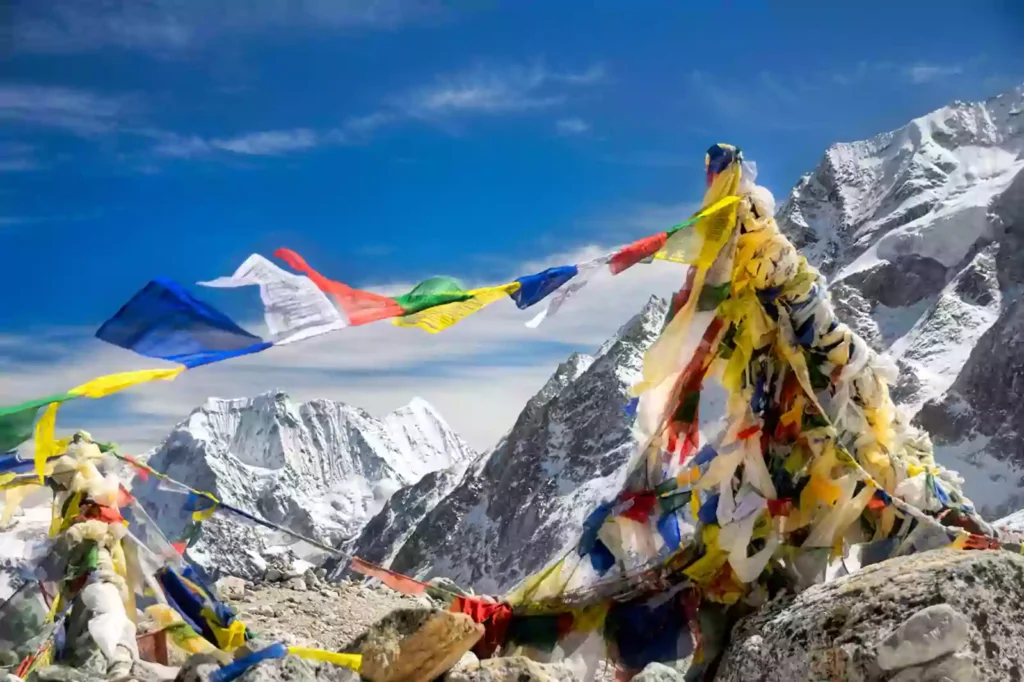
Where is Larkya La Pass?
Larkya La Pass lies in the Manaslu region of north-central Nepal, close to the Tibetan border. It sits within the Manaslu Conservation Area and forms the high point of the Manaslu Circuit route between Gorkha and Manang.
The trail approaches the pass from the Budhi Gandaki Valley. After crossing the summit, trekkers descend towards Bimthang and continue towards Dharapani.
The usual route follows this sequence:
Samagaun → Samdo → Dharamsala → Larkya La Pass → Bimthang
The pass is not a separate trekking destination. It is a major crossing on the longer Manaslu Circuit.
How high is Larkya La Pass?
Larkya La Pass is commonly listed at 5,106 metres (16,752 feet). However, some trekking operators publish 5,160 metres (16,929 feet). Because published figures differ, it is more accurate to describe the pass as approximately 5,100 metres high rather than present one disputed figure as exact.
The elevation makes it a serious high-altitude crossing. Trekkers should allow enough time for acclimatization before reaching Dharamsala.
Approximate Manaslu Circuit elevation profile
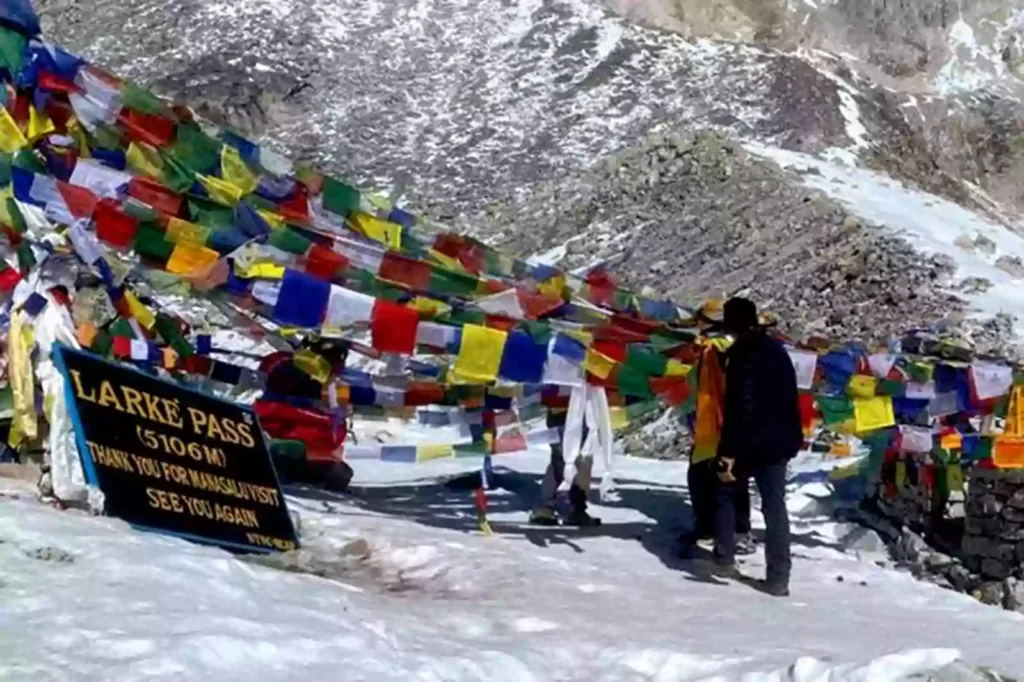
These are planning elevations, not a surveyed GPS profile. Published figures vary between maps and trekking sources, particularly for the pass and Bimthang.
The important point is the change in sleeping altitude. You move from Samdo to a much higher overnight stop at Dharamsala before crossing the pass. Plan the approach carefully rather than treating the summit elevation as the only altitude concern.
How difficult is Larkya La Pass?
Larkya La Pass is a strenuous high-altitude trek, but it is not normally a technical mountaineering climb. The difficulty comes from walking for many hours above 4,000 metres, reaching roughly 5,100 metres and descending a long way on tired legs.
Snow, ice, wind and poor visibility can make the crossing harder. Conditions change from season to season, so the guide’s assessment on the day matters.
The main challenges are:
- Altitude: The reduced oxygen level makes ordinary walking feel harder.
- Long walking day: The crossing from Dharamsala to Bimthang commonly takes around 8–10 hours, sometimes longer.
- Early start: Groups often leave before sunrise to allow enough daylight for the descent.
- Cold and wind: Conditions near the pass can be much colder than in the lower villages.
- Long descent: The trail drops steeply from the pass towards Bimthang. This can be hard on knees and ankles.
- Snow and ice: These can affect the route, especially after fresh snowfall or during less stable weather.
You do not need technical climbing experience for a normal trekking-season crossing. However, previous multi-day hiking experience is useful. A trekker should be comfortable walking for several consecutive days and should prepare for a long day at altitude.
What happens on the Larkya La crossing day?
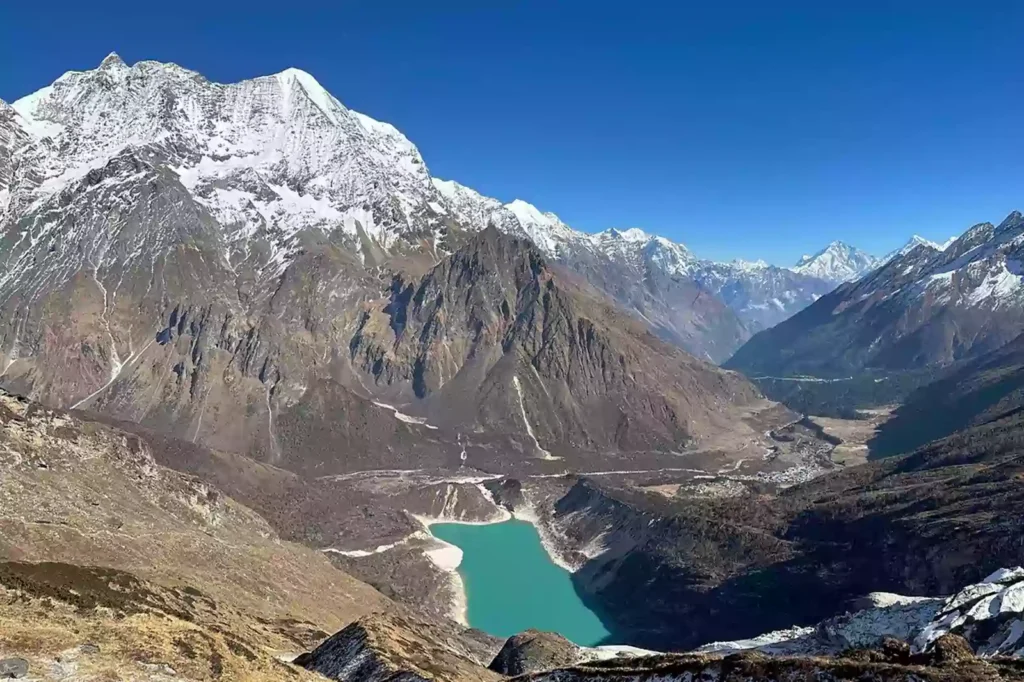
The crossing day usually begins at Dharamsala, also called Larkya Phedi, and finishes at Bimthang. Trekkers leave early, climb towards the pass and then descend to the lower valley on the other side.
The exact walking time depends on snow, weather, trail conditions, group pace and individual acclimatization. Do not plan the day around a guaranteed arrival time.
1. Early departure from Dharamsala
Most groups begin before sunrise. Your guide will decide the departure time after checking the weather and trail conditions.
Have your warm layers, headlamp, gloves, water and snacks ready the night before. Eat breakfast if possible, even if you do not feel very hungry.
2. Climb towards the pass
The trail gradually gains height through exposed mountain terrain. Walking becomes slower as the altitude increases.
Keep a steady pace. Avoid rushing to catch up with faster trekkers. Short breaks can help, but long stops in cold and exposed areas are not ideal.
3. Reach the Larkya La summit
At the top, you will find prayer flags and views of the surrounding Himalayan peaks. The summit is an important milestone, but do not spend too long there if the weather is deteriorating.
Take photographs, adjust your clothing and follow your guide’s instructions before starting the descent.
4. Descend towards Bimthang
The descent is long and can be difficult on tired legs. Depending on conditions, the trail may include loose ground, rocky sections and snow or ice.
Use trekking poles if you are comfortable with them. Take care with every step, especially where the trail is slippery.
Bimthang is the overnight destination after the crossing. Reaching it means you have completed the highest and most demanding section of the Manaslu Circuit.
What happens if bad weather stops the crossing?
A crossing should not continue simply because it is already part of the itinerary. Heavy snowfall, strong wind, poor visibility or unsafe trail conditions can make the pass unsuitable.
Your guide should check local conditions before leaving Dharamsala. If conditions are unsafe, the group may need to wait at a lower stop or return along the approach route.
A sensible itinerary includes spare days. These provide flexibility if snow, weather or health problems delay the crossing.
Before departure, ask your trekking agency:
- How does the guide check conditions before crossing?
- What happens if the pass is not safe?
- Is there spare time in the itinerary?
- What emergency and evacuation arrangements are in place?
- Who makes the final decision to continue or turn back?
There is no universal turnaround time that suits every group. The decision depends on weather, visibility, the condition of the trekkers and the guide’s assessment.
Do not attempt to cross a closed or unsafe pass independently.
What is accommodation like at Dharamsala and Bimthang?
Dharamsala is a basic overnight stop before the pass. Accommodation and facilities are limited compared with larger villages on the lower Manaslu trail. Rooms can be simple, and demand can be high during busy trekking periods.
Bring a suitable sleeping bag and do not expect the comfort or services available in Kathmandu. Confirm the accommodation arrangements with your agency before travelling.
Bimthang is the overnight stop after the pass. It has teahouse accommodation, but facilities remain basic by city standards.
A teahouse is a local mountain lodge that provides meals and simple rooms. Availability, room standards and services can vary by season.
When is the best time to cross Larkya La Pass?
The main trekking seasons for Larkya La Pass are spring and autumn. March to May and late September to November are generally the most suitable planning periods, although actual conditions vary each year.
Autumn is a popular choice, but it is not a guarantee of good weather. Spring can also offer suitable conditions, depending on snowfall and the timing of your trek.
For a wider seasonal overview, see our guide to the best time to trek in Nepal.
How do you prepare for altitude sickness on Larkya La?
Altitude sickness is a real risk on the Manaslu Circuit because the route climbs well above 3,000 metres. Symptoms can include headache, nausea, dizziness, unusual tiredness and loss of appetite. Fitness does not prevent altitude sickness.
The most useful preparation is a sensible itinerary that allows gradual ascent and enough time to acclimatize.
Keep these points in mind:
- Follow an itinerary with suitable acclimatization time around Samagaun and Samdo.
- Do not rush the ascent to Dharamsala.
- Tell your guide if you develop symptoms.
- Do not continue ascending or sleep higher when you have symptoms of altitude sickness.
- Descend if symptoms worsen, and seek urgent medical help for serious symptoms.
Confusion, loss of coordination, difficulty walking or breathlessness at rest are warning signs that require urgent attention. Do not try to solve serious symptoms by simply resting at the same altitude.
The CDC recommends gradual ascent and advises travellers to avoid ascending to a higher sleeping altitude when symptoms are present. Read its high-altitude travel and altitude illness guidance.
If you have a heart, lung or other relevant medical condition, discuss high-altitude travel with a doctor before booking.
For more information, read our guide to altitude sickness in Nepal.
What should you pack for the Larkya La crossing?
The right equipment helps you stay warm, comfortable and prepared for changing conditions. Pack for a cold early start, a long walking day and a steep descent.
Your crossing-day essentials should include:
- Warm down jacket and insulating layers
- Waterproof and windproof outer jacket and trousers
- Warm gloves, hat and neck covering
- Headlamp with spare batteries
- Broken-in trekking boots with good grip
- Trekking poles
- Sunglasses and sun protection
- Water bottle or hydration system
- Snacks and a packed lunch
- Personal medication and a small first-aid kit
- Sleeping bag suitable for cold mountain nights
Microspikes may be useful when snow or ice affects the trail. They are not automatically required every season. Ask your guide about current conditions before deciding whether to carry them.
See our Nepal trekking equipment list for a broader packing guide.
Larkya La Pass vs Thorong La Pass: Which is harder?
Thorong La Pass is higher than Larkya La. Thorong La is commonly listed at 5,416 metres, while Larkya La is usually listed at approximately 5,100 metres. However, height alone does not decide which crossing feels harder.
Some trekkers find Larkya La more demanding because of the long descent and more limited facilities. Others find Thorong La harder because it reaches a higher altitude.
There is no reliable universal ranking. Your acclimatization, weather, fitness and previous trekking experience will influence how difficult either pass feels.
You can also read our Thorong La Pass crossing guide.
What permits do you need for Larkya La Pass?
Foreign trekkers on the Manaslu Circuit need a Restricted Area Permit for the Manaslu section, as well as the relevant conservation area entry permits. The trek must be arranged through a registered trekking agency and accompanied by a licensed trekking guide.
The Department of Immigration’s current published Manaslu Restricted Area Permit rates are:
The Nepal Tourism Board lists the Manaslu Conservation Area entry fee for foreign visitors at NPR 3,000. The Annapurna Conservation Area entry fee is also NPR 3,000 for foreign visitors. The route continues towards the Annapurna region after Bimthang, so confirm the applicable permits for your full itinerary.
Permit fees and rules can change. Check the Department of Immigration’s trekking route and permit fee page and the Nepal Tourism Board’s protected-area entry fees before departure.
Solo trekkers can now apply for a restricted-area permit. The rule changed in March 2026. However, solo foreign trekkers must still arrange the trek through a registered agency and travel with a licensed guide. The Department of Immigration also introduced a maximum of seven trekkers per guide.
For more details, see our Manaslu Restricted Area Permit guide.
Planning to trek the Manaslu Circuit? Explore our Manaslu trekking package for itinerary details, permit arrangements and local trekking support.
Is Larkya La Pass suitable for beginners?
Larkya La is not the best choice for someone with no trekking experience or preparation. It is a demanding high-altitude crossing with a long walking day and limited facilities near the pass.
However, a beginner who has built good endurance, completed multi-day hikes, and follows a carefully planned itinerary may be able to prepare for it. Previous experience at altitude is helpful, but it does not guarantee that you will avoid altitude sickness.
Before booking, consider your health, fitness, available time, and willingness to walk in cold conditions. Do not choose a rushed itinerary simply to reduce the number of days.
Final advice for crossing Larkya La Pass
Larkya La Pass is the defining challenge of the Manaslu Circuit. Its height is only one part of the difficulty. The long day from Dharamsala, cold conditions, changing weather, and descent to Bimthang all deserve serious preparation.
Plan enough acclimatization time, use a licensed guide, and keep flexibility in your itinerary. If conditions are unsafe, wait or turn back rather than forcing the crossing.
Plan Your Manaslu Circuit Trek With a Local Team
At Nepal Footprint Holiday, we plan Manaslu trips around your group’s pace, acclimatization needs, and local trail conditions. If you are considering the circuit, contact our Kathmandu team to discuss the route and a suitable itinerary.
Prefer to speak directly? Call us at
+977-1-4701091 or +977-9841459861.
Frequently Asked Questions About Larkya La Pass
1. How high is Larkya La Pass?
Larkya La Pass is approximately 5,100 metres (16,732 feet) above sea level. Many sources list it at 5,106 metres, while some trekking operators use 5,160 metres. The published figures differ, so it is better to treat the elevation as approximate when planning your trek.
2. How difficult is Larkya La Pass?
Larkya La Pass is a strenuous but normally non-technical trekking crossing. The main challenges are high altitude, cold weather, an early start, and a long descent. Trekkers need good endurance, suitable acclimatization, and a guide who can assess changing trail conditions.
3. How long does it take to cross Larkya La Pass?
The crossing from Dharamsala to Bimthang often takes around 8–10 hours, although some groups take longer. Walking time depends on weather, snow, trail conditions, fitness and group pace. Start times are usually early so trekkers have enough daylight for the descent.
4. When is the best time to cross Larkya La Pass?
The best planning periods are generally spring, from March to May, and autumn, from late September to November. Autumn is popular for clearer mountain views. However, snow and weather can change quickly, so check local conditions before attempting the crossing.
5. Is Larkya La Pass harder than Thorong La Pass?
Larkya La is lower than Thorong La, which reaches approximately 5,416 metres. However, some trekkers find Larkya La harder because of its long descent and more remote setting. The more difficult pass depends on your acclimatization, experience, weather, and physical condition.
6. Can beginners do the Larkya La Pass trek?
Yes, some beginners can prepare for the Larkya La Pass trek, but it is not an easy first trek. You should build endurance through regular hiking and follow an itinerary with enough acclimatization time. Previous multi-day trekking experience is helpful before attempting this high pass.
7. Do you need a guide for Larkya La Pass?
Yes, foreign trekkers must arrange the Manaslu restricted-area trek through a registered trekking agency and travel with a licensed trekking guide. This requirement remains in place even after Nepal allowed individual foreign trekkers to apply for restricted-area permits in March 2026.
8. Can you get altitude sickness on Larkya La Pass?
Yes, altitude sickness can develop on the Manaslu Circuit because the route reaches approximately 5,100 metres. Common symptoms include headache, nausea, dizziness, and unusual tiredness. Do not ascend higher when symptoms appear. If they worsen, descend and seek medical assistance.
9. What should you wear for the Larkya La Pass crossing?
Wear layered clothing that protects you from cold, wind, and possible snow. A warm down jacket, insulating layers, waterproof outerwear, gloves, a warm hat, and suitable trekking boots are important. Carry a headlamp, sunglasses and trekking poles for the early start and long descent.
10. What happens if Larkya La Pass is closed because of snow?
If snow, wind, or poor visibility makes the pass unsafe, your guide may delay the crossing or return the group to a lower settlement. The exact decision depends on local conditions. Keep spare days in your itinerary and never attempt an unsafe crossing independently.
Author: Bashu Dev Thapaliya, Founder and Director of Nepal Footprint Holiday. Bashu has worked in Himalayan trekking and mountain biking tours since 1999, guiding and organizing trips across Nepal, Tibet, and Bhutan.