

Ghorepani Poon Hill is one of the best choices for a 7 days trek in Nepal if you are travelling from Kathmandu and want a relatively comfortable itinerary. Mardi Himal suits fitter trekkers looking for closer mountain views, while Khopra Ridge offers quieter trails. Langtang Valley has reopened through alternative trails after the August 2026 flood, but we recommend allowing at least eight days.
A 7 days trek in Nepal can take you through rhododendron forests, traditional Gurung and Magar villages, and high Himalayan viewpoints. The route you choose matters more than the mountain you have heard of.
First, decide what you mean by seven days. Do you have seven days on the trail, or seven days in total from Kathmandu and back? Most travellers mean the second. Domestic flights, road journeys and transfers to the trailhead all use part of that week. In practice, you may have only four or five days of walking.
Having worked in Himalayan trekking since 1999, I have learned that the best short trek is not necessarily the one that reaches the highest altitude. It is the one that gives you enough time to enjoy the mountains without rushing every day.
Here are the best options for travellers planning a one-week trek in Nepal in 2027.
Best 7 Days Trek in Nepal: Quick Comparison
If you have seven days in total, including travel from Kathmandu, compare transport and walking time before choosing a route.
Altitudes and durations can vary slightly with the exact itinerary and viewpoint. A seven-day schedule does not suit every traveller equally. Some routes require an early domestic flight and leave little room for delays.
1. Mardi Himal Trek: Close-Up Himalayan Views
Mardi Himal is a strong choice if you want impressive mountain scenery within a relatively short trekking holiday. The trail climbs through rhododendron and oak forests before reaching open ridges facing Machhapuchhre, Annapurna South and Hiunchuli.
Who it suits: Trekkers who are comfortable with steep uphill sections, long descents and cold nights in basic teahouses. Accommodation above Low Camp is simple, and temperatures can drop sharply after sunset.
Seven-day planning: This itinerary assumes an early morning flight from Kathmandu to Pokhara. You start walking on the first day and keep the final day for the return journey to Kathmandu.
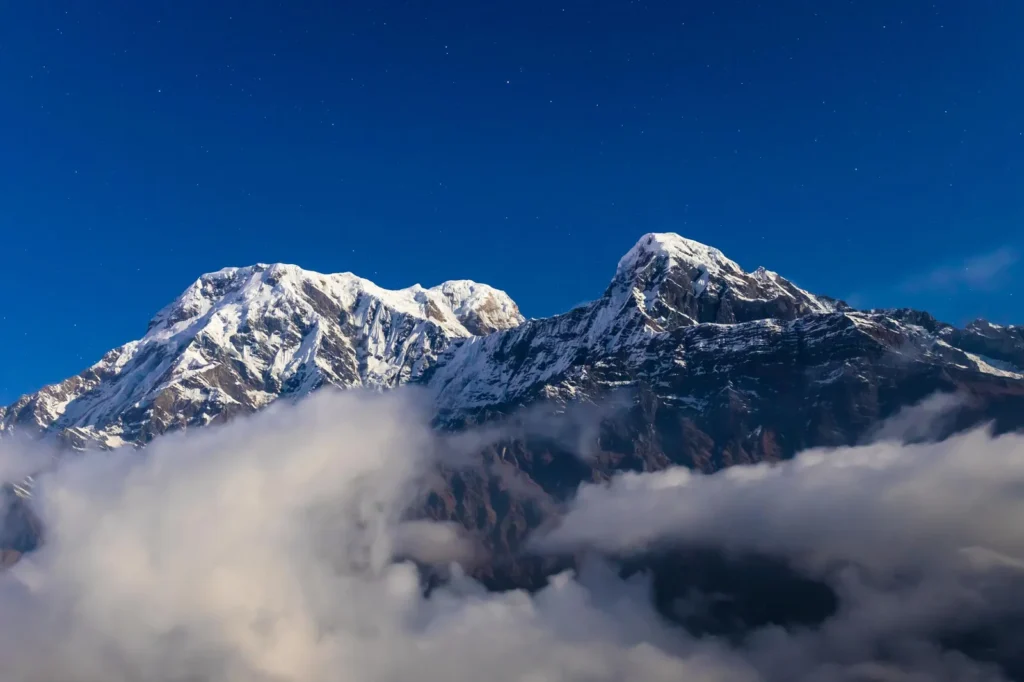
Possible 7-day Mardi Himal itinerary
- Day 1: Early flight to Pokhara, drive to Kande and trek to Deurali.
- Day 2: Deurali to Low Camp, passing Forest Camp.
- Day 3: Low Camp to High Camp.
- Day 4: Early morning viewpoint excursion, then descend towards Low Camp.
- Day 5: Descend to Sidhing.
- Day 6: Jeep transfer to Pokhara.
- Day 7: Return to Kathmandu.
This is a compact schedule. There is no spare day for a cancelled flight, road disruption or a slower walking pace. Adding an extra day makes the trip more comfortable and gives you some flexibility.
For the full route description and trip details, see our Mardi Himal Trek page.
2. Ghorepani Poon Hill Trek: A Practical Choice for Beginners
Ghorepani Poon Hill is one of the most practical choices for a first Himalayan trek. The route passes through Gurung and Magar villages, terraced farmland, and rhododendron forests. Its main attraction is the sunrise viewpoint at 3,210 metres, where morning light spreads across the Annapurna and Dhaulagiri ranges.
Why beginners choose it: You get impressive mountain views without committing to a high-altitude expedition. The route also has established teahouse accommodation and relatively accessible transport from Pokhara.
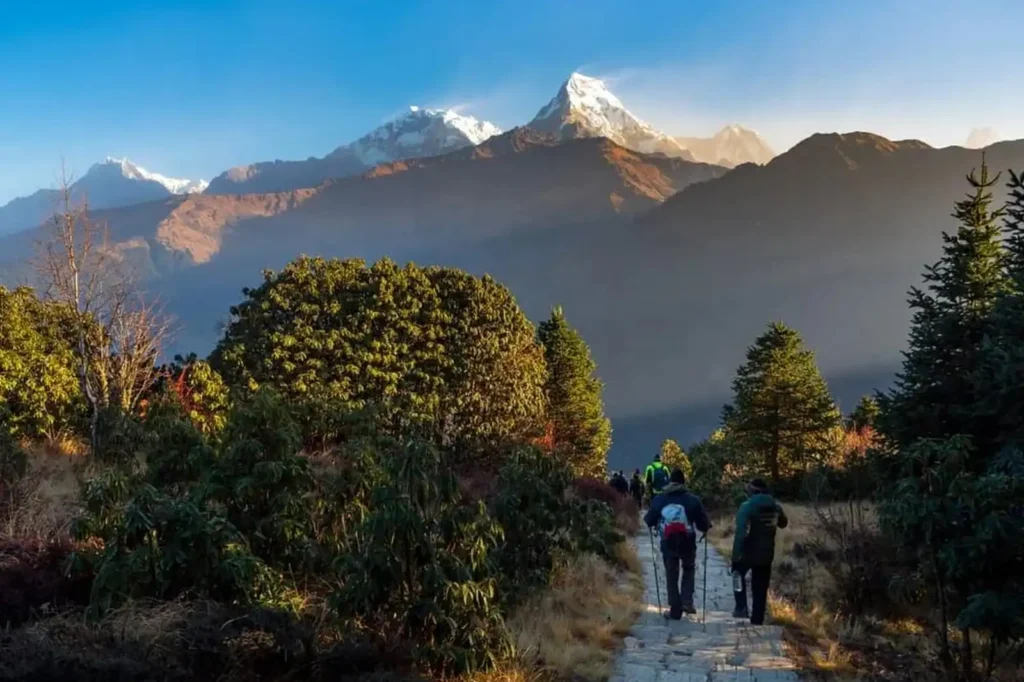
Credit: Photo by Austin Curtis on Unsplash.
A typical Poon Hill trek takes four to five days on the trail. A seven-day holiday can include the trek, time in Pokhara and a little flexibility. Our standard Poon Hill Trek runs for eight days, allowing more breathing space than this compressed schedule.
Possible 7-day Poon Hill itinerary
- Day 1: Take an early flight from Kathmandu to Pokhara. Drive to Hile and trek to Ulleri.
- Day 2: Trek from Ulleri to Ghorepani.
- Day 3: Walk to Poon Hill for sunrise, then continue towards Tadapani.
- Day 4: Trek from Tadapani to Ghandruk.
- Day 5: Explore Ghandruk, trek towards Kimche and drive to Pokhara.
- Day 6: Rest or explore Pokhara.
- Day 7: Return to Kathmandu.
This schedule assumes an early domestic flight to Pokhara. If you travel by road from Kathmandu, allow an additional day or choose a shorter trekking itinerary. Road travel takes considerably longer and leaves less time for walking.
Poon Hill is lower than Mardi Himal and Kyanjin Ri, but altitude sickness can still affect anyone. Keep a steady pace and avoid rushing the ascent. If your schedule allows, adding a day is better than trying to fit too much into the week.
3. Langtang Valley Trek: Allow Eight or More Days
The route was affected by the Bhote Koshi flood on 26 August 2026. The traditional access around Syabrubesi was severely damaged, changing the usual approach to the valley.
The important update for 2027: The Langtang Valley trekking route reopened on 29 October 2026 through alternative trails. Trekkers can reach the valley from Dhunche via Thulo Bharkhu, Brabal and Thulo Syaphru, continuing towards Bamboo, Lama Hotel and Langtang Village.
This alternative approach adds travel and walking time compared with the traditional Syabrubesi starting point. Langtang is accessible again, but the changed approach makes a seven-day Kathmandu-to-Kathmandu itinerary too tight for most travellers.
Who it suits: Travellers with at least eight days, preferably more, who enjoy Tamang culture and are comfortable with longer walking stages.
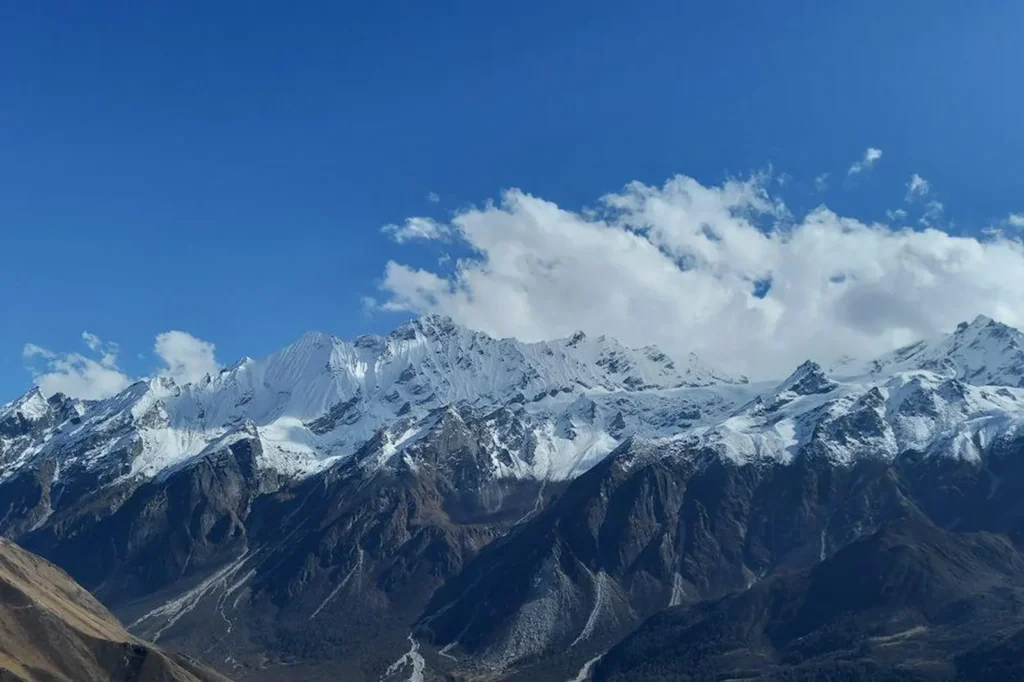
Credit: Photo by Aashish Parajuli on Unsplash.
Our standard Langtang Valley Trek runs for 11 days. We recommend checking road access, trail conditions, and teahouse availability before departure. Conditions can change, so reconfirm them two to three weeks before travelling and again 48 to 72 hours before the trek begins.
4. Khopra Ridge Trek: Quieter Annapurna Trails
Khopra Ridge is a good alternative if you want fewer crowds than the main Poon Hill route. The trail passes through traditional villages and forest before reaching Khopra Danda, where the views include Dhaulagiri and Annapurna South.
Who it suits: Fit trekkers who prefer quieter community trails and can manage several long walking days in a row.
Day two is particularly demanding. The climb from Ghandruk to Dobato gains well over a thousand metres. If you have little previous trekking experience or are not comfortable with steep uphill walking, add a day or consider Poon Hill instead.
Possible 7-day Khopra Ridge itinerary
- Day 1: Early flight from Kathmandu to Pokhara, drive to Kimche and trek to Ghandruk.
- Day 2: Trek from Ghandruk to Dobato.
- Day 3: Visit Muldai viewpoint and continue towards Khopra Ridge.
- Day 4: Trek from Khopra Danda to Swanta.
- Day 5: Trek from Swanta to Ghorepani.
- Day 6: Descend towards Ulleri and drive to Pokhara.
- Day 7: Return to Kathmandu.
This is a demanding schedule and assumes an early flight to Pokhara on the first day. Travelling by road from Kathmandu would make the itinerary considerably tighter. Confirm the walking stages, transport arrangements, and overnight stops before booking.
For a longer route description, see our Khopra Hill Trek page.
Other Options: Pikey Peak and Everest Panorama
If seeing Mount Everest is your priority, consider Pikey Peak or Everest Panorama.
Pikey Peak is an overland trekking option in the lower Everest region. Its summit reaches approximately 4,065 metres and offers views across the Himalayan range, including Mount Everest in clear weather. It avoids the need to fly to Lukla, although road travel and trail conditions still need to be considered.
Everest Panorama takes you through Namche Bazaar and Tengboche, with Sherpa villages, mountain monasteries and views of Everest and Ama Dablam. Tengboche is around 3,870 metres above sea level.
Our standard Everest Panorama Trek runs for nine days because the route depends on flights to Lukla. Weather can disrupt both arrival and departure flights. During some peak-season periods, flights may operate from Manthali Airport in Ramechhap rather than Kathmandu, adding a long early-morning road journey.
With only seven days available, a flight delay can cause serious problems for your international departure. Keep spare days if you choose a Lukla-based trek.
How Much Does a 7-Day Trek in Nepal Cost?
The cost of a 7 days trek in Nepal depends on the route, transport, group size, accommodation, and guide arrangements. A flight-based Annapurna trek has different transport costs from a Langtang trek that uses road transport and a private jeep.
The main expenses usually include:
Nepal Footprint Holiday’s Published Package Prices
The following are starting prices for our standard published itineraries. They are not prices for a custom seven-day version
Prices depend on group size, season, and the services included. Our standard packages run longer than a strict seven-day schedule, so compressed itineraries are quoted individually. Transport, accommodation and guide arrangements can change the final cost.
For daily guide and porter rates, see our guide and porter cost guide.
Trekking Permit Fees
For foreign visitors, the currently published reference entry fee is NPR 3,000 for the Annapurna Conservation Area and NPR 3,000 for Langtang National Park. The Nepal Tourism Board lists the foreign-national TIMS fee at NPR 2,000 where applicable. Check our trekking permits page for full details.
Everest-region routes also have Sagarmatha National Park and local municipality fees. Confirm the current charges for your exact route when requesting a quotation.
Check the official Nepal Tourism Board TIMS information and park entry fees before departure. These are published reference amounts, not guaranteed 2027 prices.
My advice is to ask for a written quotation that separates transport, guide services, permits, accommodation, and meals. It makes trekking packages much easier to compare accurately.
Is Seven Days Enough for a Trek in Nepal?
Yes, seven days can be enough for several Nepal trekking routes. The important question is whether you mean seven days on the trail or seven days from Kathmandu and back.
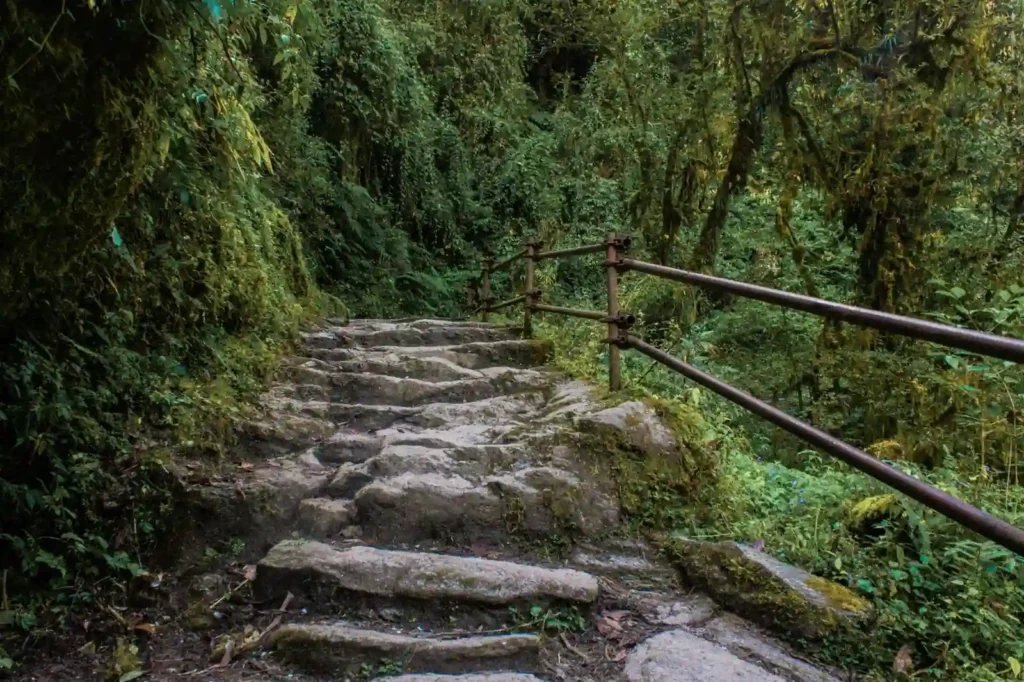
Here is how the main options compare:
- Poon Hill: A practical choice for a seven-day holiday, particularly for beginners.
- Mardi Himal: Possible with an early flight to Pokhara, but the walking stages and transport need careful planning.
- Khopra Ridge: Possible for fit trekkers who can manage long daily walking stages.
- Langtang Valley: Allow at least eight days because the alternative approach from Dhunche adds time.
- Everest Panorama: Not ideal for a strict seven-day schedule because of the risk of Lukla flight delays.
- Pikey Peak: Worth considering if you want Everest views without relying on Lukla flights, but allow enough time for road transfers.
If your seven days in Nepal include international arrival and departure, choose a shorter route rather than squeezing a demanding trek into the time available. Our guide to short treks in Nepal covers more options for travellers with limited time.
Best Time for a Seven-Day Trek in Nepal
Spring and autumn are generally the preferred trekking seasons in Nepal. However, the best time also depends on the route, altitude, and weather conditions.
Spring (March to May): Rhododendron forests bloom, temperatures become warmer and mornings often bring good mountain views. It is a popular season for Annapurna and Langtang trekking.
Autumn (September to November): Post-monsoon conditions often bring clearer skies and favourable trekking weather. October and November are particularly popular, so book accommodation and transport in advance where necessary.
Winter (December to February): Lower routes such as Poon Hill remain options, but higher trails can experience freezing temperatures and snow. Check conditions before choosing Mardi Himal, Khopra or other high routes.
Monsoon (June to August): Rain, slippery trails, landslides and transport disruption can make tight itineraries unreliable. Build in flexibility if travelling during this period.
For more detailed seasonal advice, see our best time to trek in Nepal guide.
Permits, Guides and Altitude Safety
Before booking a seven-day trek, check the permit and guide requirements for your exact route.
The Nepal Tourism Board lists several routes covered in this guide, including Mardi Himal, Khopra, Langtang and Everest View, under its licensed-guide and agency-issued TIMS provisions. Requirements can vary by route and may change, so confirm the current rules with a registered trekking agency before travelling.
Altitude also deserves attention. Once you climb above 2,500 metres, watch for symptoms such as headaches, nausea, dizziness, unusual fatigue and loss of appetite.
If symptoms develop, do not continue ascending. Rest, monitor how you feel and descend if symptoms worsen. Severe headache, confusion, difficulty walking or breathlessness at rest require urgent medical attention.
Discuss high-altitude travel with your doctor before departure. Physical fitness alone does not prevent altitude sickness.
Useful official resources:
- Nepal Tourism Board: Trekking and TIMS information
- Nepal Tourism Board: Park entry fees
- CDC: High-altitude travel and altitude illness
Government of Nepal registered · Kathmandu-based · 10+ years guiding experience
Frequently Asked Questions
1. Can you complete a trek in Nepal in seven days?
Yes, you can complete several Nepal treks in seven days. Poon Hill, Mardi Himal and some Khopra itineraries can fit this schedule with suitable transport. Langtang currently needs at least eight days for a more realistic trip, while Everest Panorama leaves little room for Lukla flight delays.
2. Which is the best seven-day trek in Nepal for beginners?
Ghorepani Poon Hill is a sensible choice for beginners because it has a moderate maximum altitude and established teahouse accommodation. The walking still includes steep stone steps, so basic fitness and preparation are necessary. Allow enough time for transport and rest rather than rushing the route.
3. Can you complete the Langtang Valley Trek in seven days?
Not comfortably for most travellers at present. Following the August 2026 flood, the route reopened through alternative trails from Dhunche via Thulo Bharkhu, Brabal and Thulo Syaphru. This adds time before you reach the main valley. We recommend at least eight days, while our standard itinerary runs for 11 days.
4. How much does a seven-day trek in Nepal cost?
The cost depends on transport, permits, guide services, accommodation, meals, and group size. Nepal Footprint Holiday’s Poon Hill Trek starts from US 700 foreight days, while its Everest Panorama Trek starts from US 1,350 for nine days. Request an itemised quotation for your dates and preferred route rather than relying on a generic package price.
5. Is a seven-day trek in Nepal suitable for first-time trekkers?
Yes, some seven-day treks suit first-time trekkers, particularly Poon Hill. Beginners should consider walking hours, steep descents, sleeping altitude, and available rest days. A lower-altitude route with manageable daily stages usually makes a better first experience than a rushed high-altitude itinerary.
6. Should I add extra days to a seven-day Nepal trek?
Yes, if your international flight schedule allows it. Extra days protect you against domestic flight delays, road closures, bad weather, and a slower walking pace. They also let you enjoy Kathmandu or Pokhara without making the trekking itinerary unnecessarily demanding.
Which Seven-Day Trek Should You Choose?
The best 7-day trek in Nepal depends on what you want from your Himalayan holiday and how much time you have for transport.
Choose Poon Hill for a relatively comfortable first trek and Mardi Himal for closer mountain views. Khopra Ridge offers a quieter Annapurna experience for fitter trekkers. Langtang is accessible again, but the alternative approach makes an eight-day or longer itinerary a better choice. If seeing Everest is your priority, consider Pikey Peak or Everest Panorama, while accounting for the transport risks.
At Nepal Footprint Holiday, we organize small-group and tailor-made trekking trips with local guides. We plan routes around your available time, walking ability and acclimatization needs.
Before booking, make sure your seven days include enough time to reach the trailhead and return safely.
Planning a trek in 2027? Contact Nepal Footprint Holiday with your travel dates and preferred route. We can help you choose an itinerary that fits your actual schedule.
About the Author
Bashu Dev Thapaliya is the Founder and Director of Nepal Footprint Holiday. He has worked in Himalayan trekking and mountain biking since 1999, with experience across Nepal, Tibet and Bhutan.