
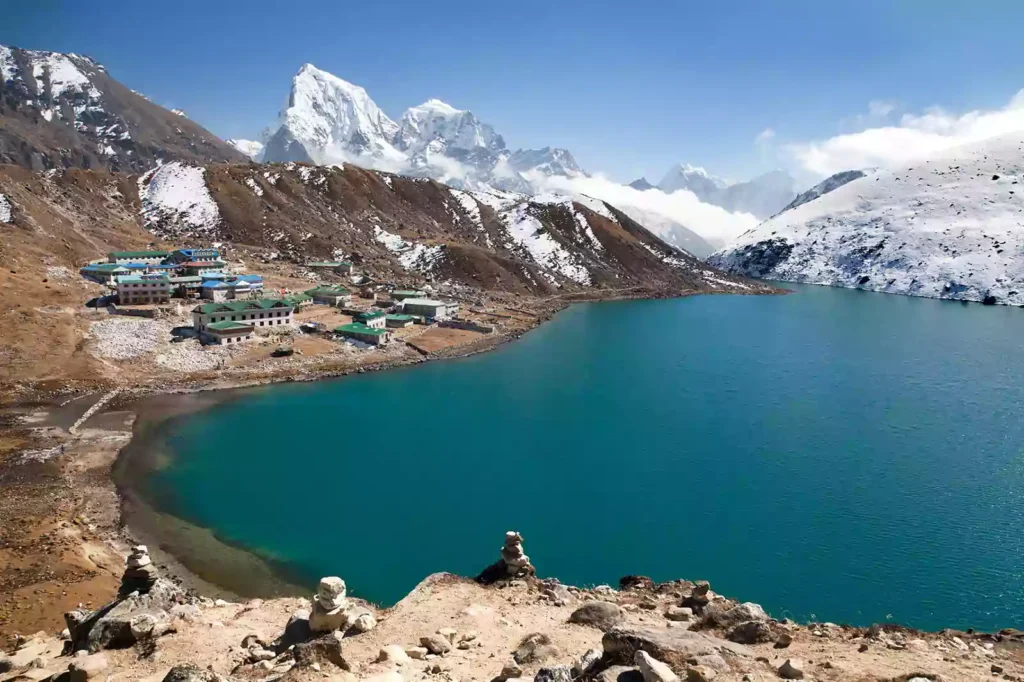
The Gokyo trek cost in 2027 depends on how you travel, how long you stay, and what your package includes. As a starting point, budget around US$1,100–1,800 per person for a standard Gokyo Lakes trek, then adjust for flights, trekking staff, insurance, and personal spending. This is a planning range, not a confirmed 2027 price.
The usual route takes around 10–12 days, depending on the itinerary and acclimatization schedule. You’ll walk through Phakding, Namche Bazaar, Dole and Machhermo before reaching Gokyo Village and its glacial lakes. This guide covers that standard route, without crossing Cho La Pass.
I’ve worked in Himalayan trekking since 1999. When comparing trek prices, I always recommend looking beyond the headline figure. A cheaper package may exclude flights, meals or staff expenses that you’ll still need to pay.
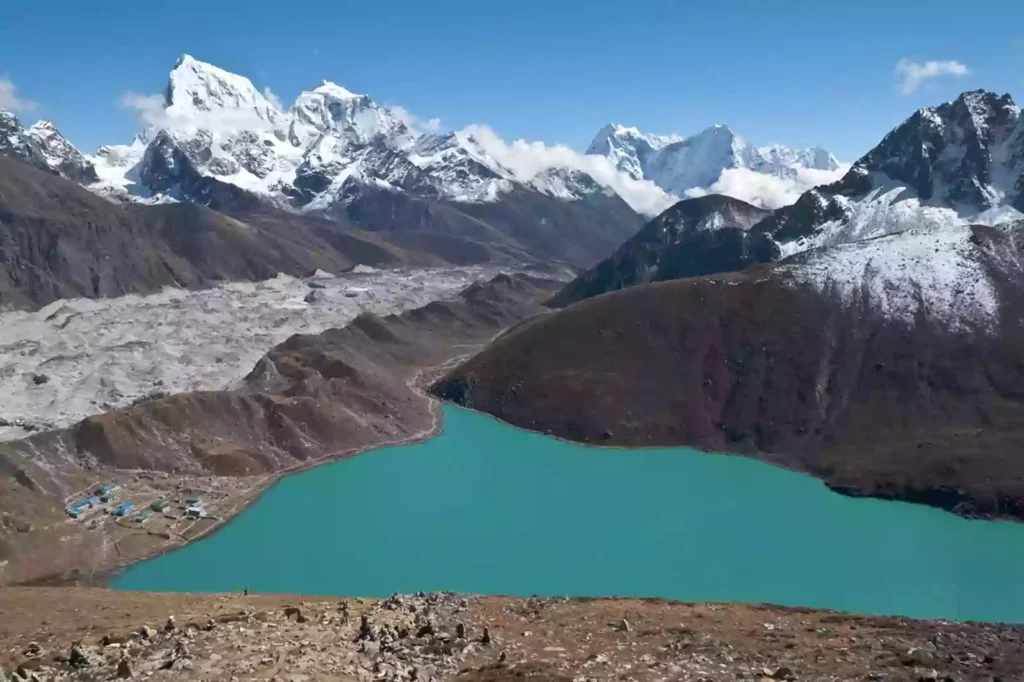
For the route and itinerary, see our Gokyo Lakes trek guide.
How Much Does the Gokyo Trek Cost in 2027?
For a standard Gokyo trek, your main expenses are flights to Lukla, permits, food, accommodation, and any guide or porter you hire. A package may combine these costs, while an independent arrangement requires you to budget for each item separately.
The following figures are estimates for initial planning, not confirmed supplier quotations.
These figures are not a fixed-price package, and the ranges shouldn’t simply be added at their lowest or highest values without checking trip length and inclusions. Staff costs also depend on whether you’re travelling alone or sharing a guide and porter with other trekkers.
For a fair comparison, ask each operator for an itemized quotation. Check whether it includes return flights, staff meals and accommodation, permits, Kathmandu hotels, airport transfers and tips.
Our EBC vs Gokyo Lakes trek comparison explains the differences between the two routes. You can also compare the Everest Base Camp trek cost.
Lukla Flight Costs and Weather Delays
Return flights to Lukla are a major part of the Gokyo trek budget. For 2027 planning, allow around US$350–500 for return flights and related ground transfers, subject to the departure airport and current fares.
During some busy trekking periods, flights operate from Manthali Airport in Ramechhap rather than Kathmandu. If that’s the arrangement for your departure, you’ll need to account for the road transfer as well.
Before booking, check:
- Which airport your flight leaves from.
- The checked baggage allowance and excess baggage charges.
- Whether airport transfers are included.
- The airline’s rules for delays, cancellations and changes.
Mountain flights depend on weather and operating conditions. Keep some flexibility in your itinerary, particularly before an international flight home. An extra hotel night or an unexpected transfer can increase your spending.
A helicopter may be an alternative in some circumstances, but availability and weather are never guaranteed. Don’t rely on finding a shared helicopter seat at short notice.
What Permits Do You Need for the Gokyo Trek?
The standard Gokyo route enters Sagarmatha National Park and passes through the Khumbu Pasang Lhamu Rural Municipality. Budget for the relevant entry charges, and verify the applicable rules before departure.
The national park rates above are published by the Nepal Tourism Board. Local charges and applicable taxes should be checked separately.
The Nepal Tourism Board’s TIMS guidance currently lists the Gokyo route among routes requiring a licensed trekking guide and an agency-issued TIMS card. Because some other online guides give conflicting advice, confirm the applicable requirements with the authorities or a registered trekking operator before publishing your 2027 plans.
Don’t assume that permit rules for one trekking region automatically apply to another.
Guide and Porter Costs
Hiring a guide adds to your budget, but it also provides local knowledge and help with route decisions, accommodation arrangements and changing conditions.
For initial budgeting, use these approximate daily rates and confirm current quotations before departure.
Ask what each rate includes. Meals, accommodation, insurance, transport and staff flights may be included in one quotation and charged separately in another.
A porter commonly carries a shared trekking load, but agree on the permitted weight beforehand. Don’t assume one porter can carry all the luggage for a large group.
Tips are customary, although the amount is a personal decision rather than a compulsory fixed percentage. Carry enough Nepalese rupees to tip staff directly at the end of the trek.
For more details on standard rates and cost breakdowns, check out this Guide and Porter Cost in Nepal guide
How Much Do Teahouses and Meals Cost?
Teahouse prices rise as you climb higher into the Gokyo Valley. Rooms are generally simple, and facilities become more basic at higher elevations.
These are indicative estimates, not guaranteed 2027 prices. Some lodges offer inexpensive rooms when you eat your meals there, while others charge separately.
For meals, hot drinks and routine extras, allow roughly US$30–45 per day as an initial allowance. Your spending may be higher if you order frequent snacks, bottled drinks or extra hot drinks.
Dal bhat, a meal of rice, lentils and accompaniments, is a common trekking choice. Prices generally rise at higher villages because supplies are harder to transport.
Remember to budget separately for:
- Hot showers, where available.
- Wi-Fi and device charging.
- Drinking water and purification supplies.
- Snacks and personal purchases.
A reusable bottle and a suitable water treatment method can reduce bottled-water costs. Follow the manufacturer’s instructions for any filter or purification product you use.
Gear Rental and Travel Insurance
You don’t necessarily need to buy every item before the trek. Renting a down jacket or sleeping bag in Kathmandu may be practical if you won’t use it regularly.
Check the condition of rental equipment and choose a sleeping bag suitable for the expected temperatures. Our Nepal trekking equipment guide covers the basics.
Insurance deserves the same attention as equipment. Your policy should explicitly cover trekking at the maximum altitude on your itinerary and emergency helicopter evacuation. Gokyo Ri reaches approximately 5,357 metres (17,575 feet), so ordinary travel insurance may not provide adequate cover.
Premiums depend on your age, trip duration, destination and policy conditions. Read the exclusions before purchasing.
Altitude sickness is another expense you shouldn’t try to manage through budget cuts. Allow time to acclimatize, know the warning signs and descend if symptoms worsen. Speak with a healthcare professional before travelling if you have concerns about high altitude.
Our altitude sickness guide provides further preparation advice.
Does Cho La Pass Increase the Trek Cost?
Yes. Extending the Gokyo trek across Cho La Pass to Everest Base Camp adds walking days and extra accommodation, meals and other expenses.
As a preliminary allowance, expect around 3–5 additional days and US$250–450 or more, depending on your itinerary and services. This is an estimate, not a guaranteed extension price.
Cho La is a high-altitude crossing, and weather or snow conditions may affect the itinerary. Don’t choose this extension based only on the additional cost.
If you want to visit Gokyo Lakes without crossing the pass, stick with the standard route covered in this article. For the combined itinerary, see our Gokyo Cho La Pass trek guide.
Frequently Asked Questions
How much cash should I bring on the Gokyo Lakes trek?
To plan your cash, calculate the cost of meals, drinks, showers, charging, Wi-Fi and tips that your package excludes. Withdraw enough Nepalese rupees in Kathmandu before leaving. ATMs are available in Namche Bazaar, but availability can vary. Carry a reserve because card payments and cash withdrawals become less dependable farther along the trail.
Is the Gokyo Lakes trek cheaper than Everest Base Camp?
The Gokyo Lakes trek can be cheaper than Everest Base Camp if your itinerary takes fewer days. However, both routes share the cost of reaching Lukla, and flights, staff, meals and package inclusions can change the final price. Compare itineraries with similar services rather than assuming one route is always cheaper.
What is the average daily budget on the Gokyo trail in 2027?
For meals, drinks, and routine extras, allow around US$30–45 per day as a starting estimate. This does not necessarily cover accommodation, guide fees, porter costs or transport. Check which expenses are prepaid, then set aside an additional reserve for unexpected nights or flight changes.
Can I trek to Gokyo Lakes solo without a guide in 2027?
Don’t assume that you can trek independently without a guide in 2027. The Nepal Tourism Board’s current TIMS guidance lists Gokyo among routes requiring a licensed guide and an agency-issued TIMS card. Confirm the applicable rules before departure, as regulations and local arrangements can change.
Plan Your Gokyo Trek Budget Before Booking
The most reliable way to estimate your Gokyo trek cost in 2027 is to price the full itinerary, not just the advertised package. Include flights, permits, accommodation, meals, staff, insurance and a reserve for delays.
At Nepal Footprint Holiday, we organize small-group and tailor-made treks with local guides. Ask for an itemized quotation so you can see exactly what’s included and decide whether the itinerary fits your budget.
Ready to explore the turquoise Gokyo Lakes and Himalayan mountain scenery? Discover the route, itinerary, and trekking options to plan your journey.
Author: Bashu Dev Thapaliya, Director and Founder of Nepal Footprint Holiday. Bashu has worked in Himalayan trekking and mountain biking tours since 1999.