

Nepal trekking in the monsoon runs from mid-June to early September, bringing heavy rain and leeches to most routes while leaving a handful of rain-shadow regions — Upper Mustang, Upper Dolpo, Nar Phu Valley, and northern Manang — consistently dry, trekable, and dramatically beautiful.
Nepal trekking in the monsoon is not the disaster most people assume. Our guides have led departures every month of the year for over a decade. June, July, and August bring real challenges: slippery trails, landslide risk, leeches, and limited mountain views across most of Nepal. However, they also deliver something no other season can: lush green hillsides, thundering waterfalls, vibrant rice terraces, quiet trails, and some of the finest trekking in the entire country in the right regions. The key is knowing exactly which routes stay open, which routes to avoid, and what to carry when the clouds roll in. This guide covers all of it.
Furthermore, monsoon 2026 has added one important consideration. Solo trekking is now strictly banned across most of Nepal’s major trekking regions. All foreign trekkers must hire a licensed guide from a registered agency. This applies year-round. In monsoon season, however, it carries extra weight — conditions change daily, and local knowledge becomes critical for safety.
When Is Nepal’s Monsoon Season?
The monsoon typically begins around mid-June, gradually intensifying through July and August before slowly retreating in September. July and August bring the heaviest rainfall across most of the country. The southern plains of Nepal receive the heaviest rainfall, while the central hill regions, including many trekking areas, experience regular showers followed by periods of sunshine.
Typically, mornings are the most reliable window for trekking. Rain typically builds through the afternoon and peaks in the evening. Therefore, our guides always plan early starts during monsoon departures, aiming to cover the bulk of each day’s distance before noon. Morning hours often stay clear before afternoon rain begins
In contrast, September marks the transition out of monsoon. The second half of September sees conditions improving rapidly. By early October, the skies are completely clear. Consequently, the trails enter peak autumn, the finest trekking window of the year.
What Makes Nepal Trekking in Monsoon Both Challenging and Rewarding?
Nepal trekking in monsoon is a study in contrasts. The same rain that makes some trails dangerous transforms others into something extraordinary.
gerous transforms others into something extraordinary.
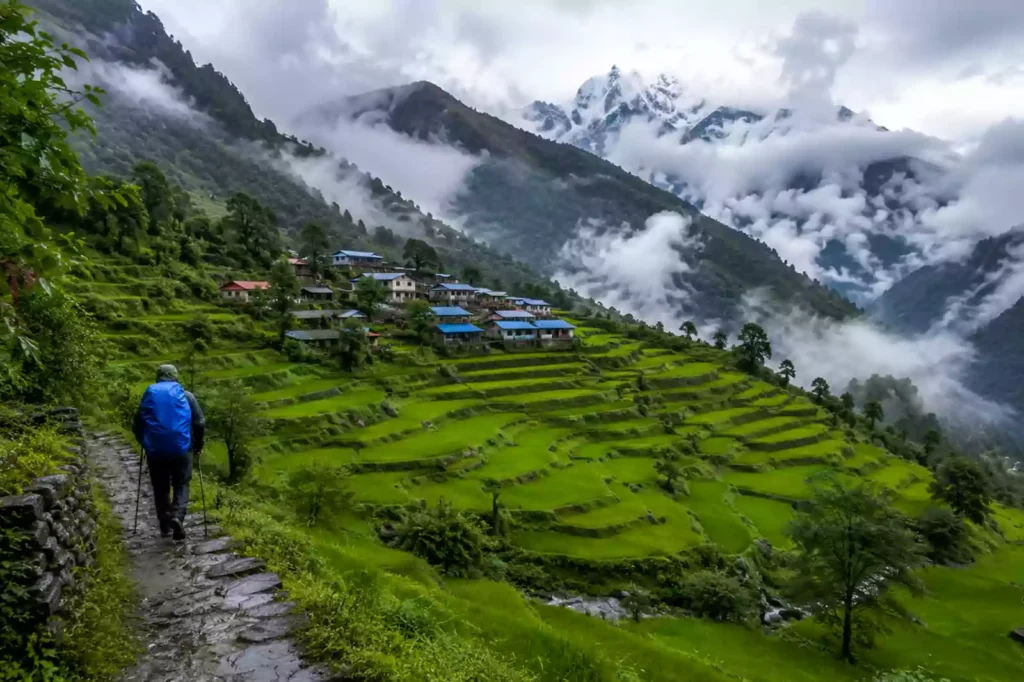
The heavy rains rejuvenate the forests and valleys, making the hillsides burst with colour and life. Waterfalls are at their fullest, and the flora is at its most vibrant. Additionally, most trekking routes stay less crowded during this season. Travelers enjoy fresh mountain air and dramatic cloud views. Indeed, for photographers and nature lovers, the monsoon landscape is unlike anything autumn or spring can offer.
Which Nepal Treks Are Open and Recommended in the Monsoon?
Upper Mustang Trek — The Best Monsoon Trek in Nepal
Upper Mustang remains one of the best monsoon trekking destinations in Nepal. This region lies in a rain-shadow area. Trekkers enjoy dry landscapes and ancient Tibetan culture. The trails feature desert-like scenery and stunning mountain views. The region also offers rich monasteries and traditional villages.
Upper Mustang sits north of the main Himalayan range, where the high peaks block monsoon clouds from reaching the plateau. The result is a desert-like landscape of eroded canyon walls, ancient cave monasteries, and medieval walled cities under clear blue skies — even in July and August. Our Mustang Trekking page covers the full 12 to 14-day itinerary and permit requirements.
Upper Dolpo Trek — Remote Wilderness in the Rain Shadow
Upper Dolpo provides remote Himalayan beauty during the rainy season. The area receives limited rainfall compared to central Nepal. Travelers experience untouched landscapes and peaceful trails. This trek suits experienced trekkers seeking adventure and isolation.
Upper Dolpo is one of Nepal’s most remote trekking regions and one of the finest monsoon destinations. The Shey Phoksundo Lake, Nepal’s deepest lake, sits in a glacial valley surrounded by dry cliffs and juniper forest. These rain-shadow regions receive little to no rainfall. There is no threat of landslides or floods on the main trail sections. That is exactly what makes them ideal for monsoon trekking. Our Upper Dolpo Trekking page covers the 18 to 21-day itinerary. A Shey Phoksundo National Park permit is required in addition to the Dolpo restricted area permit.
Nar Phu Valley Trek — Nepal’s Most Remote Monsoon Route
The Nar Phu Valley sits north of the Annapurna range and receives dramatically less rainfall than the main circuit trail. Nar Phu Valley sees fewer than 500 trekkers per year. The culture is genuine, the landscapes are dramatic, and the isolation is complete. Consequently, a monsoon visit to Nar Phu feels genuinely unexplored. The restricted area permit requirement keeps the route quiet year-round. Those wanting to understand the full permit structure before booking should read our guide on trekking permits in Nepal.
Northern Manang — Upper Annapurna Circuit in Monsoon
Above Manang, the Annapurna Circuit receives far less rain than the southern approach. When you go higher, near Manang, the weather is often drier. This is because Manang is in a rain-shadow area, which means the big mountains block some of the rain clouds. Trekkers who begin the Annapurna Circuit from Besisahar will face muddy and slippery lower sections. However, those who drive directly to Chame or Manang and trek the upper circuit can find excellent monsoon conditions. Our Annapurna Circuit Trek page explains all access options, including the drive-in approach that avoids the wettest lower sections.
Poon Hill and Lower Annapurna — Manageable with Preparation
The Poon Hill Trek and lower Annapurna routes remain walkable in monsoon for trekkers prepared for rain and mud. Ghorepani Poon Hill and Mardi Himal remain popular options. The forests become vibrant and green after rainfall. Mountain views are limited, but the rhododendron forest is at its most lush, and the waterfalls on the descent from Poon Hill are spectacular. These routes suit trekkers who understand the trade-off: no peak views, but extraordinary green scenery and complete solitude.
Which Nepal Treks to Avoid in Monsoon?
Some routes become genuinely unsafe in the monsoon. Others simply offer a poor experience relative to what is possible at other times of year. Our team avoids the following routes from mid-June to early September:
Everest Base Camp Trek: Some trekking routes, especially those in the higher-altitude regions such as the Everest Base Camp trek, may be affected or closed during the monsoon season due to safety concerns. Lukla domestic flights are frequently canceled due to poor visibility. The lower trail through the Phakding gorge floods during heavy rain. Mountain views — the entire purpose of the trek — are almost entirely hidden behind cloud cover throughout July and August.
Langtang Valley Trek: The approach road to Syabrubesi carries real landslide risk in heavy monsoon rain. Additionally, the lower forested sections carry heavy leech exposure. Mountain views of Langtang Lirung and Ganesh Himal — the defining draw of this route — stay hidden for weeks during peak monsoon.
Manaslu Circuit Trek: The Budhi Gandaki gorge receives very heavy monsoon rainfall. Sections near Jagat and Philim are flooded. The approach road from Arughat is also prone to landslides. We do not recommend the Manaslu Circuit between July and mid-August. Late September, however, is excellent on this route as the monsoon retreats. Those interested in the route can read our Manaslu Circuit Trek blog for full seasonal context.
Kanchenjunga Base Camp Trek: The far east of Nepal receives some of the heaviest monsoon rainfall in the country. The approach trails are steep, remote, and genuinely dangerous in wet conditions. We do not operate this route in monsoon.
What Gear Do You Need for Nepal Trekking in Monsoon?
Packing for monsoon trekking demands a different approach to peak season. Our guides review every trekker’s gear list before monsoon departures. The essentials are:
- Waterproof shell jacket and trousers: A proper waterproof outer layer, not just water-resistant. Rain falls hard and long
- Pack rain cover: Fits over your daypack and keeps everything inside dry
- Dry bags: Seal electronics, documents, and spare clothes inside dry bags inside your pack
- Waterproof trekking boots with deep tread: Grip matters more than anything on wet muddy trails
- Gaiters: Essential for leech protection on lower forest trails
- Leech socks: Worn over socks to stop leeches entering boots. Salt sachets are also effective
- Trekking poles: Balance on slippery surfaces is significantly harder without them
- Quick-dry clothing: Cotton stays wet for hours. Synthetic or merino wool layers dry fast
- Insect repellent: DEET-based, applied to exposed skin and gaiters on lower trail sections
Additionally, our trekking equipment guide covers the complete monsoon packing list with brand recommendations and what to buy or rent in Kathmandu before departure.
Altitude Sickness in Monsoon: Does the Season Change the Risk?
Notably, altitude sickness risk does not change with the season. The physiology is the same in July as in October. However, monsoon conditions do affect how quickly a descent can happen if someone develops symptoms. Muddy trails slow the pace of emergency descent. Road access in some valleys is restricted after heavy rain. Therefore, our monsoon departures follow an even more conservative acclimatisation profile than peak season trips. Read our altitude sickness guide before booking any monsoon trek above 3,000 m.
Is Nepal Trekking in Monsoon Worth It?
For the right trekker, Nepal trekking in monsoon is genuinely exceptional.The lush forests, dramatic clouds, powerful rivers, and vibrant village life create a different perspective on the Himalayas. With careful planning and the right trekking routes — such as those in rain-shadow areas like Upper Mustang — trekkers can discover a side of Nepal that is both peaceful and unforgettable during the monsoon months.
The trekker who suits monsoon trekking is someone who values solitude over summit views, green landscapes over clear skies, and a quiet tea house over a busy lodge. It is not for beginners on classic routes. However, for experienced trekkers heading to rain-shadow areas with proper gear and a licensed guide, monsoon Nepal offers an experience that autumn and spring crowds simply cannot match.
Ready to plan your monsoon trek? Our team knows which routes are open, which tea houses stay reliably dry, and exactly what conditions to expect in any given week of the monsoon season. Contact us via the inquiry page, and we will respond within 24 hours with a custom itinerary built around your dates.
“July in Upper Mustang is one of the most extraordinary trekking experiences we offer. The rest of Nepal is rain-soaked and quiet. Up there, it is bone dry, the skies are deep blue, and you walk through a 15th-century kingdom with almost no one else around. It is the best-kept secret in the Nepal trekking calendar.” — Nepal Footprint Holiday senior guide, Upper Mustang and Dolpo specialist with 11 years of field experience.
Frequently Asked Questions About Nepal Trekking in Monsoon
Q1. Which treks are open during Nepal’s monsoon season?
The best treks open during Nepal’s monsoon season are Upper Mustang, Upper Dolpo, Nar Phu Valley, and the northern Annapurna Circuit above Manang. All four sit in Himalayan rain-shadow zones and receive significantly less rainfall than the rest of Nepal. Lower-altitude routes like Poon Hill and Mardi Himal are walkable with proper rain gear but offer limited mountain views.
Q2. Is Nepal trekking safe in monsoon season?
Nepal trekking in the monsoon is safe in rain-shadow areas with a licensed guide. Routes like Upper Mustang and Dolpo carry no significant landslide or flood risk. Mainstream routes such as Everest Base Camp, Langtang, and Manaslu carry genuine hazards in July and August, including landslides, flooding, leech exposure, and cancelled flights. Also, our team assesses conditions weekly during monsoon season and adjusts itineraries accordingly.
Q3. When does Nepal’s monsoon season end for trekking?
Nepal’s monsoon typically retreats in early to mid-September. By the third week of September, most mainstream routes reopen with excellent conditions. October marks the start of Nepal’s best trekking season, with crystal-clear post-monsoon skies, freshly washed mountain views, and fully open trails across all regions.