

The Manaslu Conservation Area shelters 33 species of mammals, over 110 species of birds, and some of Nepal’s most endangered wildlife, including the Snow Leopard, Red Panda, and Himalayan Musk Deer across 1,663 square kilometres of protected Himalayan wilderness.
The Manaslu Conservation Area’s wildlife is among the most diverse and least disturbed of any protected region in Nepal. Established in 1998 and managed by the National Trust for Nature Conservation, this 1,663 sq km sanctuary sits in Gorkha District. It protects ecosystems ranging from subtropical forest at 1,400 m to glacial terrain near Manaslu at 8,163 m. That vertical range of nearly 7,000 m creates six distinct ecological zones. In turn, each zone supports its own community of mammals, birds, reptiles, and plant life. Our guides have trekked this region for over a decade. Still, every departure reveals something new along the trail.
Furthermore, the Manaslu Conservation Area wildlife benefits directly from one of Nepal’s most effective community-based conservation programmes. Local lamas in Nubri and Tsum villages have traditionally prohibited the killing of wildlife for centuries. That cultural protection has allowed species like the Snow Leopard and Red Panda to persist here. Combined with the formal conservation framework of 1998, it gives Manaslu a wildlife resilience that few protected areas in Nepal can match. Trekkers on the Manaslu Circuit Trek and the Tsum Valley Trek move through this living sanctuary every step of the way.
What Wildlife Lives in the Manaslu Conservation Area?
Manaslu Conservation Area’s wildlife spans 33 mammal species, 110 bird species, 11 butterfly species, three reptile species, and over 1,500 to 2,000 flowering plant species. The table below covers the key species trekkers are most likely to encounter or glimpse at different altitude zones along the route:
Snow Leopard: The Ghost of the Manaslu Highlands
The Snow Leopard is the most celebrated and most elusive resident of the Manaslu Conservation Area wildlife community. Research estimates that 15 to 20 individual Snow Leopards occupy the high-altitude habitats above 3,500 m within the conservation area. They prey primarily on Himalayan Tahr, Blue Sheep, and Musk Deer. Notably, each of these prey species is also present in the conservation area. Sightings are rare and never guaranteed. However, our guides know which ridges, rocky outcrops, and drainage gullies above Samagaun and Samdo carry the highest chance of a glimpse during early morning hours.
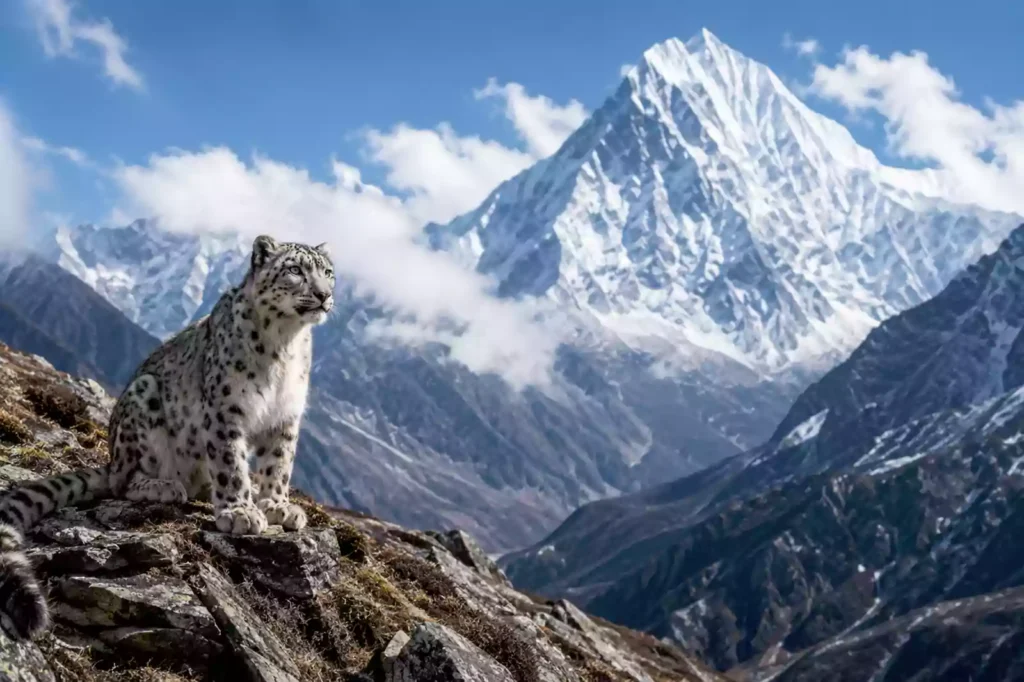
The Snow Leopard holds Vulnerable status on the IUCN Red List. Globally, fewer than 4,000 to 6,500 individuals remain across 12 countries. Nepal holds one of the most important Snow Leopard populations in Asia. The Manaslu Conservation Area forms a critical corridor linking high-altitude habitats across the central Himalaya. Consequently, permit fees from the Manaslu restricted area permit contribute directly to Snow Leopard monitoring. These funds support habitat protection programmes run by the National Trust for Nature Conservation.
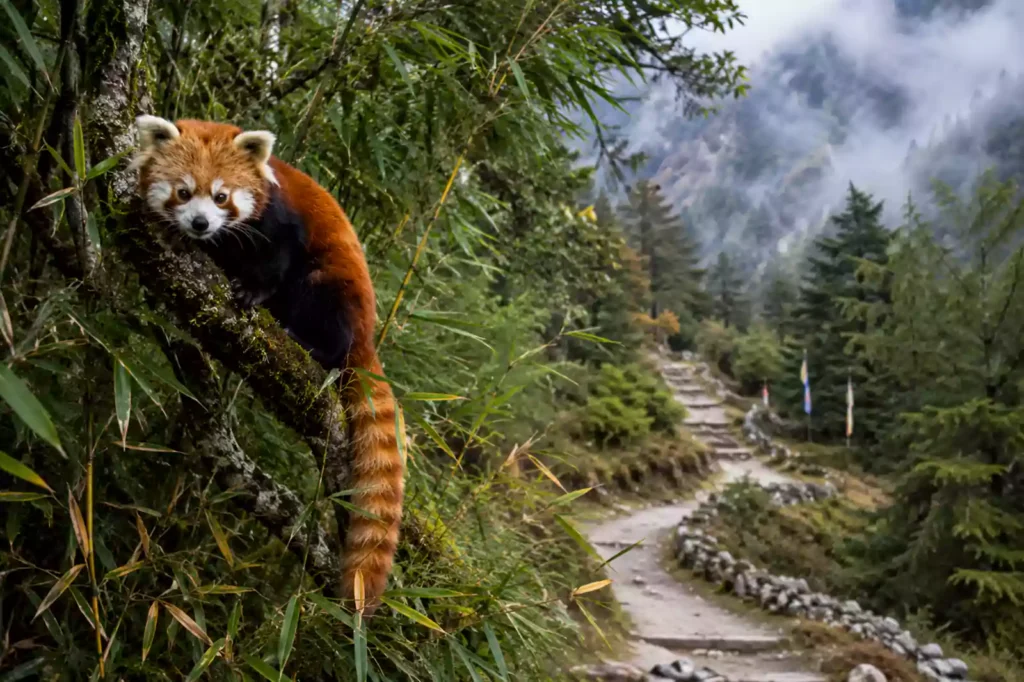
Red Panda: Nepal’s Most Beloved Forest Resident
The Red Panda is the Manaslu Conservation Area wildlife species our trekkers most frequently encounter on the trail. Despite the name, it resembles a raccoon more than a bear. In addition, it carries rich reddish-brown fur, a bushy ringed tail, and a face marked with white-lined ears and rust-coloured tear tracks. It lives in temperate bamboo and rhododendron forests between 2,500 m and 4,000 m. That is exactly the elevation band the Manaslu Circuit passes through on the approach to Jagat, Philim, and Ghap.
Red Pandas hold Endangered status on the IUCN Red List. Fewer than 10,000 Red Pandas remain in the wild globally. Bamboo shoots form the core of the Red Panda diet, supplemented by berries, bird eggs, and insects. The bamboo forests of the Manaslu Conservation Area therefore provide ideal habitat. Moreover, Red Pandas are most active at dawn and dusk, so early starts from lower lodges make a real difference. Moving quietly through the forest between Soti Khola and Deng gives the best chance of a sighting. Our guide on the most unexplored places in Nepal covers several other areas where the red panda habitat overlaps with trekking routes. Additionally, the Kanchenjunga Base Camp Trek in eastern Nepal offers comparable Red Panda and Snow Leopard habitat on a similarly remote restricted-area route.
Himalayan Musk Deer: One of Nepal’s Most Endangered Mammals
The Himalayan Musk Deer holds Endangered status on the IUCN Red List. It is also one of the most heavily poached animals in Nepal due to the high value of musk pod secretions in traditional medicine markets. The Manaslu Conservation Area provides one of the more secure remaining habitats for this species. Buddhist lamas across Nubri and Tsum communities have enforced a cultural prohibition on hunting for centuries. That tradition predates formal conservation law by generations.
Specifically, Musk Deer are small forest-dwelling animals that inhabit dense temperate woodland between 2,500 m and 4,300 m. Unlike most deer, the males carry prominent downward-curving fangs rather than antlers. Sightings occur most often in early morning along forested trail sections between Namrung and Lho. Additionally, the species benefits from the same habitat protection that sustains Red Panda populations in the middle-elevation forest zones.
Himalayan Tahr: The Cliff Dweller of the High Manaslu Zone
Indeed, the Himalayan Tahr is among the most frequently spotted large mammals on the Manaslu Conservation Area wildlife trail. This heavily built wild goat relative inhabits steep rocky terrain and cliff faces between 2,500 m and 5,000 m. In winter, adult males carry curved horns and thick rufous-brown coats that darken noticeably. Females and juveniles form herds on open rocky slopes while older males tend to remain solitary or in small bachelor groups.
Tahr sightings are most common on the rocky slopes above Samagaun and Samdo during the approach to Larkya La Pass. They stand on near-vertical cliff faces with remarkable ease, using their specially adapted hooves to maintain grip on surfaces that would stop any other large mammal. Furthermore, Tahr populations in the Manaslu region remain healthy relative to other parts of Nepal. The upper circuit trail runs through terrain that naturally limits hunting pressure from lower valleys.
Bird Life in the Manaslu Conservation Area
The Manaslu Conservation Area hosts over 110 bird species across its six ecological zones. For birdwatchers, the vertical range of the conservation area creates an exceptional opportunity to observe both subtropical lowland species and high-altitude alpine specialists within a single multi-day trek. Those interested in combining birdwatching with a broader understanding of peak climbing season in Nepal will find spring and autumn are equally productive for both activities.
Specifically, the three species our guides watch for most closely are:
- Himalayan Monal: Nepal’s national bird, found between 2,400 m and 4,500 m. The male carries iridescent plumage in green, red, blue, and copper. It appears most often in open clearings and rhododendron zones in spring and early autumn
- Blood Pheasant: A high-altitude specialist found between 3,000 m and 4,500 m. It moves in small flocks through sub-alpine scrubland. Sightings occur regularly near the Manaslu Circuit trail above Philim and Ghap
- Snow Partridge: The highest-living bird on the circuit, found above 3,500 m on rocky alpine terrain near Samagaun and on the approach to Larkya La Pass
The Six Ecological Zones of the Manaslu Conservation Area
Understanding the ecological zones of the Manaslu Conservation Area helps trekkers anticipate what wildlife they might encounter at each stage of the route. The conservation area contains six distinct climatic and vegetative zones stacked vertically from the Budhi Gandaki valley floor to the glacial peaks above Manaslu:
- Subtropical forest (1,400 m to 2,000 m): Sal, Schima, and Castanopsis trees with bamboo groves and wild banana. Habitat for Red Panda, Himalayan Black Bear, and diverse bird species
- Temperate forest (2,000 m to 3,000 m): Oak, maple, rhododendron, and pine. Core zone for Musk Deer, Red Panda, and Himalayan Monal
- Sub-alpine forest (3,000 m to 4,000 m): Birch, juniper, and dense rhododendron. Transition zone for Snow Leopard, Tahr, and Blood Pheasant
- Alpine meadow (4,000 m to 5,000 m): High-altitude grasses and medicinal herbs. Primary Snow Leopard and Tahr habitat
- Sub-nival zone (5,000 m to 5,500 m): Sparse vegetation on rocky moraines near glacial margins
- Nival zone (above 5,500 m): Permanent snow and ice; essentially no terrestrial wildlife
When Is the Best Time to See Wildlife in the Manaslu Conservation Area?
Spring (March to May) and autumn (September to November) offer the best wildlife observation conditions in the Manaslu Conservation Area. In spring, animals move to lower elevations as snow retreats from upper zones. Rhododendron blooms attract birds to the temperate forest. In autumn, clear skies and lower vegetation improve visibility across open terrain, making Snow Leopard and Tahr sightings more likely on the rocky slopes above 3,500 m. Our trekking season guide covers the seasonal patterns that affect both wildlife visibility and trail conditions across the full Manaslu region.
How Do I Trek the Manaslu Conservation Area Responsibly?
The Manaslu Conservation Area’s wildlife depends on visitors who travel with genuine respect for the environment. Our team follows strict guidelines on every departure. These cover no wildlife disturbance, no single-use plastic, no collection of plants or natural materials, and no noise in areas where wildlife is known to be present. Under Nepal’s 2025 mandatory guide regulation, introduced by the Nepal Tourism Board and TAAN (Trekking Agencies’ Association of Nepal), all foreign trekkers must travel with a licensed guide. This applies throughout the conservation area. Our altitude sickness guide also covers the health preparation needed for high-altitude wildlife trekking in this region.
Ready to experience the Manaslu Conservation Area wildlife on a guided trek? Contact our team via the inquiry page. We will build a custom itinerary around your interests — wildlife, photography, culture, or the full circuit adventure.
“The Manaslu Conservation Area is the most biodiverse trekking corridor we guide through in Nepal. Every elevation zone surprises you with something different. We have seen Snow Leopards on three separate departures in the past two years, always above Samagaun, always in the early morning. Nothing prepares you for that.” — Nepal Footprint Holiday senior guide, Manaslu region specialist with 13 years of field experience.
Frequently Asked Questions About Manaslu Conservation Area Wildlife
Q1. Can you see Snow Leopards on the Manaslu Circuit Trek? Snow Leopard sightings on the Manaslu Circuit Trek are rare but possible. Research estimates 15 to 20 Snow Leopards occupy the conservation area above 3,500 m. The highest chance of a sighting is on rocky slopes above Samagaun and Samdo in early morning hours during autumn. Our guides know which terrain features attract Snow Leopard movement and position trekkers in the best possible viewing locations without disturbing the animals.
Q2. Where is the best place to see Red Pandas in the Manaslu Conservation Area? Red Pandas inhabit temperate bamboo and rhododendron forest between 2,500 m and 4,000 m along the Manaslu Circuit. The forest sections between Soti Khola and Deng, and again between Namrung and Lho, offer the most consistent habitat. Dawn departures give the best chance of a sighting. Red Pandas retreat to the tree canopy during the warmer daytime hours and are hardest to spot after mid-morning.
Q3. How many bird species live in the Manaslu Conservation Area? The Manaslu Conservation Area is home to over 110 bird species. These range from subtropical lowland species in the Budhi Gandaki valley to high-altitude specialists like Snow Partridge and Blood Pheasant above 3,500 m. The Himalayan Monal, Nepal’s national bird, appears regularly on the Manaslu Circuit Trek between Soti Khola and Samagaun. It ranges through both temperate and sub-alpine zones of the conservation area.