

Tengboche in the Everest region, Mu Gompa in Tsum Valley, Braga in Manang, Thubchen in Upper Mustang, and Kopan near Kathmandu are among the best Buddhist monasteries in Nepal. Most are reached on trekking routes such as Everest Base Camp, Tsum Valley and the Annapurna Circuit, while Kopan and Namo Buddha are easy day trips from Kathmandu.
The first thing many trekkers notice on a Himalayan trail is not always a mountain. It may be the sound of monks chanting inside a monastery, prayer flags moving in the wind, or a long stone wall carved with Buddhist prayers.
Monasteries are found across the Everest, Manaslu, Tsum Valley, Annapurna, Upper Mustang, and Dolpo regions. Some sit on established trekking routes, while others need a longer journey through remote valleys. You can also visit important monasteries near Kathmandu without a high-altitude trek.
I have worked in Himalayan trekking and travel since 1999, and I have seen how Buddhist culture is part of everyday life in many mountain communities. In this guide, I introduce the main monasteries, explain which treks reach them, and share practical advice for visiting respectfully. For the wider picture of religion and pilgrimage, see our guide to spiritual tourism in Nepal.
Best Buddhist Monasteries in Nepal at a Glance
Use this table as a starting point for planning a cultural visit or trek.
These monasteries differ in size, history, tradition and visitor access. Some are active communities where visitors should stay quiet and follow local instructions. Others are heritage sites inside historic settlements.
1. Buddhist Monasteries in the Everest Region
The Khumbu is one of Nepal’s best-known areas for Himalayan Buddhist culture. Sherpa communities have strong links with Tibetan Buddhism, and monasteries remain important for prayer, learning, ceremonies, and community gatherings. To understand the people behind them, read our guide to Sherpa culture and history.
Tengboche Monastery
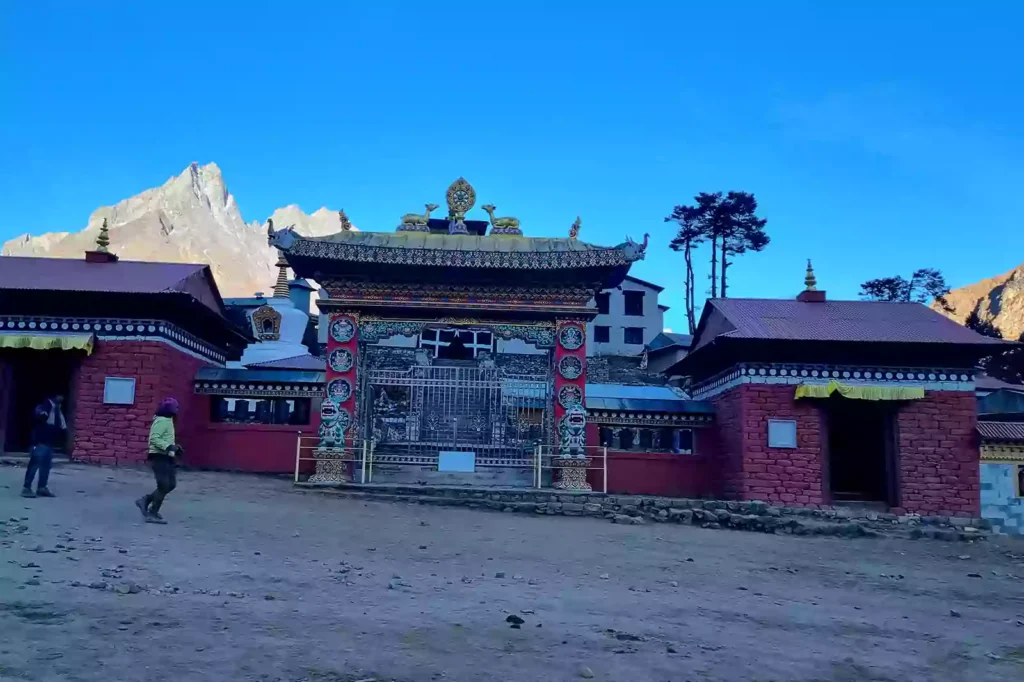
Tengboche is the most famous monastery on the Everest trail. It stands on the main route, with Ama Dablam rising behind it, and it is a major Buddhist centre for the Khumbu community.
It is also known for the Mani Rimdu festival, with religious ceremonies, masked dances and traditional performances. The festival usually falls in autumn, in October or November, and follows the Tibetan lunar calendar, so confirm the dates each year.
Trekkers usually reach Tengboche between Namche Bazaar and Dingboche or Pheriche. Visitors can often attend part of the daily prayers, so ask your guide for current times and plan to arrive before the afternoon light fades.
Pangboche Monastery
Pangboche is a traditional Sherpa village above Tengboche on the way to Dingboche, and its monastery is often described as one of the oldest in the Khumbu. It is a good stop if you have time to explore villages rather than only walk between overnight stays.
Thame and Khumjung Monasteries
Khumjung is an easy hike from Namche Bazaar and fits well into an acclimatization day. Thame sits further up a side valley, so it usually needs a longer day or an overnight stay. Neither is part of every standard Everest Base Camp itinerary, so ask for them when you plan your route.
Best trek for this region: Everest Base Camp Trek
2. Buddhist Monasteries in the Manaslu and Tsum Valley Regions
The Manaslu and Tsum Valley regions feel very different from the busier Everest trail. Buddhist culture here is closely tied to remote villages, mani walls and monastic communities.
Pungyen Gompa
Pungyen Gompa lies above Samagaun in the Manaslu region. It is a side trip from the main Manaslu Circuit route, not a monastery beside the regular trail. The walk climbs into an alpine landscape beneath Mount Manaslu, and the monastery matters to the local Nubri community.
Plan a rest day at Samagaun before you go, and allow a half to a full day. The side trip is high, so it should fit your acclimatization plan rather than be treated as a casual stroll. Our Manaslu Circuit Trek guide explains the route and permits.
Mu Gompa
Mu Gompa is one of the most significant monasteries in Tsum Valley, in the upper valley beyond Chhule and Nile, near the Nepal–Tibet border. You reach it on foot as part of the Tsum Valley Trek, and its remote setting and living religious life make it a meaningful goal for anyone interested in Himalayan Buddhism.
Rachen Gompa
Rachen Gompa is a nunnery near Chhokang Paro, one of the larger settlements in the valley. Many itineraries combine it with Mu Gompa. Together they show that Tsum Valley is more than a scenic detour from the Manaslu Circuit: it has its own religious and cultural identity.
Tsum Valley is a restricted area, so you need the right permit and a licensed guide. Our Manaslu Tsum Valley combo trek page shows how the two routes fit together.
3. Buddhist Monasteries in the Annapurna and Manang Region
Many trekkers spend only one or two nights in Manang for acclimatization. If you are interested in Buddhist culture, it is worth allowing time for the old villages and monasteries. Our Annapurna Circuit Trek page shows where these stops fit.
Braga Monastery
Braga Monastery stands in the traditional village of Braga, just below Manang, and it is one of the oldest monasteries in the valley. The gentle walk up to it makes a good low-effort rest-day visit. A short side trip from Braga leads to Milarepa’s Cave, a meditation site linked to the Tibetan saint.
Praken Gompa
Praken Gompa is a small monastery on the slope above Manang village, at about 3,945 m. The climb is short but steep, and takes around two hours uphill. A resident lama is known to give blessings, and the views take in Annapurna II, Annapurna IV and Gangapurna.
Do not treat this hike as a substitute for a proper acclimatization plan. Walk slowly and turn back if you feel unwell.
4. Buddhist Monasteries in Upper Mustang
Upper Mustang has a distinctive Tibetan-influenced Buddhist heritage. Its historic settlements, monasteries, chortens and traditional architecture reflect centuries of cultural exchange across the Himalayas. The Tiji festival in Lo Manthang, held in late spring, is one of the best-known events in the region, with dates that vary by year.
Lo Gekar (Ghar Gompa)
Lo Gekar, also called Ghar Gompa, is an important historic monastery in the Marang–Tsarang area. Local tradition links it with Padmasambhava, and its old buildings and surrounding chortens make it a key stop for anyone interested in Mustang’s history.
Thubchen, Jampa Lhakhang and Choede in Lo Manthang
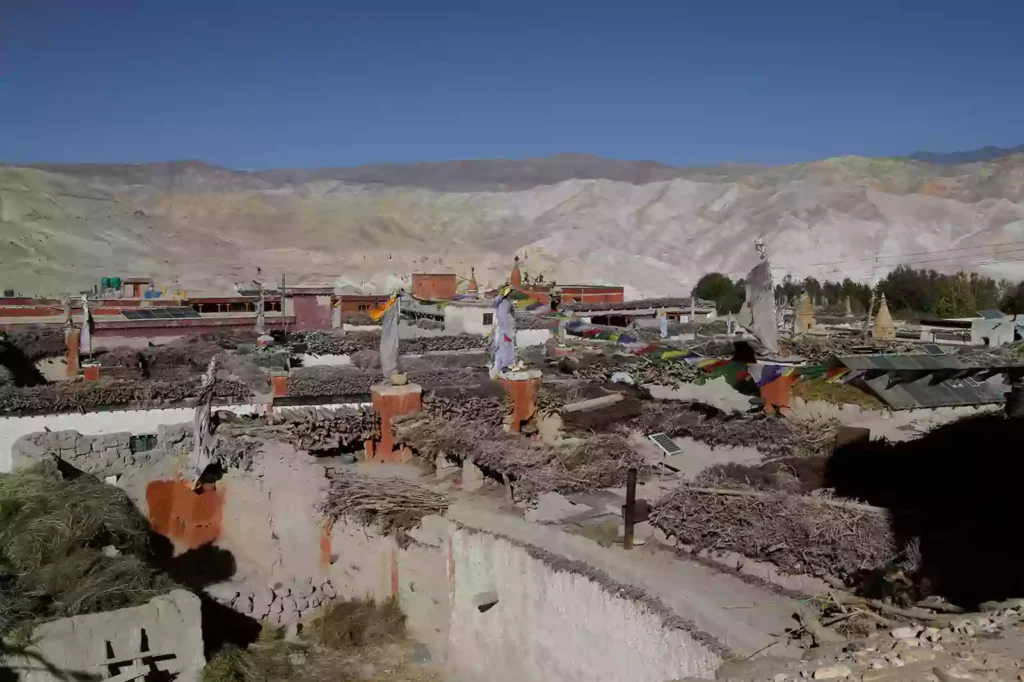
Thubchen Gompa is one of the major historic monasteries inside the walled city of Lo Manthang, known for its traditional architecture and religious artwork. Jampa Lhakhang and Choede Gompa are also part of the city’s monastic landscape, and together they make the walled settlement an important cultural destination.
Upper Mustang is a restricted area. Foreign trekkers need the special permit and must follow current government rules, including those on accompanying guides. If you prefer to travel by road, see our Mustang jeep tour.
Best trek for this region: Upper Mustang Trek
5. Buddhist Monasteries in Upper Dolpo
Shey Gompa is one of the best-known remote Buddhist monasteries in western Nepal. It lies in Upper Dolpo near the sacred Crystal Mountain, at about 4,500 m, and is tied to the region’s pilgrimage traditions.
Reaching it is not a short side trip. Upper Dolpo means long trekking days, remote settlements and camping-style logistics, plus restricted-area permits. It suits experienced trekkers with enough time who are ready for remote conditions.
Best trek for this region: Upper Dolpo Trek
6. Buddhist Monasteries Near Kathmandu
You do not need a long Himalayan trek to visit a Buddhist monastery in Nepal. Important Buddhist centres sit within easy reach of Kathmandu, and they pair well with our guide to short treks in Nepal if you have limited time.
Kopan Monastery
Kopan is a Tibetan Buddhist monastery on the edge of Kathmandu, near Boudhanath. It is known for study, meditation and retreats. Visitors can usually explore the grounds, but courses and retreats need booking, and the monastery asks for modest clothing and respectful behaviour.
Thrangu Tashi Yangtse Monastery at Namo Buddha
This monastery stands at Namo Buddha in Kavre district, southeast of Kathmandu. Namo Buddha is an important Buddhist pilgrimage site, and the monastery is a good choice if you want a Buddhist experience outside the city without a multi-day trek.
Boudhanath and Its Monasteries
Boudhanath Stupa is one of Nepal’s major Buddhist pilgrimage sites, and the surrounding streets hold many Tibetan Buddhist monasteries and centres. Note the difference: the stupa is the pilgrimage focus, while the monasteries are the communities around it. You can walk around the stupa, watch the practice and explore the neighbourhood.
7. Best Buddhist Monastery Treks in Nepal
If your main interest is Buddhist culture, choose a trek that gives you time to visit monasteries rather than simply pass through villages.
There is no single best monastery trek for everyone. Everest is the most established and has a famous monastery on the main route. Tsum Valley and Upper Mustang give a stronger focus on traditional Himalayan culture, while Upper Dolpo needs more time and preparation.
Best Time to Visit Buddhist Monasteries in Nepal
Spring (March to May) and autumn (September to November) are the best seasons for most monastery treks. Autumn also brings Mani Rimdu at Tengboche, usually in October or November. Losar, the Tibetan New Year, falls in winter and varies between communities.
Monsoon trekking suits few of these routes, although Upper Mustang lies in a rain shadow and is visited in summer. Winter can close or complicate high routes, so check conditions with your agency.
Permits, Altitude and Planning
Tsum Valley, Upper Mustang and Upper Dolpo are restricted areas, so you need special permits and a licensed guide, and rules and fees can change. Check the current requirements in our trekking permit guide and with the Nepal Tourism Board.
Many monastery visits involve altitude gain, especially Praken Gompa, Pungyen Gompa and Shey Gompa. Build them into your acclimatization plan, climb slowly and descend if symptoms worsen.
8. Buddhist Symbols and Etiquette on Nepal Trekking Trails
As you walk through Buddhist communities, you will see religious symbols beside paths, near villages and outside monasteries. A few customs help you visit respectfully.
Mani Walls
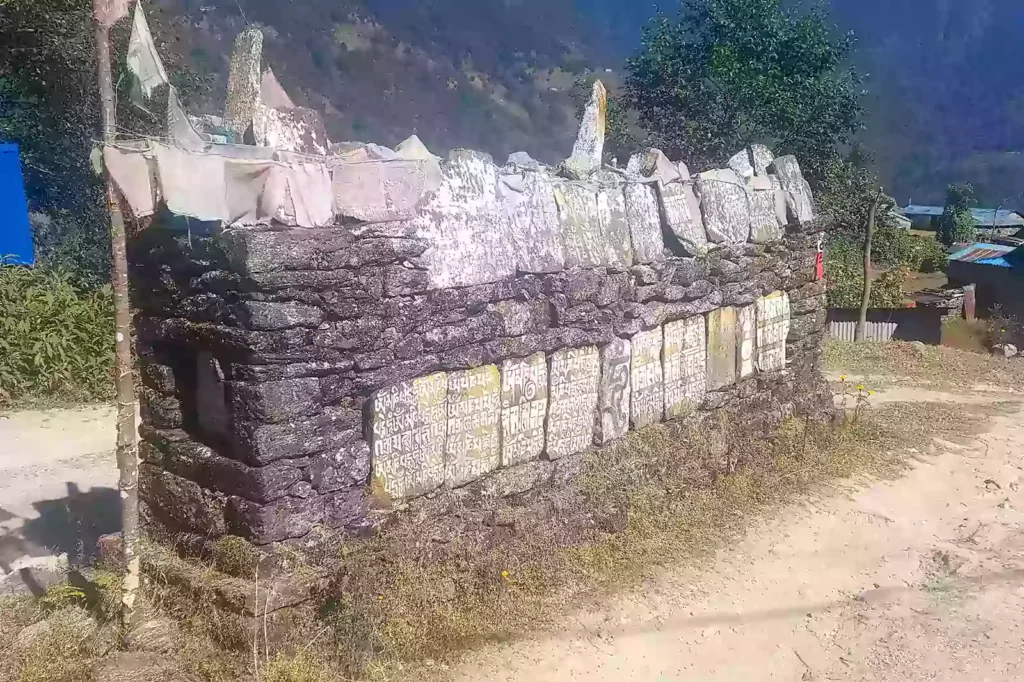
Mani walls are stone structures carved with Buddhist prayers, especially the mantra linked with Avalokiteshvara. Pass them with the wall on your right, which means walking clockwise. Where the path splits, take the side that keeps the wall on your right.
Chortens and Stupas
Chortens and stupas are sacred structures. Walk around them clockwise, and do not climb on them or sit on their bases.
Prayer Wheels
Prayer wheels contain written prayers or mantras. Turn them clockwise and handle them gently.
Prayer Flags
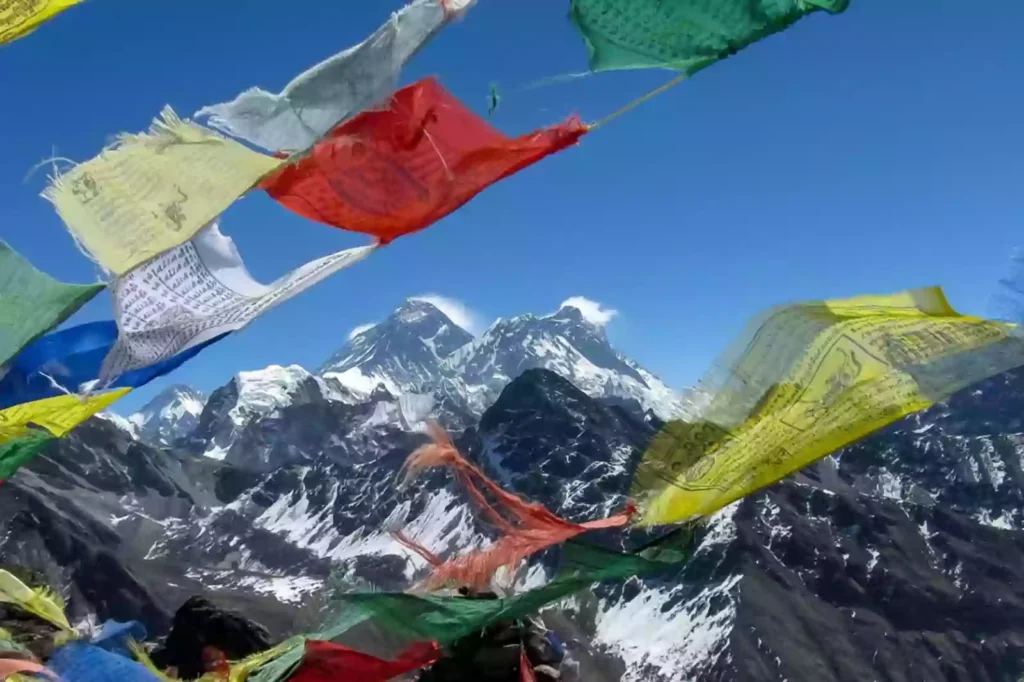
Prayer flags carry prayers and auspicious symbols and hang on passes, bridges and monasteries. Do not pull them down or treat them as decoration.
9. Buddhist Festivals in Nepal
Festivals are an important part of religious and community life in Nepal’s Himalayan regions, and dates and traditions differ between communities and monasteries.
Mani Rimdu
Mani Rimdu is a major festival of the Sherpa communities in the Everest region, and Tengboche is especially well known for its celebrations, including ritual performances and masked dances. It is a religious event, not a performance arranged for visitors, so follow the monastery’s instructions and never interrupt ceremonies.
Losar
Losar is the Tibetan New Year, but dates and customs vary. Sherpa, Tamang and other communities have their own traditions and calendars. If you plan a visit around Losar, confirm local dates rather than assuming every community celebrates together.
10. How to Visit a Buddhist Monastery Respectfully
Monasteries are active religious places. Some welcome visitors, while others restrict access to certain rooms or ceremonies.
Keep these simple guidelines in mind:
- Dress modestly and cover your shoulders and knees.
- Remove your shoes where requested.
- Speak quietly inside prayer halls.
- Ask permission before taking photographs.
- Do not touch religious objects, paintings or offerings.
- Do not interrupt monks or nuns during prayers.
- Follow signs and instructions from monastery staff.
- Donate only if you wish and where donations are accepted.
Rules differ between monasteries, so check with the monastery or your guide before entering restricted areas or taking photographs.
Plan a Nepal Trek That Includes Buddhist Monasteries
Visiting Buddhist monasteries in Nepal works best when your route gives you time to stop, watch and listen. Compare treks by the monasteries they reach, the altitude involved and whether the region needs a special permit.
Share your travel month, available days and the regions that interest you, and discuss a suitable itinerary with Nepal Footprint Holiday.
Not sure which monastery route fits you? Tell us your preferred region, travel dates and fitness level so we can help you compare suitable options.
Frequently Asked Questions About Buddhist Monasteries in Nepal
1. What are the most famous Buddhist monasteries in Nepal?
Tengboche Monastery in the Everest region is among the best-known Himalayan monasteries in Nepal. Other important sites include Mu Gompa and Rachen Gompa in Tsum Valley, Pungyen Gompa in Manaslu, Lo Gekar and Thubchen Gompa in Upper Mustang, and Kopan Monastery near Kathmandu.
2. Which Buddhist monasteries can you visit while trekking in Nepal?
You can visit Tengboche and Pangboche on the Everest route, Braga Monastery and Praken Gompa near Manang on the Annapurna Circuit, and Mu Gompa and Rachen Gompa on the Tsum Valley Trek. Pungyen Gompa is a side trip from Samagaun on the Manaslu Circuit, and Upper Mustang and Upper Dolpo have more remote monasteries.
3. Can tourists visit Buddhist monasteries in Nepal?
Many monasteries welcome visitors, but access depends on the monastery, religious activities and local rules. Some allow entry to designated areas, while others restrict prayer halls or ceremonies. Dress modestly, ask permission before taking photographs and follow instructions from monks or monastery staff.
4. Which is the best Buddhist monastery trek in Nepal?
The best route depends on your interests and time. The Everest Base Camp Trek includes Tengboche Monastery, while Tsum Valley offers Mu Gompa and Rachen Gompa. Upper Mustang is a strong choice for travellers interested in historic Tibetan-influenced monasteries and traditional settlements.
5. Are there Buddhist monasteries in the Annapurna region?
Yes. Braga Monastery sits just below Manang, and Praken Gompa is a steep climb above Manang village. You can visit both on the Annapurna Circuit. Allow extra time, because Manang is also an important acclimatization stop before Thorong La.
6. What should I wear when visiting a Buddhist monastery?
Wear modest clothing that covers your shoulders and knees. Remove your shoes where requested, and avoid clothing that could seem disrespectful in a religious setting. Individual monasteries may have extra guidelines, so follow the instructions at the entrance.
7. Do you need a permit to visit monasteries in Nepal?
Monasteries on regular routes such as Everest and the Annapurna Circuit need only the usual trekking permits. Tsum Valley, Upper Mustang and Upper Dolpo are restricted areas that need a special permit and a licensed guide. Check current rules before you book.
Conclusion
Buddhist monasteries in Nepal offer much more than interesting buildings along a trekking route. They are living centres of prayer, education, community life and Himalayan cultural heritage.
From Tengboche in the Everest region to Mu Gompa in Tsum Valley, Braga in Manang and the historic monasteries of Upper Mustang, each region offers a different experience. Some fit easily into a popular trek, while others need extra days, careful planning and a willingness to travel into remote mountains.
My advice is to leave enough time for these visits. Do not rush through a village just to reach the next overnight stop. Take time to observe, listen and learn from the local community.
Planning a Nepal trek with monasteries on the route? Contact Nepal Footprint Holiday and our team will help you choose a route and a suitable itinerary.
About the author: Bashu Dev Thapaliya is the Founder and Director of Nepal Footprint Holiday. He has worked in Himalayan trekking and mountain biking since 1999, guiding and organizing journeys across Nepal, Tibet and Bhutan. His experience includes adventure support work and guiding trips to Mount Kailash.