

If you are wondering how much cash to carry on a Nepal trek, your budget depends mainly on what your trekking package includes. For an all-inclusive guided trek, plan around NPR 2,500–4,000 per day (about USD 17–27) for personal expenses. If you pay for your own meals and accommodation, allow roughly NPR 5,000–7,500 per day (about USD 33–50) as an initial planning estimate.
These are budgeting guidelines, not fixed prices across every trekking region. Dollar amounts in this article are converted at about NPR 150 per US dollar, so check the day’s rate before you exchange money.
I have worked in Himalayan trekking and mountain biking since 1999. One question I hear again and again from trekkers preparing in Kathmandu is how much Nepalese currency they should take into the mountains.
My advice is straightforward: calculate your spending before departure, withdraw enough money in advance and keep an emergency reserve separate.
Also, plan for thinner banking than most visitors expect. ATMs on trekking routes are never guaranteed, and after the August 2026 flood in Rasuwa, the Langtang region needs special care.
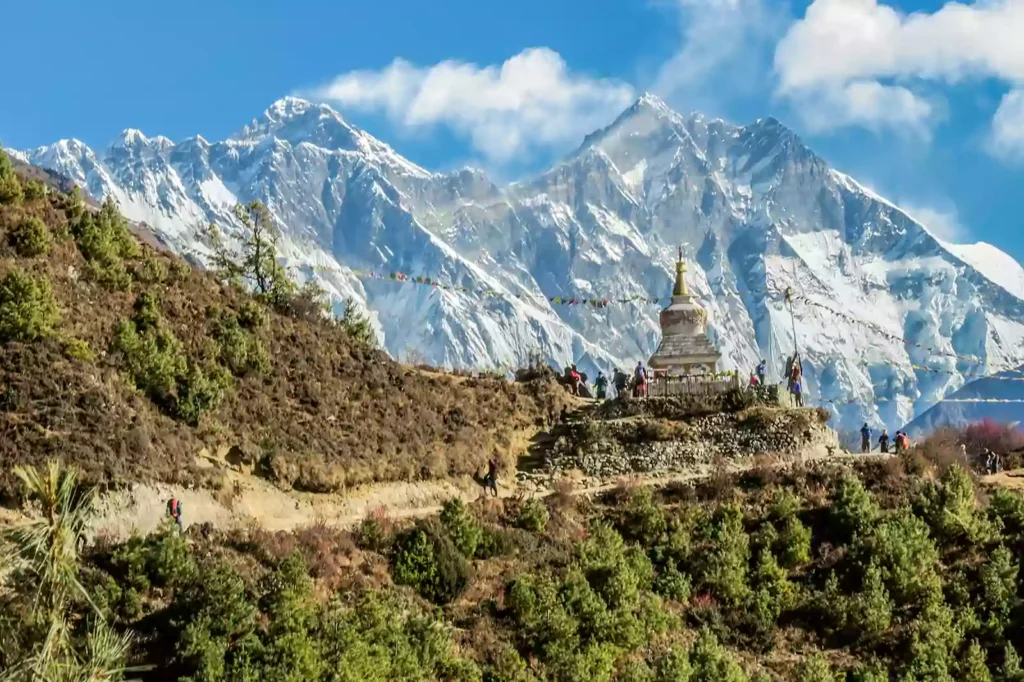
Daily Cash Budget for a Nepal Trek
Calculate your trekking cash from your daily expenses, trek duration and package inclusions. An all-inclusive trek generally needs less personal cash than an independent trek where you pay for meals and accommodation yourself.
Here is a practical starting point:
These amounts are planning estimates. Actual expenses depend on altitude, route, season and personal spending habits.
An all-inclusive package may already cover:
- Three meals per day
- Teahouse accommodation
- Trekking permits
- Guide and porter services
- Ground transportation
- Domestic flights, where applicable
Some personal expenses usually remain outside the package. Typical examples are hot showers, device charging, Wi-Fi, snacks, bottled drinks and extra accommodation during delays.
Always check your package inclusions before withdrawing money. Otherwise, you may carry far more cash than you need.
How Do You Calculate the Total Cash Needed?
Multiply your expected daily spending by the number of days you will be on the trail. Then add crew tips, any unpaid permits, and an emergency reserve.
Total trekking cash = Daily spending × Trail days + Tips + Unpaid permits + Emergency reserve
Three categories matter most:
- Daily spending: meals and accommodation if excluded, hot showers, charging, drinking water and snacks.
- Crew tips: your share of the tip for the guide, any assistant guide and the porters.
- Emergency reserve: extra money for unexpected accommodation, transport or other costs.
City days in Kathmandu or Pokhara are not trail days, so leave them out of the daily spending figure.
Example 1: 16-Day Everest Base Camp Package
Assume an all-inclusive package with about 12 days on the trail.
Example 2: 14-Day Annapurna Base Camp Package
Assume you pay for meals and accommodation yourself, with about 10 days on the trail.
These are illustrative budgets, not fixed trekking tariffs. Adjust the tip share to your actual group size and crew. The tipping section below explains where those figures come from.
How Much Cash Do You Need for Different Nepal Trekking Routes?
Cash needs vary between regions. Remote villages, transport arrangements and access to banking all affect how you should prepare.
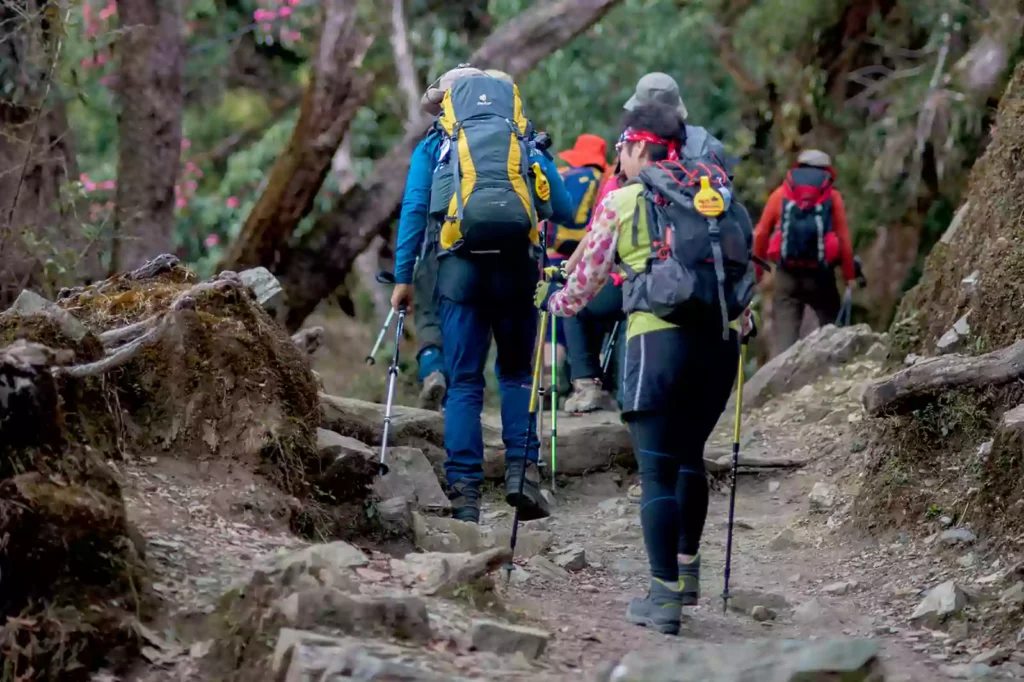
Everest Base Camp Trek
The Everest region has higher supply costs than many lower-altitude areas. Food, charging and drinking water become more expensive as you climb.
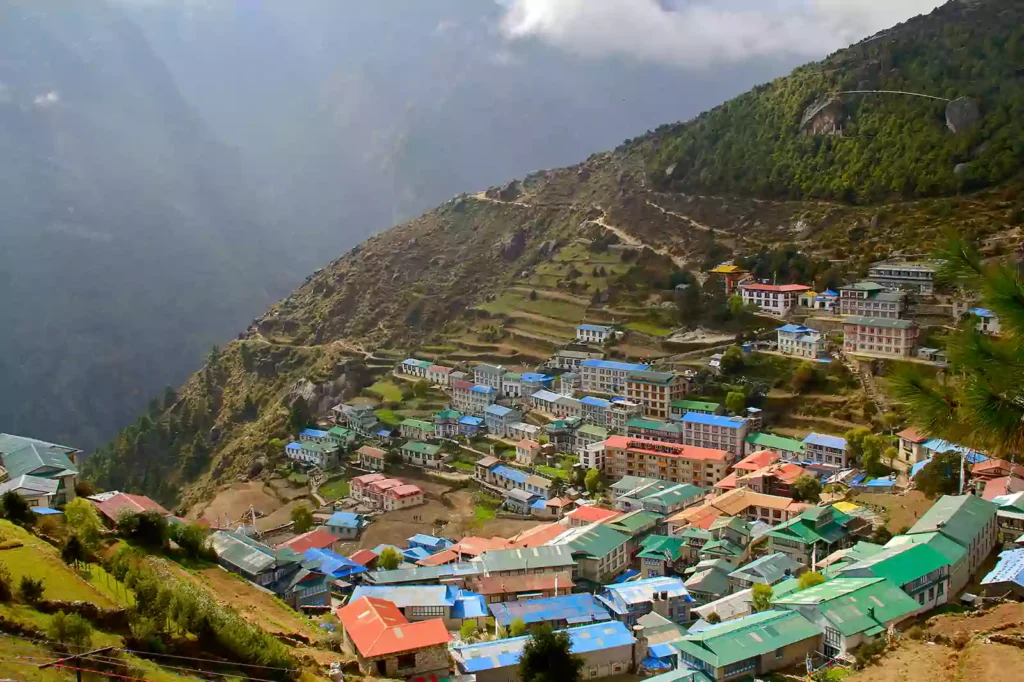
Machines are sometimes available in Lukla and Namche Bazaar, but they can be offline or out of cash, so never plan to fund the rest of your trek from them. Namche is a good place to check which services are working before you continue towards Tengboche and Dingboche.
If you fly to Lukla, delays can add unplanned nights and meals. Our Lukla Airport guide explains how flight disruption works and why a cash reserve helps.
For a complete package and expense breakdown, see our Everest Base Camp trek cost guide.
Annapurna Circuit Trek
The Annapurna Circuit passes through several settlements with road connections and local services, but banking access varies from village to village.
If your itinerary includes Manang, Thorong La and Muktinath, prepare enough cash for the remote sections before you leave the larger towns. Do not assume that a nearby bank will have a working ATM or accept your international card. Our Annapurna Circuit Trek page shows the route and package details.
Annapurna Base Camp Trek
Arrange your cash in Pokhara before travelling to the trailhead. Once you enter the mountain sanctuary, expect to pay for personal services in Nepalese rupees.
Your actual requirement depends on whether your package covers meals, accommodation and transport. See our Annapurna Base Camp Trek page for what a standard package includes.
Langtang Valley Trek
Langtang needs the most careful cash planning of any route in this guide right now. The August 2026 Bhote Koshi flood damaged banks and ATMs in the affected areas of Rasuwa, and the road and trail links around Syabrubesi were badly disrupted. Treks are currently rerouted via Dhunche and Thulo Syabru.
My recommendation: carry all the cash you need for the whole trek from Kathmandu, and do not count on any bank or ATM between Dhunche and Kyanjin Gompa. A machine listed in an online directory is not proof that it works today.
Conditions in Rasuwa have changed several times since August, so ask your trekking agency for the latest situation shortly before you travel. Our Langtang Valley Trek page shows the current route, and our Langtang Valley trek cost guide breaks down the budget.
Manaslu Circuit Trek
Manaslu is a remote route with limited banking along the main trail. Arrange your cash before leaving Kathmandu, and confirm which restricted-area permits and other costs your agency has already paid.
This matters most when your itinerary adds extra days in Tsum Valley or other remote settlements. Our Manaslu Circuit trek cost guide explains what to budget.
Should You Carry Nepalese Rupees or US Dollars?
Carry Nepalese rupees for everyday trekking expenses. Mountain teahouses, local shops and small service providers generally quote prices in NPR.
US dollars and euros are useful in Kathmandu for certain travel payments and currency exchange. Foreign currency is not a dependable payment method in remote mountain villages.
Before you start your trek:
- Exchange foreign currency through an authorized money changer or bank.
- Keep your currency exchange receipts.
- Carry NPR 100 and NPR 500 notes for small purchases.
- Keep some larger notes for bigger payments.
- Avoid depending on foreign currency at mountain teahouses.
The Nepal Tourism Board’s foreign currency guidance explains currency exchange and why you should keep your exchange receipts.
Why Should You Carry Small Denominations?
Imagine ordering a cup of tea for NPR 200 and handing over a NPR 1,000 note. A small teahouse, especially early in the morning or in a remote village, may not have enough change.
Break larger notes in Kathmandu or Pokhara before your trek, and keep the small notes in a separate wallet for everyday purchases.
Can You Use ATMs During a Nepal Trek?
ATMs exist in some trekking regions, but reliability varies. A machine can be offline, out of cash or unable to process an international card.
Here is a practical overview:
Remember: the existence of a bank or ATM does not guarantee a successful withdrawal. Ask your agency or the bank itself about operating status, cash availability and international card compatibility before relying on any machine.
Can You Pay by Credit Card or Digital Wallet in Mountain Teahouses?
Carry physical cash, because card and digital payment acceptance is inconsistent along trekking routes.
Some hotels, restaurants and established businesses accept international cards, but many small mountain teahouses prefer Nepalese rupees. Nepal also has local QR payment systems, but foreign banking apps will not necessarily work with every local QR code.
Payment facilities are changing, so check with your accommodation or trekking agency before departure. For everyday mountain purchases, cash remains the safer option.
How Much Emergency Cash Should You Carry?
Keep an emergency reserve that you do not touch for ordinary purchases. NPR 15,000–20,000 (about USD 100–133) is a reasonable starting allowance, although longer and more remote treks may need more.
Unexpected expenses can include:
- Additional teahouse nights
- Food during travel delays
- Changes to local transport
- Extra accommodation in a trailhead town
- Unexpected personal supplies
Weather, for example, can ground mountain flights, which means extra nights and meals while you wait.
Emergency cash is not a replacement for travel insurance. Choose a policy that covers your trekking activities, maximum altitude and emergency medical evacuation
How Should You Keep Your Trekking Cash Safe?
Carry your money in more than one secure place, and avoid keeping your whole budget in a single wallet or backpack pocket.
These simple precautions help:
- Keep daily spending money in a secure waist pouch or accessible pocket.
- Store part of your reserve in a separate protected compartment.
- Keep emergency money apart from ordinary spending cash.
- Protect banknotes from rain and moisture with a waterproof pouch.
- Keep your ATM card and backup card separately.
- Avoid showing large amounts of cash when paying.
They matter most on long trekking days, when rain, snow and frequent clothing changes make it easy to misplace belongings.
What Should You Check Before Leaving Kathmandu or Pokhara?
Before heading for the mountains, take a few minutes to check your finances and package inclusions:
- Confirm whether meals and accommodation are included.
- Check whether trekking permits have been paid.
- Confirm transport and flight inclusions.
- Calculate personal spending for every trail day.
- Set aside money for guide and porter tips.
- Prepare an emergency reserve.
- Exchange larger notes into smaller denominations.
- Keep your bank and exchange receipts.
- Tell your bank about your travel plans.
- Store cash in separate secure places.
- Ask your agency for the latest bank and ATM situation on your route.
If you are still arranging your trip, our trekking permits in Nepal guide explains the permit requirements for your route.
Plan Your Nepal Trek With a Realistic Cash Budget
Knowing how much cash to carry on a Nepal trek starts with knowing what your package covers. Check your inclusions for meals, accommodation, permits, transport, and guide and porter services before you exchange money.
Banking access varies a lot between trekking regions, so plan your cash before you leave Kathmandu or Pokhara. Share your route, travel dates, and trek length to discuss a suitable itinerary and budget with Nepal Footprint Holiday.
Not sure what to budget for your route? Tell us your preferred trek, travel dates, and available days so we can explain what your package covers and what to prepare in cash.
Frequently Asked Questions
How Much Cash Should I Carry on a 10-Day Nepal Trek?
Multiply your daily personal spending by the number of trail days, then add crew tips, unpaid permits and an emergency reserve. For an all-inclusive trek with 10 trail days at NPR 3,000 a day, that is NPR 30,000 before tips and reserve. Check your package inclusions before you exchange money.
Are There Banks and ATMs in the Langtang Valley?
Not reliably right now. The August 2026 Bhote Koshi flood damaged banks and ATMs in the affected areas of Rasuwa, and access routes remain disrupted. Withdraw all the cash you need in Kathmandu before you leave, and keep a separate reserve.
Can I Use ATMs During the Everest Base Camp Trek?
Machines are sometimes available in Lukla and Namche Bazaar, but they are not dependable sources of trekking cash. They can be offline or run out of money. Arrange the funds you need in Kathmandu before travelling towards the Everest region.
Should I Carry Cash or a Credit Card in Nepal?
Carry Nepalese rupees as your main payment method on trekking routes. Cards are useful in Kathmandu and Pokhara, but many mountain teahouses and small shops do not accept international cards. Keep a backup card in a separate place for emergencies.
How Much Should I Tip a Trekking Guide in Nepal?
There is no compulsory rate, and practice varies between companies. As a planning starting point, many companies suggest a pooled group tip of about USD 15–20 per day for a lead guide and USD 8–10 per day for each porter. Confirm the crew arrangements with your agency and tip in Nepalese rupees at the end of the trek.
Is It Safe to Carry NPR 100,000 on a Nepal Trek?
Carrying a large amount of cash needs sensible precautions. Split your money between secure places and avoid showing it unnecessarily. You may not need NPR 100,000 if your package covers most expenses, so calculate your real requirement before withdrawing that much.
Final Advice: Prepare Your Trekking Cash Before Leaving the City
Knowing how much cash to carry on a Nepal trek makes your journey easier to manage. You do not need every possible expense in your everyday wallet, but you should have enough money to complete your itinerary without depending on mountain ATMs.
Start by checking your package inclusions. Calculate your daily expenses, set aside money for your guide and porters, and keep an emergency fund separate.
Banking access differs a lot between regions. On Langtang in particular, take everything you need with you from Kathmandu.
At Nepal Footprint Holiday, we organize small-group and tailor-made treks with local guides. We help our guests understand what their packages cover and which personal expenses they should prepare for.
Planning a trek in Nepal? Contact our local team to discuss your route, itinerary and budget.
Plan Your 7-Day Nepal Trek With Local Experts
Choosing the right 7 days trek in Nepal depends on your fitness, your travel dates, and how much of the week goes on transport. Compare routes, access and altitude before you book, and keep spare time before your international flight.
Share your arrival date, the days you have available, and your walking experience to discuss a suitable itinerary with Nepal Footprint Holiday.
Not sure which route fits your week? Tell us your preferred region, travel dates, and fitness level so we can help you compare suitable options.
Author: Bashu Dev Thapaliya is the Founder and Director of Nepal Footprint Holiday. He has worked in Himalayan trekking and mountain biking since 1999, guiding across Nepal, Tibet and Bhutan.