

The mountain you should climb before climbing Mount Everest is not another eight-thousander. In fact, it is Island Peak. At 6,189 metres, Island Peak in Nepal’s Khumbu region has earned wide recognition as the ideal preparation peak for Everest. Moreover, it is where our team at Nepal Footprint Holiday has watched trekkers become mountaineers, and where future Everest climbers discover whether they are truly ready for the world’s highest mountain.
Climbing Mount Everest drives the ambitions of many adventurers. However, the summit above 8,000 metres offers no room to learn on the job. Consequently, the most experienced Everest expedition operators, guides, and mountaineering authorities consistently direct first-time climbers toward smaller Himalayan peaks first. Therefore, Island Peak stands as the best known and most widely recommended starting point among them.
Why You Should Not Attempt Everest Without Prior Climbing Experience
Everest above 8,000 metres presents challenges that no amount of trekking fitness or general athleticism can prepare you for. Therefore, understanding these challenges is the essential first step in building a responsible mountaineering progression.
High Altitude Challenges
At 8,000 metres and above, oxygen levels fall to roughly one-third of their sea-level concentration. Furthermore, the human body can never fully acclimatise to this altitude. As a result, every hour spent in the Death Zone accelerates physical deterioration regardless of fitness level. Climbers who have never pushed themselves above 5,000 metres are therefore genuinely unprepared for conditions above 8,000 metres.
Technical Skills Required for Everest
Everest demands competence in fixed-rope climbing, crampon use, ice axe self-arrest, jumar ascender use, glacier travel, and route-finding in whiteout conditions. Specifically, those who have never undertaken serious technical climbs have no business attempting Everest as their first. Moreover, developing these skills takes years and requires practice at altitude. Nobody learns them in a classroom.
Mental Endurance
Summit days on Everest involve 12 to 18 hours of continuous effort in subzero temperatures, with oxygen deprivation affecting judgment and decision-making at the most critical moments. Nevertheless, climbers only develop the ability to manage fear, fatigue, and uncertainty at altitude through progressive experience on smaller peaks. Nobody can will that ability into existence on summit day.
Recent Everest seasons have made the consequences of lacking these skills even more apparent. As a result, Nepal’s government and mountaineering authorities have increasingly tightened permit requirements for climbers without sufficient prior high-altitude experience.
Island Peak: The Best Mountain to Climb Before Everest
The mountain you should climb before climbing Mount Everest has a clear answer: Island Peak, also known as Imja Tse, standing at 6,189 metres in Nepal’s Khumbu region. It sits northeast of Everest Base Camp, surrounded by glaciers, with Lhotse, Nuptse, and Ama Dablam rising on all sides. British explorers first spotted it in 1951 and named it because it resembled an island rising from a sea of glaciers.
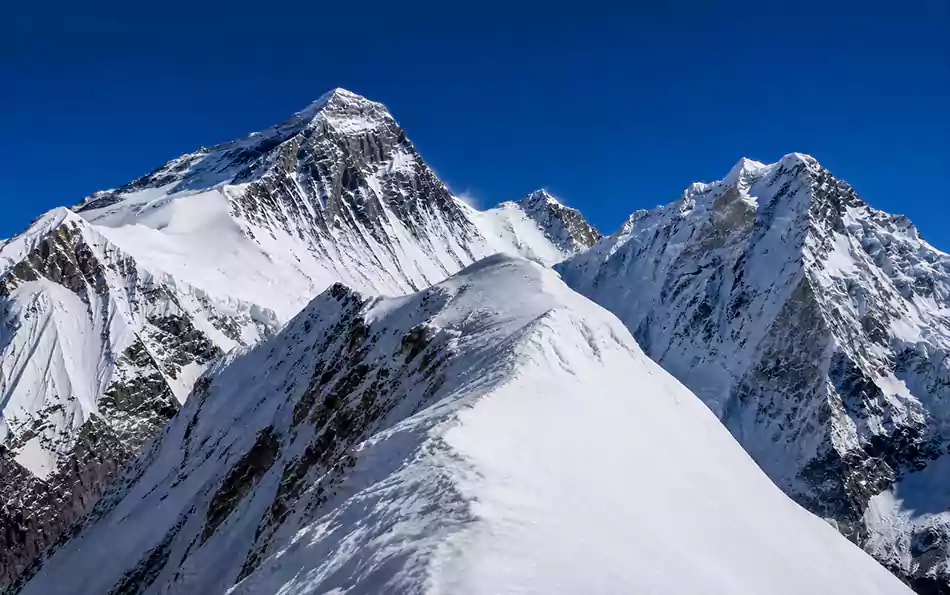
Island Peak carries significant historical weight. In 1953, it served as a training climb for members of the British expedition that went on to make the first ascent of Everest. Notably, Tenzing Norgay Sherpa was among the first Island Peak summit team. Since then, it has served as a preparation climb for some of the most significant Himalayan ascents in history.
Island Peak at a Glance
What You Learn Climbing Island Peak
Island Peak teaches every technical skill that Everest demands, in a controlled and manageable environment. Therefore, it functions as the ideal training ground for any aspiring Everest climber.
Crampon technique. The upper section of Island Peak involves sustained climbing on hard snow and ice. As a result, you learn to move confidently on technical terrain with crampons attached, a fundamental skill for every route on Everest.
Fixed rope technique. Fixed ropes protect the steep summit headwall. Consequently, ascending and descending these lines under load at altitude uses the same technique required throughout Everest’s upper mountain.
Jumar ascender use. In particular, climbers develop the upper-body strength and muscle memory essential for the fixed-rope sections on Everest above Camp 2.
Glacier travel. Crossing active glacier terrain to reach Island Peak’s high camp teaches crevasse navigation and rope team movement. Additionally, it builds the hazard assessment skills that every Himalayan climber needs above the snowline.
High-altitude adaptation. Sleeping and performing at 6,000 metres gives your body genuine high-altitude exposure. Crucially, it reveals how your body responds to altitude stress before you commit to an Everest expedition.
How Island Peak Simulates an Everest Expedition
Island Peak mirrors the logistical and psychological experience of a genuine Himalayan expedition in ways that day hikes and lower-altitude treks simply cannot replicate.
The approach involves a multi-day acclimatisation trek from Lukla through Namche Bazaar and Dingboche, building altitude gradually over 10 to 12 days. This process directly mirrors the acclimatisation rotations used on Everest expeditions. Furthermore, summit attempts begin with an alpine start at 2 am to 3 am, navigating in darkness in extreme cold. The technical summit push involves rope systems and genuine commitment at altitude. Together, all of these elements give climbers an honest assessment of their readiness for larger objectives.
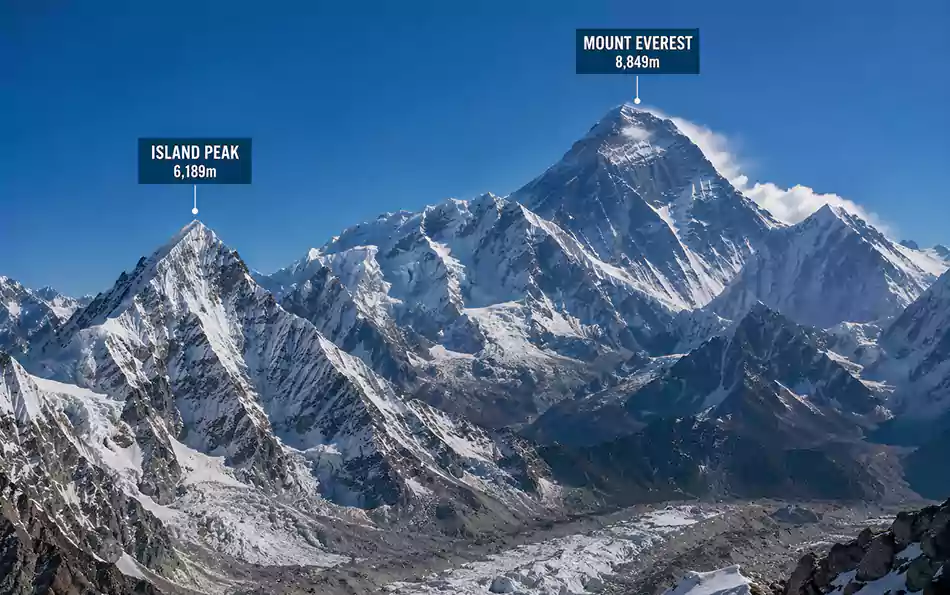
Island Peak vs Mount Everest
Permits Required for Island Peak in 2026
To climb Island Peak, you need three permits. First, the NMA climbing permit costs USD 250 per person in spring and USD 125 per person in autumn. You also need the Sagarmatha National Park Entry Permit, as Island Peak sits within the park. Additionally, the Nepal Mountaineering Association charges a garbage deposit of USD 500 per team.
Current regulations require all Island Peak climbs to include a licensed guide. Therefore, no climber may attempt Island Peak solo or without a permit. Full documentation requirements for your NMA permit appear at nepalmountaineering.org/documents-required-to-issue-permit. For Everest expedition permit regulations, the Department of Tourism provides official guidance at tourismdepartment.gov.np.
Nepal Footprint Holiday handles all permits and assigns certified climbing guides for every Island Peak expedition. Our Island Peak Climbing page has full package details and current departure dates.
Who Should Climb Island Peak?
Island Peak is ideal for trekkers who have completed the Everest Base Camp Trek and want to progress into mountaineering. It also suits experienced trekkers seeking their first genuine Himalayan summit, future Everest climbers building the required experience portfolio, and adventure travellers ready to move beyond trekking into technical climbing.
Island Peak does not suit complete beginners. At a minimum, we strongly recommend prior experience at elevations above 5,000 metres before attempting any peak climb. Furthermore, our trekking difficulty and grade guide helps you assess your current level honestly before committing.
The Progression from Island Peak to Everest
For many climbers, Island Peak is the first step in a structured progression toward Everest. Specifically, a sensible route begins with Island Peak at 6,189 metres for fundamental technical skills, then progresses to Lobuche East or Mera Peak for additional altitude, followed by Ama Dablam at 6,812 metres for genuine technical mixed climbing experience, and then Manaslu at 8,163 metres or another eight-thousander before committing to Everest.
Additionally, our peak climbing in Nepal page covers the full range of options available at each stage of this progression.
Final Thoughts
The mountain you should climb before climbing Mount Everest is Island Peak. At 6,189 metres, it combines real altitude, technical mountaineering elements, and full Himalayan expedition logistics into a summit that is both achievable and genuinely preparatory. In conclusion, every climber who reaches Everest’s summit has almost certainly built their skills and experience methodically over the years. Island Peak is where that experience begins.
📍
Island Peak expeditions depart spring and autumn. Nepal Footprint Holiday handles permits, guides, and full logistics from Kathmandu. Spring 2026 spots are filling now.