

The Nar Phu trek takes you through captivating Tibetan valleys, ancient villages, and mountain passes tucked away in the lesser-traveled regions of the Himalayas.
The Nar Phu trek is one of Nepal’s most isolated trekking experiences. While the trails of Everest Base Camp and the Annapurna Circuit are packed with trekkers, Nar Phu leads you to hidden valleys. Stone villages are still inhabited by yak caravans and Buddhist communities. Very few trekkers visit each year.
The trek starts at Koto, a small checkpoint village accessible from Besisahar in Manang District. From Koto, you hike over enormous suspension bridges and up through pine forests. Then the trail enters the restricted Nar and Phu valleys. Our Nepali guides call it “Old Himalayan Nepal” — no modern conveniences, no big chain hotels, no roads.
Why Choose the Nar Phu Trek?
The Nar Phu trek has a rare mix of characteristics you just don’t find on other treks in Nepal. You don’t need technical climbing skills. Furthermore, the Tibetan culture here remains untouched by commercial tourism.
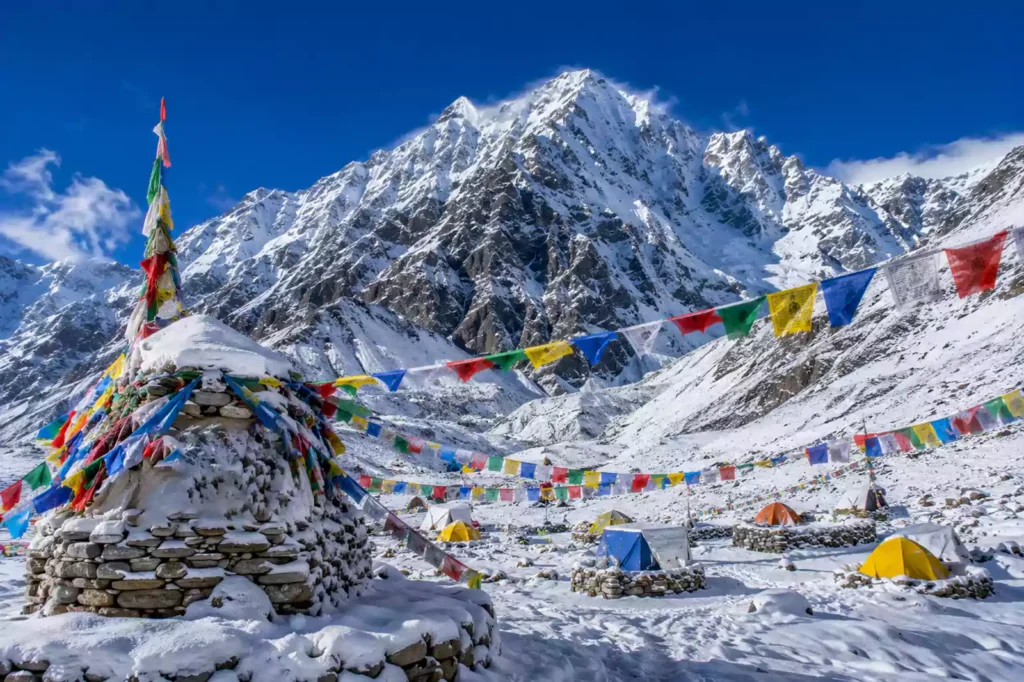
Most Nepal treks have tea houses at two-hour intervals, making trails feel congested. Nar Phu, however, is the opposite. Stone villages cling to cliff edges. Blue sheep and Himalayan griffons are spotted throughout.
Trekkers who visit tend to be experienced, photographers, and cultural travelers. Consequently, the Nar Phu trek attracts those who want something genuinely remote, challenging, and rewarding not a mainstream route.
At a Glance
Additionally, many trekkers combine Nar Phu with the Manaslu Circuit Trek for a three-to four-week Himalayan expedition.
How Difficult Is the Nar Phu Trek?
The Nar Phu trek is not for the novice trekker. Expect steep ascents, loose rock, narrow canyons, and exposed ridgelines at altitude.
The most difficult section is crossing Kang La Pass at 5,320m. At this elevation, available oxygen is roughly half of that at sea level. Trekking too fast brings on altitude sickness — headaches, nausea, dizziness, and fatigue. Therefore, our guides carry pulse oximeters and monitor blood oxygen levels at every camp.
There are no technical climbing sections. However, trekkers without high-altitude experience should build confidence on a shorter route first. The Mardi Himal Trek from Pokhara is a solid option.
Fitness preparation we recommend:
- Maintain cardio training for 8 to 10 weeks, hiking on uneven terrain with a loaded pack of 8 to 10 kg
- Speak to your GP or a Travel Medicine Clinic about altitude medication (Acetazolamide / Diamox), specifically if flying from sea-level cities like London, New York, or Amsterdam
Insider Tips
- Clear skies are usually found mid-October to early November — the Nepal trekking season guide breaks down conditions month by month across every region
- Local food to try: Tibetan butter tea (po cha) and buckwheat pancakes (khaaphar)
- The jeep transfer from Kathmandu to Koto takes 9 to 10 hours via Besisahar
📍
Choosing Nepal Footprint Holiday for your Nar Phu trek plans keeps you safer and makes the process smoother — Government of Nepal registered, Kathmandu-based local guides.
What Permits Do You Need for the Nar Phu Trek?
You will need a Restricted Area Permit (RAP) and an Annapurna Conservation Area Permit (ACAP). Arrange both before entering the valley.
Because Nar and Phu sit close to the Tibetan border, the Government of Nepal restricts entry. Licensed guide accompaniment is mandatory — fully independent trekking is prohibited. Our Kathmandu office processes all permits in advance, so trekkers avoid delays at remote checkpoints.
For official permit rates, visit the Nepal Tourism Board. First-time visitors can also check the Nepal visa and entry guide for full entry requirements.
What Are the Nar Phu Trek Villages Like?
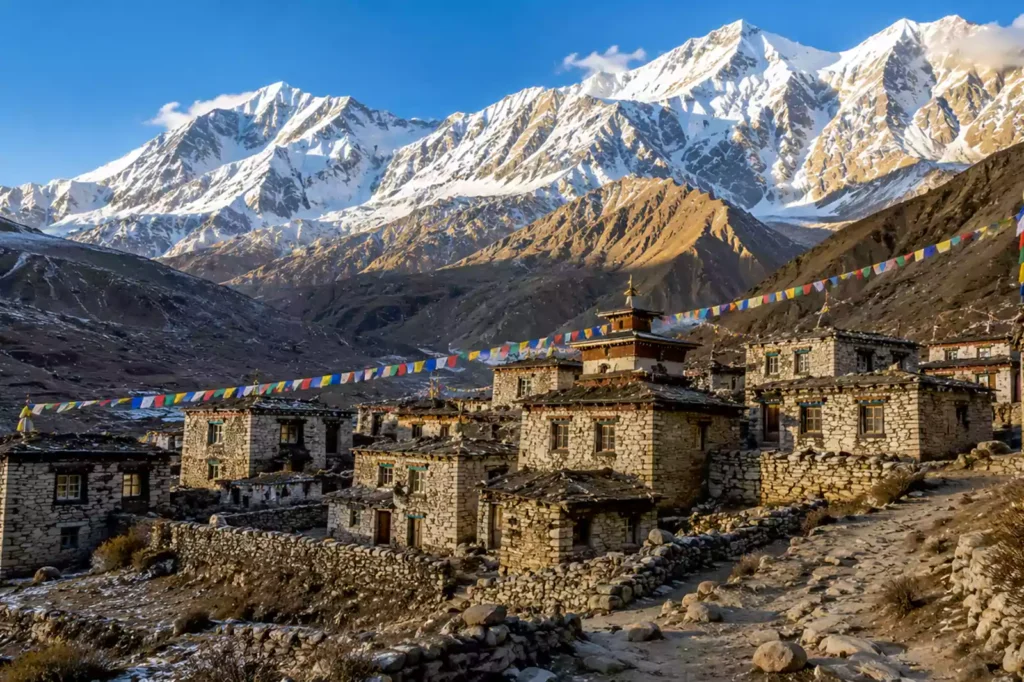
The villages of the Nar Phu trek are among the most culturally intact Tibetan heritage settlements in Nepal.
Phu Village lies at around 4,080m, accessible only through a narrow gorge. The village has approximately 200 residents who rely on yak herding and barley trading. Tashi Lhakhang Monastery, believed to be more than 800 years old, sits perched on the cliffs above. Its prayer hall contains original thangka paintings and hand-carved doorways untouched by modern restoration.
Nar Village, at around 4,110m, is larger and slightly more connected. Homes are built adjoining one another against the rocky hillside. Rooftops are used for drying buckwheat and turnips during harvest season.
In both villages, stopping for tea in a smoke-filled kitchen and drinking salty po cha from a wooden bowl is the most memorable part of the trip.
Insider Tips
- Best season for village life: late September for barley harvesting and early festival celebrations
- Local food to try: tsampa porridge with yak butter, a high-altitude staple throughout Himalayan Nepal and Tibet
- Mule caravans still carry supplies to the upper valleys — passing one on a narrow cliff ledge is unforgettable
Moreover, travelers drawn to cultural immersion often find the Upper Mustang Trek equally fascinating — another restricted-area route where Tibetan Buddhism shapes daily life.
Best Nar Phu Trek Itinerary
The Nar Phu trek traditionally takes 12 days, with two reserved for acclimatization. Ten-day versions compress the already limited rest days, making the trek more dangerous. We do not recommend them.
Most itineraries begin in Kathmandu and go by jeep to Koto via Besisahar. Then the route proceeds through the gorge toward Meta, Phu, and Nar, before crossing Kang La Pass.
Finally, trekkers seeking a gentler warm-up near Kathmandu often choose the Langtang Valley Trek, just a few hours from the capital.
How Much Does the Nar Phu Trek Cost?
The cost of the Nar Phu trek typically ranges from USD 1,200 to USD 2,200. In fact, direct bookings with a Kathmandu operator are 20 to 35 percent lower than bookings through European or North American agencies.
All international trekkers need travel insurance covering high-altitude trekking and helicopter evacuation. Without insurance, medical evacuation from Nar Phu costs USD 4,000 to 8,000. World Nomads, True Traveller (UK), and ERGO (EU) all offer solid coverage at reasonable premiums.
Although Nar Phu is a longer commitment, trekkers seeking a shorter introduction to Annapurna often start with the Poon Hill Trek from Pokhara.
What to Pack for the Nar Phu Trek
Weather in the Nar and Phu valleys changes rapidly. It can be warm at midday in October and below freezing by evening. Wind chill in the canyons can be intense.
Our guides check all gear before leaving Kathmandu. Fortunately, trekkers who arrive underprepared can rent equipment in Thamel. The full trekking equipment checklist covers every item, from base layers to emergency gear.
Essential packing list:
- Down jacket rated for -10°C or colder
- Waterproof, ankle-supportive trekking boots, broken in before arrival
- UV sunglasses Category 3 or 4 — UV reflection off snow is intense above 4,000m
- Sleeping bag rated to -15°C, rentable in Thamel
- Trekking poles to reduce knee strain on the Kang La descent
- Water purification tablets or a filter bottle
- Power bank and solar-compatible charger — charging stops are unreliable above Koto
- Windproof gloves and thermal base layers
- Blister treatment: socks, tape, or toe caps
- First aid kit with prescribed altitude medication if necessary
Is the Nar Phu Trek Safe?
No trek is completely risk-free. Nevertheless, the Nar Phu trek is safe when you use licensed guides and follow proper acclimatization timelines.
From 2025, all trekkers in Nepal’s restricted areas are legally required to use a government-licensed guide. This exists because the upper valleys have no permanent rescue infrastructure. Specifically, independent trekkers have found themselves in seriously dangerous situations in the past.
We stay in contact with tea house operators and checkpoint staff throughout the journey. Our guides use satellite communication and have established emergency procedures with helicopter rescue services in Pokhara and Kathmandu. The Nepal trek difficulty grading guide is also useful for comparing routes before making a final decision.
Nepal Footprint Holiday
Government of Nepal registered · Kathmandu-based · 10+ years guiding experience
Why Trekkers Describe Nar Phu as Transformational
The Nar Phu trek goes back to the roots of trekking. There are no Wi-Fi passwords. There are no selfie queues on the bridges.
Days follow the same rhythm. Frost crunches underfoot in the early hours. Juniper smoke drifts from village kitchens. A storm clears, and the Annapurna range appears in full.
In conclusion, trekkers consistently say Nar Phu is more peaceful and more affecting than any route they have done before. This is what people have told us for the last decade as we have guided them through this valley. The stillness here lingers with everyone who visits.
If you think Nar Phu may be the right trek for you, send us an inquiry and our Kathmandu team will get back to you within 24 hours.