

The Tiji Festival Mustang is a three-day sacred Buddhist celebration held every May inside the ancient walled city of Lo-Manthang, featuring elaborate monk mask dances rooted in 17th-century Tibetan ritual tradition.
The Tiji Festival Mustang is one of the most extraordinary cultural events in all of Nepal. Every year, monks of Lo-Manthang perform ancient sacred rituals inside the walled capital of Upper Mustang — a tradition unbroken for over 370 years. Our team at Nepal Footprint Holiday has guided travellers to this festival for many years. We say with confidence: nothing in the Himalayan world compares to witnessing the Tiji Festival in person.
“Tiji” is the shortened form of “Tempa Chirim,” meaning Prayer for World Peace. The festival celebrates the victory of Dorje Jono — a son of Lord Buddha — over the demon Gyalpo Meto, who threatened to destroy the Mustang Kingdom. Furthermore, this is not simply a folk performance. It is a deeply sacred event, presided over by the head Rinpoche of Chhyode Monastery, drawing pilgrims, monks, and travellers from across the world.
📍
Planning to witness the Tiji Festival Mustang? Let us handle every detail — permits, guides, and accommodation. Nepal Footprint Holiday, Government of Nepal registered and based in Kathmandu.
What Is the Tiji Festival Mustang and Why Is It Celebrated?
The Tiji Festival Mustang is Upper Mustang’s most important annual religious event. Historical records show it was founded by King Samdrub Rabten of Mustang around 1650 AD. The King invited the renowned Sakya Buddhist leader Ngawang Kunga Sonam to lead the first formal ceremony inside Lo-Manthang. Therefore, from its very beginning, this festival carried both royal authority and profound spiritual weight.
The mythology at the heart of the festival tells the story of Dorje Jono, who battled a powerful demon threatening to flood and destroy the Mustang Kingdom. His victory represents the triumph of good over evil and the protection of all humanity. Because this legend sits at the very core of Mustang’s identity, the Tiji Festival remains one of the most emotionally powerful events our guides have ever witnessed in Nepal.
Monks from Chhyode Monastery — located inside the Lo-Manthang city walls — lead all three days of ritual performance. Additionally, the head Abbot Khempo Tashi Tenjin Rinpoche presides over the entire ceremony alongside the King of Mustang, adding both spiritual and royal significance to every single moment.
When Is the Tiji Festival Mustang in 2027 and 2028?
The Tiji Festival Mustang follows the Tibetan Lunar Calendar and always falls in the third Tibetan month, aligning with May in the Gregorian calendar. Below are the confirmed dates:
| Year | Tiji Festival Dates |
| 2027 | June 01, 02, and 03 |
| 2028 | May 21, 22, and 23 |
We recommend booking your trip at least 3 to 4 months in advance. Consequently, permits, flights to Jomsom, and guesthouses in Lo-Manthang fill up extremely fast during festival season. Our Upper Mustang trekking package covers the full journey with every arrangement handled by our experienced local team.
What Happens on Each Day of the Tiji Festival?
The Tiji Festival unfolds over three distinct days inside the courtyard of Lo-Manthang. Each day carries its own sacred ritual dance, costume, and spiritual meaning.
Day 1 — Tsa Chham: The Opening Mask Dance
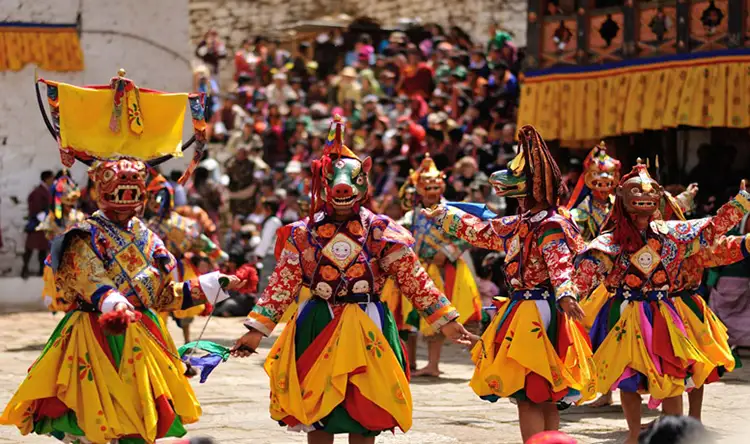
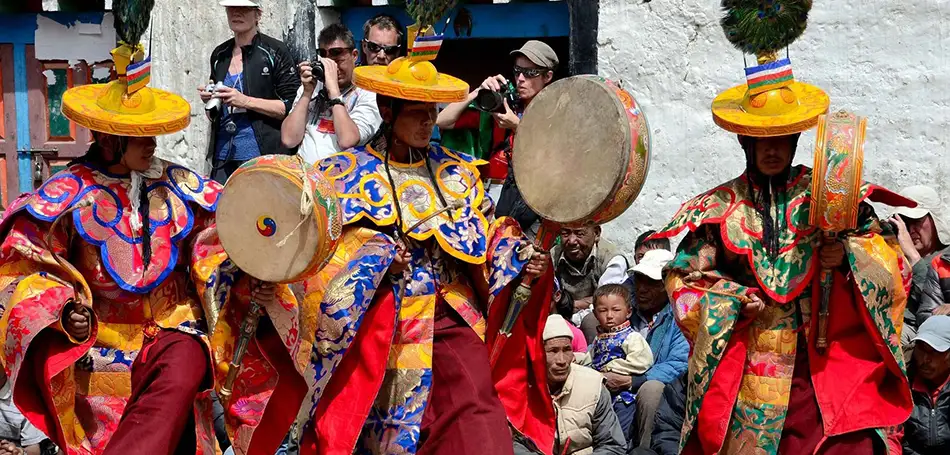
On the first day, monks dress in elaborate deity costumes and sacred masks. They perform the Tsa Chham dance, setting the mythological stage for the battle between good and evil. The courtyard fills with incense, horns, drums, and chanting. First-time visitors consistently describe this as the most visually stunning cultural experience of their entire Nepal journey.
Day 2 — Nga Chham: The Demon Parade
The second day is the most dramatic of all three. Monks wear terrifying demon masks and perform the Nga Chham dance, representing the demon’s violent rampage across the Mustang Kingdom. Moreover, the procession moves through the streets of Lo-Manthang itself, bringing the ancient legend to life in a deeply immersive experience.
Day 3 — Rha Chham: The Final Victory
The festival reaches its powerful conclusion on the third day. Monks enact the ceremonial defeat of the demon and perform a ritual banishment of evil from the kingdom. Finally, the King of Mustang and the head Rinpoche appear together to close the celebration, and the crowd erupts with genuine joy and relief.
How Do You Get to Lo-Manthang for the Tiji Festival Mustang?
Reaching Lo-Manthang is now more accessible than ever before. The road connecting Jomsom to Lo-Manthang — running all the way to the Tibet border — transformed this remote journey into a realistic destination for most travellers. However, advance planning remains absolutely essential.
| Route | Travel Mode | Starting Point | Travel Time |
| Pokhara to Jomsom to Lo-Manthang | Flight + Jeep | Pokhara | 2 to 3 days |
| Kathmandu to Lo-Manthang | Full Jeep Overland | Kathmandu | 3 to 4 days |
| Jomsom to Lo-Manthang | Trek | Jomsom | 5 to 7 days |
Our Nepal trekking overview covers everything you need to plan a journey into restricted Himalayan regions like Mustang. In addition, trekkers who want to combine the festival with a classic Himalayan route can explore our Annapurna Base Camp Trek before heading north to Mustang through Jomsom.
What Permits Do You Need for the Tiji Festival Mustang?
Upper Mustang is a restricted area of Nepal. Therefore, all foreign visitors must obtain special permits before entry. Under Nepal’s 2025 mandatory licensed guide regulation, every trekker must travel with a government-registered guide — solo entry is strictly not permitted.
| Permit | Cost (USD) | Validity |
| Restricted Area Permit (RAP) | USD 500 | 10 days |
| Additional Days (RAP) | USD 50 per day | Per extra day |
| ACAP Permit | USD 30 | Full trek duration |
| TIMS Card | USD 20 | Full trek duration |
Our team manages every permit through TAAN (Trekking Agencies’ Association of Nepal) in full compliance with Nepal Tourism Board regulations. You can review our detailed trekking permit guide to understand the full process before booking. Furthermore, our booking policy makes every step of the reservation completely transparent and stress-free.
What Makes Upper Mustang Worth Visiting Beyond the Tiji Festival?
Upper Mustang is unlike anywhere else in Nepal. The landscape shifts dramatically from green Himalayan foothills into a vast wind-carved desert plateau — ancient canyon walls, sky caves, and centuries-old monasteries stretching toward the Tibet border.
The Kingdom of Upper Mustang only opened to foreign visitors in 1992. Although guesthouses and road access now exist in every village along the route, the region remains deeply and authentically Tibetan. In fact, many travellers describe walking through Lo-Manthang’s narrow lanes as stepping back 500 years in time.
Moreover, Upper Mustang lies in the rain shadow of the Himalayas. As a result, it stays trekable even during Nepal’s monsoon season (June to August), making it one of the very few Himalayan destinations accessible year-round. Adventurous travellers can also explore our remote area trekking options for a broader view of Nepal’s most off-the-beaten-path routes.
For those combining Mustang with other Himalayan adventures, our Manaslu Trek and Langtang Valley Trek offer spectacular alternative routes through Nepal’s restricted and semi-restricted zones. You can also check our trekking grade guide to find the right difficulty level for your fitness and experience. Additionally, solo travellers planning any Himalayan journey should read our solo trekking safety guide before departure.
Government of Nepal registered · Kathmandu-based · 10+ years guiding experience
FAQ — Tiji Festival Mustang
1. What Does “Tiji” Mean?
“Tiji” is short for “Tempa Chirim,” a Tibetan phrase meaning “Prayer for World Peace.” The festival celebrates the victory of Dorje Jono, a Buddhist incarnation of Lord Buddha, over a demon who threatened to destroy the Mustang Kingdom. Monks of Chhyode Monastery re-enact this ancient legend annually across three days of sacred mask dancing.
2. Can I Visit the Tiji Festival Mustang Without a Guide?
No. Upper Mustang is a restricted area, and all foreign visitors must travel with a government-licensed guide under Nepal’s 2025 mandatory guide regulation. The Restricted Area Permit also requires groups of at least two people. Nepal Footprint Holiday provides certified English-speaking guides and handles all permits for every Mustang journey.
3. What Are the Tiji Festival Mustang Dates for 2027?
The Tiji Festival Mustang 2027 will be held from May 13 to May 15. Dates follow the Tibetan Lunar Calendar and change every year. We strongly recommend booking at least 3 to 4 months in advance, as flights, permits, and accommodation in Lo-Manthang sell out quickly during festival season.