

Langtang Himal Trekking takes you to the closest Himalayan range from Kathmandu, just 32 kilometres north, offering mountain panoramas, dense rhododendron forests, rare Red Pandas, and living Tamang Buddhist culture in one of Nepal’s most rewarding trekking regions.
Langtang Himal Trekking is one of the most underrated journeys in the Nepal Himalayas. The Langtang range sits just 32 kilometres north of Kathmandu. It forms a natural barrier between Nepal and Tibet. Despite that proximity, the valley feels remote, wild, and deeply peaceful. Our team has guided trekkers through Langtang for over a decade, and we never tire of watching people see it for the first time. If you are exploring trekking in Nepal and want a route that combines great mountain views with rich culture and easy access from Kathmandu, Langtang Himal is the answer.
Furthermore, Langtang Himal Trekking suits a wide range of travellers. Routes range from a comfortable week-long walk to Kyanjin Gompa to two-week circuits through remote villages. The terrain moves from moderate to adventurous, and every level of trekker finds something rewarding here.
What Makes Langtang Himal Trekking Special?
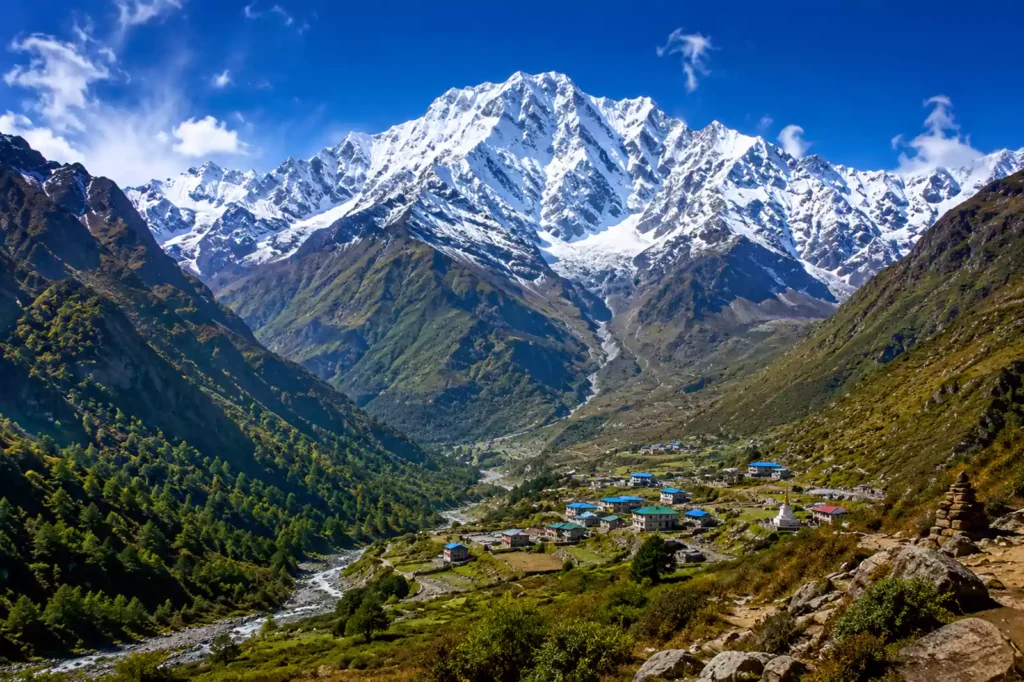
Langtang Himal Trekking delights you with an ever-changing landscape from the very first day. The trail climbs through dense forest of tall rhododendron — Nepal’s national flower — alongside magnolia, pine, oak, and fir. The forest is thick and alive. It shelters rare species, including the endangered Red Panda, which resembles a raccoon more than a bear and occasionally appears along the trail during walks through the bamboo thickets. Additionally, a rich variety of bird species appears throughout the season, making Langtang a rewarding destination for birdwatchers as well as trekkers.
Spring is the most vivid season on this trek. From March to May, rhododendron flowers burst across the hillsides in red, pink, and white. They spread from tall canopy trees down to low azalea bushes near the trail. Wild flowers cover the valley floor. The contrast of green rolling hills against white snow-capped peaks turns the whole area into what our guides simply call a mountain paradise. Those wanting to experience spring at its finest can extend their trip with our Langtang Gosainkunda Trek. This adds a longer spring journey through sacred alpine lakes.
How Does Langtang Himal Trekking Compare to Other Nepal Treks?
| Feature | Langtang Himal Trek | Everest Base Camp Trek | Annapurna Circuit Trek |
| Distance from Kathmandu |
32 km north | Flight to Lukla | Drive to Besisahar |
| Max altitude | 4,984 m (Tsergo Ri) | 5,364 m | 5,416 m |
| Duration | 7 to 14 days | 12 to 14 days | 14 to 21 days |
| Difficulty | Moderate to challenging | Strenuous | Moderate to strenuous |
| Best season | Spring and Autumn | Spring and Autumn | Spring and Autumn |
| Highlights | Valley, culture, wildlife | Base camp, Sherpa culture | Circuit, passes, villages |
| Approx. cost (guided) | USD 600–900 | USD 1,200–1,800 | USD 1,000–1,500 |
Langtang Himal Trekking is logistically simpler than either of its famous neighbours. There are no domestic flights to book and no long drives to remote trailheads. Moreover, the cultural and natural variety along the Langtang trail rivals anything in Nepal at a fraction of the preparation time.
Where Does Langtang Himal Trekking Go?
Langtang Valley and Kyanjin
The most popular destination on the Langtang Himal Trek is Kyanjin, sitting at 3,749 m (12,371 ft) within the magnificent Langtang Valley. The valley is enclosed by a series of high snow-capped peaks, and Kyanjin provides comfortable accommodation in cosy lodges with rooms facing mountain views and sweeping alpine landscapes. Our guides recommend spending at least two nights here to properly explore the area. Those who want to extend the experience into deeper mountain terrain will find the full Langtang Valley Trek itinerary on our main trek page.
Kyanjin was historically known as Kyanjin Gompa. The old monastery no longer stands. It was a small shrine near the Langtang Lirung glacier, rather than a full monastery. Over time, glacial movement, heavy snowfall, and avalanches gradually erased it. Today, the area around Kyanjin still carries a quietly sacred atmosphere that every trekker feels on arrival.
The Cheese Factory at Kyanjin
One of the most distinctive stops on the Langtang Himal Trekking is the small cheese processing factory near Kyanjin. The factory was built in the mid-1980s with Swiss Technical Assistance support. It was established because the area has an abundance of yaks and domestic animals producing large quantities of milk. The cheese made here is sold throughout Nepal and carries a distinct flavour from the high-altitude grazing land. Visiting the factory and trying the local yak cheese is one of those small experiences that trekkers remember long after the trip.
Return Route Options
The return from Langtang Himal Trekking offers several choices. You can descend through Upper Syabru or Thulo Syabru to reach Dhunche. Alternatively, you can walk directly to Syabrubesi village on the road, where a drive takes you back to Kathmandu. Our guides tailor the return based on your remaining time, energy, and interest in seeing additional villages along the way. Those wanting to explore Tamang communities further can combine the descent with the Tamang Heritage Trail. It is one of Nepal’s finest cultural walking routes.
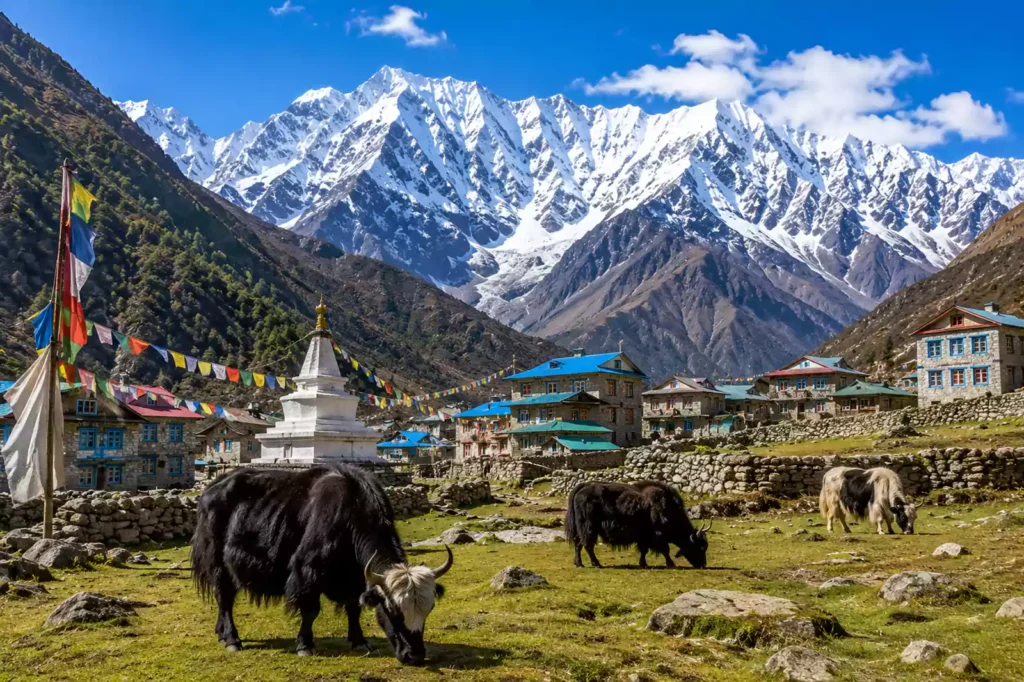
Langtang After the 2015 Earthquakes
The earthquakes of 25 April and 12 May 2015, measuring 7.8 on the Richter scale, devastated the Rasuwa district and surrounding areas. More than 8,000 people lost their lives across Nepal. In Langtang specifically, the tremors triggered massive avalanches that swept through villages along the route to Kyanjin and within the valley itself. The destruction was severe and immediate.
Nepal Footprint Holiday actively supported earthquake victims in Langtang. Our team contributed charity funds, volunteered in house construction, and assisted with road repair work in the weeks and months following the disaster. We strongly encourage all visitors to stay in family-owned tea houses. Hiring local guides and porters makes a direct difference. Buying locally made products, including the famous Kyanjin cheese, completes that support.
After more than a decade of recovery, the trails are rebuilt, and the villages are largely restored. However, some schools and remote areas around Langtang Himal still benefit from outside support. Visiting the region is itself one of the most meaningful contributions any trekker can make. Those who want to combine their visit with direct community support can learn more through our Nepal Footprint CSR programme.
The Langtang Marathon: Adventure Beyond Trekking
Langtang Himal Trekking is not only a journey for walkers. The region also hosts the Langtang Marathon, an adventure running event that is steadily gaining recognition alongside the more established Everest and Annapurna marathons. Participating in the Langtang Marathon is a unique way to support the local economy while experiencing the trail in a completely different way.
The ideal running season is April and May. Days are mostly clear with mild temperatures, and daylight runs from approximately 5:30 a.m. to 6:30 p.m. The standard marathon distance is 42 km, with ultramarathon options exceeding 55 km and a half-marathon at 21 km. The course begins at Kyanjin at 3,749 m, offering a dramatic high-altitude start with immediate mountain views. Runners descend toward Syabrubesi, approximately 38 km away, with some uphill sections. Course adjustments ensure the full standard marathon distance is met. Contact our team for current Langtang Marathon dates and participation details.
Langtang Himal Trekking and Tamang Culture
The Tamang people are the heart of Langtang Himal Trekking. This community is spread throughout Nepal. It is most concentrated in the Midwest around the Langtang region. Tamang culture is deeply interwoven with Tibetan Buddhism, specifically the Mahayana tradition, known as the Greater Wheel. Their art, monasteries, prayer flags, and daily rituals shape the atmosphere of every village you pass through on this trek.
Walking through a Tamang village feels different from any other trekking experience in Nepal. The carved wooden doorways, the mani walls, and the sound of drums from monastery courtyards all connect you to a living tradition. It has survived for centuries in these high valleys. Those who want to explore this cultural dimension further can read our spiritual tourism in Nepal guide. It covers the Buddhist heritage sites woven throughout the Langtang region.
What Permits Do You Need for Langtang Himal Trekking?
Two permits are required. First, you need a Langtang National Park entry permit at NPR 3,000 (approximately USD 22) per person. Second, you need a TIMS card at NPR 2,000 (approximately USD 15) for individual trekkers. Our guides handle all permit paperwork before the trek begins. Under Nepal’s 2025 mandatory guide regulation, all foreign trekkers in national park areas must use a licensed guide. This rule was introduced by the Nepal Tourism Board and TAAN (Trekking Agencies’ Association of Nepal). It applies to Langtang National Park year-round. Our full trekking permit guide covers the current process in detail.
When Is the Best Time for Langtang Himal Trekking?
Spring (March to May) and autumn (September to November) are the two prime seasons. Spring brings rhododendron blooms and wildflowers across the valley. Autumn offers crystal-clear skies and the sharpest mountain views of the year. Winter trekking to Kyanjin is possible for experienced trekkers with proper cold-weather gear. The monsoon from June to August brings heavy rain and reduced visibility, though the forest is lush and trails are quiet. Our trekking season guide covers monthly conditions across the Langtang region in full detail.
“Langtang is the trek we recommend to anyone who wants the full Himalayan experience without a long domestic flight or weeks of preparation. The valley is beautiful, the culture is genuine, and the mountains are right above you from day one.” — Nepal Footprint Holiday senior guide, Langtang region specialist with 11 years of field experience.
Ready to experience Langtang Himal Trekking? Our team will design a custom itinerary around your dates and budget. Send us an inquiry, and we will respond within 24 hours.
Frequently Asked Questions About Langtang Himal Trekking
Q1. How long does the Langtang Himal Trekking take? A standard Langtang Valley trek to Kyanjin and back takes 7 days. Extended routes, including Gosainkunda Lake or the Tamang Heritage Trail, run to 14 days or more. Our team tailors the duration to your schedule and fitness level.
Q2. Is Langtang Himal Trekking safe after the 2015 earthquakes? Yes. Langtang Himal Trekking is fully safe. Trails have been rebuilt, tea houses restored, and the region has been open to trekkers for years. Some traces of the 2015 earthquake are still visible, which serve as a powerful reminder of the community’s resilience. Our guides know every section of the trail and brief trekkers fully before departure.
Q3. What wildlife can you see on the Langtang Himal Trek? The most famous resident is the Red Panda, an endangered species that resembles a raccoon and inhabits the bamboo forest zones along the trail. Many bird species are visible throughout the season. Spring is the best time for wildlife sightings when the forest is active and the bamboo is fresh. Larger mammals, including Himalayan black bears, are present in the national park, though rarely seen on the main trail.