

Tea house trekking in Nepal means staying each night at a locally owned mountain lodge along the trail, where you get a simple room, freshly cooked meals, and direct connection with Himalayan communities, all without carrying camping gear.
Tea house trekking in Nepal is the most popular way to explore the Himalayas. When you head out on a Nepal trekking holiday, you face two main choices: a tea house trek, also called a lodge or guest house trek, or a fully organised camping trek. Today, almost every popular trail in Nepal runs through a network of family-owned lodges where you end each day with a warm meal, a simple bed, and a real conversation with your hosts. You carry only your personal gear. Our guides and a support Sherpa handle everything else.
Furthermore, tea house trekking opens a side of Nepal that camping simply cannot. You sleep inside the same homes where Sherpa, Tamang, and Gurung families have lived for generations. That closeness with local life is one of the main reasons trekkers return to Nepal year after year.
What Is a Tea House or Lodge in Nepal Trekking?
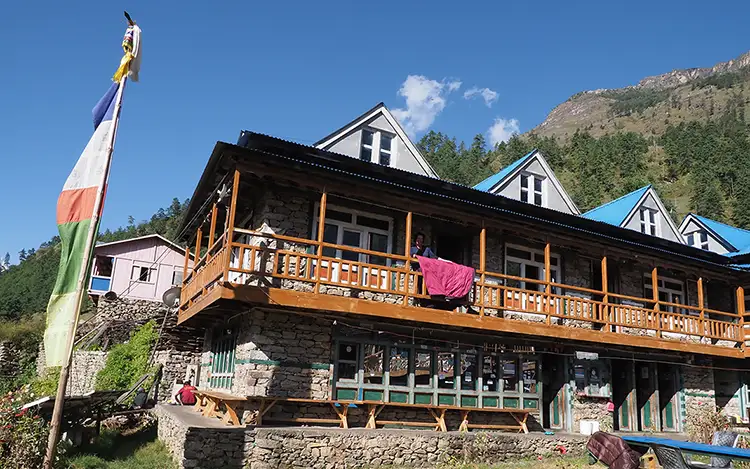
A tea house is a small, cosy Nepali home built primarily from local materials, mostly stone walls and timber frames, and designed to host both the family and passing trekkers. Our team also calls them mountain huts. Each one typically offers a few basic bedrooms with separate beds, a common dining hall with a firewood stove, and shared bathroom facilities. Tea house owners choose prime locations whenever possible, so views of the Himalayas are often extraordinary even from the dining table.
The rooms are basic but clean, with bedding changed daily. Some lodges offer attached private bathrooms at a slightly higher rate, with better furnishings and more privacy. Standard rooms include a clean blanket, pillow, and a lock for your door. Many lodges also hang a drying rope for wet trekking clothes. For a shared bathroom, you step outside your room. Hot showers are available at most lodges, heated by firewood, gas, or a bucket of hot water. A cold shower is usually free.
Our Practical Tips Before You Go
If you are concerned about hygiene, we strongly recommend bringing your own sleeping bag liner or a thin private sleeping bag. You can buy both in Kathmandu, Pokhara, Namche Bazaar, Manang, and most major stops along popular routes. Additionally, pack a pair of earplugs. Tea house walls are thin, sometimes just wooden planks or open stone, and sound travels freely between rooms at night.
What Should You Expect from Tea House Trekking in Nepal?
Most tea houses charge between USD 5 and USD 15 per night for a twin room. However, the room rate is kept low because owners earn the majority of their income from meals and drinks. When you stay at a tea house, the host genuinely expects you to eat all your meals there. Our guides always explain this to trekkers before departure because respecting this arrangement is an important part of supporting the local economy.
Your meal arrangement depends on your trekking package. On all-inclusive packages with Nepal Footprint Holiday, your guide manages all meal costs at each lodge. If you hire only a guide, you pay your own meals directly at each stop. Personal snacks and extra drinks are always settled separately. Trekkers who want to keep costs low will find useful budgeting advice in our guide to short treks in Nepal for beginners, which also covers which routes have the most affordable tea house options.
What Food Will You Eat on a Tea House Trek?
Tea house menus across Nepal follow a broadly similar pattern. You will find dal bhat, momos, varieties of potato dishes, local wheat and corn bread, noodles, rice, cooked vegetables, and what trekkers affectionately call mountain pizza. Each tea house also prepares its own local specialties, which are often more hygienic and flavourful than anything on the printed menu. Our guides always encourage trekkers to try the locally suggested dish. Local cooks know local food best, and that principle holds true everywhere from the Everest region to the Langtang valley.
Food is cooked fresh when you order, so it takes longer than you might expect. Dishes like momos and spring rolls take even more time to prepare. Therefore, always ask your guide what is fresh and fast before you order. To avoid stomach trouble on the trail, choose freshly cooked simple dishes. Dal bhat, chapatti, and cooked vegetables are consistently safe and widely available on every route, from the Annapurna foothills to the higher camps of the Everest Base Camp Trek.
At high-altitude sections like Thorong La on the Annapurna Circuit or the upper camps of the Manaslu Circuit Trek, food cools within minutes of being served. In those areas, lighter options like soups, spaghetti, bread, and boiled vegetables are easier to digest and hold warmth longer. Our guides give specific meal advice for each altitude zone before you leave each morning.
Is Wi-Fi and Electricity Available in Nepal Tea Houses?
Wi-Fi is one of the fastest-growing services along Nepal’s trekking routes. On popular trails, including the Gokyo Lakes Trek, Annapurna Base Camp, the Langtang Valley, and Upper Mustang, most tea houses offer Wi-Fi powered by electricity or solar panels. The connection is generally available in the dining room. When many trekkers connect at once, the speed drops considerably. The Solukhumbu area around Everest typically has a stronger and more consistent signal than other regions.
Pricing varies widely. Some lodges charge per hour, others per day, with costs ranging from USD 1 to USD 15 per day. Many tea houses also offer device charging for between USD 2 and USD 4 per full charge. Power cuts are frequent, so always charge your devices whenever you get the opportunity. On heavily overcast days with limited solar output, service may not be available. We always advise trekkers to carry a power bank and treat periods of disconnection as simply part of the mountain experience.
What Are the Advantages of Tea House Trekking in Nepal?
Tea house trekking in Nepal offers clear benefits over camping, which is why it has become the dominant style for routes of all difficulty levels across the country.
- Lighter pack: You carry only personal trekking gear, not tents, cooking equipment, or camp furniture
- Lower cost: Less manpower, fewer crew members, and no equipment transport significantly reduce your overall trekking budget
- Community connection: You sleep in family-owned lodges, eat locally grown produce, and directly support Himalayan farming families
- Weather protection: A solid stone or timber lodge shelters you from rain, snow, and wind far better than any tent
- Flexibility: You can adjust your pace each day without dismantling a camp or reorganising a crew, which is especially useful on routes like the Annapurna Base Camp Trek, where weather can shift quickly
Moreover, because you stay inside the community each night, your spending reaches local families directly. When you eat at a tea house, the ingredients often come from the host’s own garden or a neighbour’s farm. Trekkers who want to understand the deeper cultural side of this experience will enjoy reading about solo trekking in Nepal and how independent travellers connect with local communities through the tea house system.
Which Nepal Treks Are Best for Tea House Trekking?
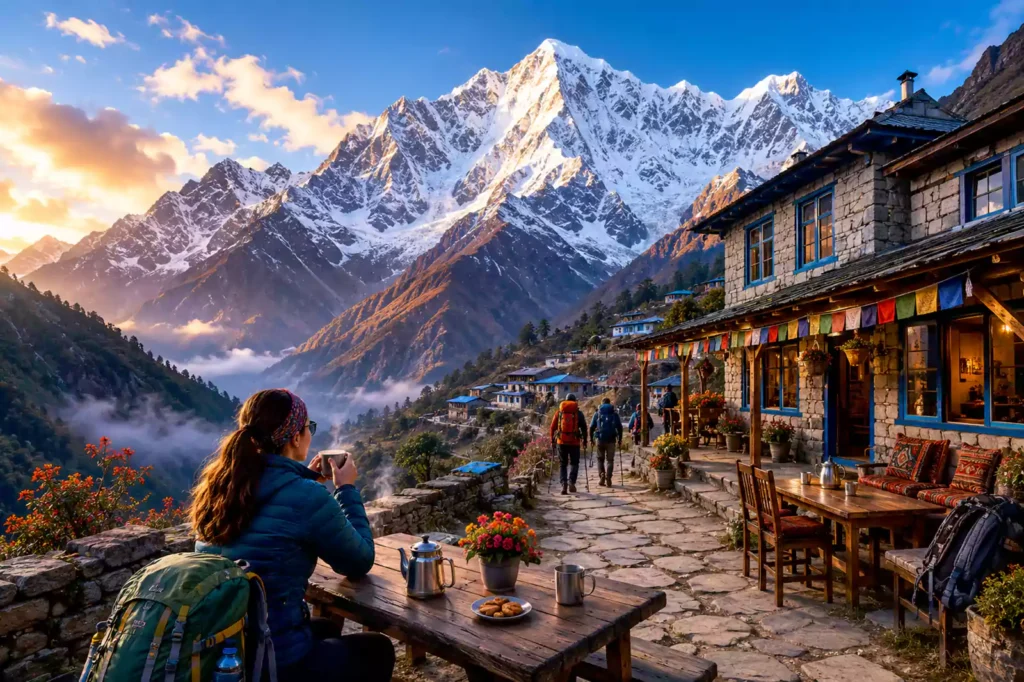
Almost every popular route in Nepal runs on tea house infrastructure. For first-timers, the closest and most accessible option is the Helambu Trek from Kathmandu, with well-spaced, welcoming family lodges throughout a 5 to 8-day circuit. The Everest Base Camp Trek has tea houses reaching up to 5,200 m, making it the highest tea house trekking corridor in the world. The Tamang Heritage Trail offers an outstanding cultural tea house experience through rarely visited Tamang villages north of Kathmandu.
For those seeking remote adventure, tea houses also operate on the Kanchenjunga Base Camp Trek, though facilities are simpler and the spacing between lodges is wider. Our team matches every trekker to the right route based on experience, fitness, and budget. Contact us today, and we will respond within 24 hours with a personalised recommendation and quote.
“Tea house trekking in Nepal is not just the most practical way to explore the Himalayas. It is also the most human. Every lodge is a family home, and every meal is cooked for you by someone who has lived in these mountains their entire life.” — Nepal Footprint Holiday senior guide, with over 12 years of Himalayan field experience.
Under Nepal’s 2025 mandatory licensed guide regulation, introduced by the Nepal Tourism Board and TAAN (Trekking Agencies’ Association of Nepal), all foreign trekkers in national park areas must trek with a licensed, government-certified guide. Our guides know every tea house on every route, and they manage permits, room bookings, and meal arrangements so you can focus entirely on the walk ahead.
Frequently Asked Questions About Tea House Trekking in Nepal
Q1. How much does tea house trekking in Nepal cost per day? A twin room in a tea house costs between USD 5 and USD 15 per night. Meals typically cost USD 4 to USD 10 per dish. A budget trekker covering accommodation and three meals per day can expect to spend approximately USD 25 to USD 40 per day on trail, excluding guide, porter, and permit costs.
Q2. Do Nepal tea houses have hot showers and Wi-Fi? Most tea houses on popular routes below 4,000 m offer hot showers, either gas-heated or by hot bucket water, for a small fee of USD 2 to USD 4. Wi-Fi is available at many lodges on major routes like Everest Base Camp, Annapurna Circuit, and Langtang, though speed is limited and reliability depends on weather and solar power availability.
Q3. Do I need a sleeping bag for tea house trekking in Nepal? Tea houses provide blankets and pillows, but we strongly recommend bringing your own sleeping bag liner or a lightweight sleeping bag, especially above 3,500 m where temperatures drop significantly at night. A sleeping bag rated to -10°C is ideal for high-altitude tea house trekking routes such as Everest Base Camp or the Manaslu Circuit.