

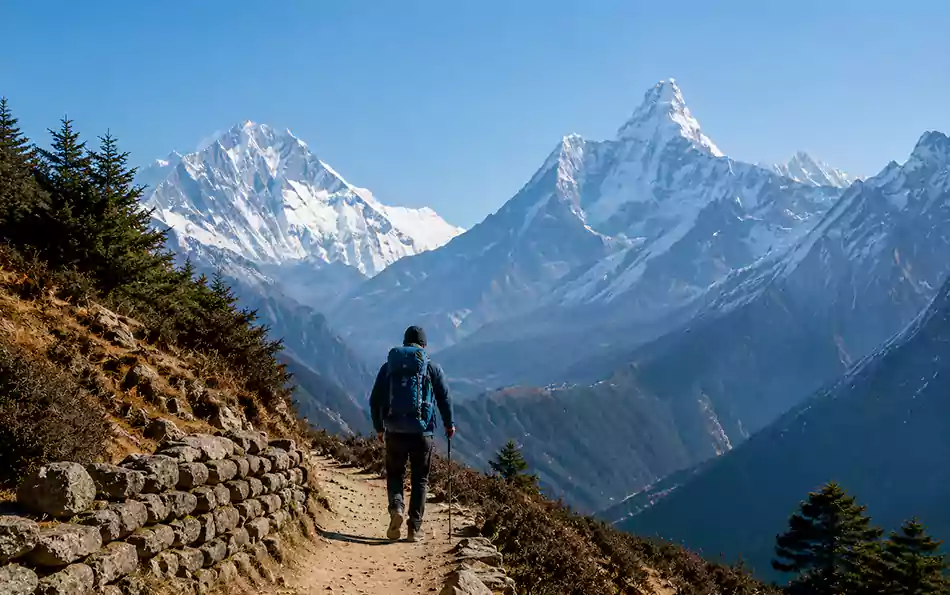
Nepal earns the title of one of the best trekking destinations in the world. Everest, the Annapurna massif, and the Himalayas have trails that attract millions of adventurers every year. The allure is real; trekkers walk freely through snow and sun, embarking on some of the most rewarding journeys on the planet.
However, in 2026, it is important to understand whether solo trekking in Nepal is still legal and what the genuine safety picture looks like before you arrive. The laws have shifted, and understanding them could be the difference between a remarkable adventure and a life-threatening situation.
Is Solo Trekking Legal in Nepal?
Nepal has instituted a ban on solo trekking. As of 2023, the Nepalese government mandated that all trekkers on all major routes must hire a licensed guide. This covers routes in the Everest, Annapurna, Langtang, Manaslu, and Kanchenjunga regions. Trekkers found without a licensed guide at permit checkpoints are turned back without exception.
The Nepal Government took this action following several serious incidents involving solo trekkers’ severe altitude sickness, injuries, and deaths on remote trails. The Nepal Tourism Board and the Trekking Agencies Association of Nepal (TAAN) worked together to put these regulations in place, and they are actively enforced at every checkpoint.
Many naturally restricted areas, such as Upper Mustang, Nar Phu Valley, Dolpo, and Kanchenjunga, have long required guides and special permits. The 2025 regulation extended similar requirements to previously unrestricted paths. Ourcomplete guide to Nepal trekking permits covers the exact routes requiring special authorisation, current permit fees, and where to obtain each one before your trek.
Why Nepal Introduced the Guide Policy
For over a decade, our guides have escorted trekkers through the Khumbu and Annapurna regions. Each season, they witness consequences that most solo trekkers never anticipate. The Himalayas are beautiful, but they are genuinely unpredictable, and three specific dangers make solo trekking particularly hazardous in these mountains.
Altitude sickness is the greatest danger. The Everest Base Camp Trek and the Gokyo Lake Trek both climb above 5,000 metres, where Acute Mountain Sickness, High Altitude Pulmonary Oedema, and High Altitude Cerebral Oedema can develop rapidly and without warning. A trained guide takes daily blood oxygen measurements, detects early warning signs, and decides when a trekker must descend immediately. Solo trekkers experiencing deteriorating cognition, itself a symptom of serious AMS, have no one to recognise the danger or intervene. That is a life-threatening situation.
Navigation is a separate and serious concern. Routes are generally visible in decent weather, but Nepal’s mountain conditions shift at an alarming pace. A clear path at 8 am can be buried under heavy snowfall by noon. Above 4,000 metres in remote areas, trail signs are scarce, and phone reception disappears for hours at a time. Getting lost alone in this terrain is not a minor inconvenience; it can become a survival situation within hours.
Emergency coordination is the third factor. Helicopter rescues are available in Nepal, and our team maintains direct contact with rescue operators. However, arranging a rescue while injured, ill, or disoriented at altitude is enormously difficult alone. A guide makes the call, provides accurate GPS coordinates, and ensures the helicopter lands in the right location. Without local support, critical time is lost.
Requiring a guide is not bureaucratic red tape. It is a direct safety requirement, supported by the statistics on trekking accidents and fatalities across Nepal’s mountain regions.
Current 2026 Regulations: Trekking Laws Explained
Under the current regulatory framework, here is how the primary trekking areas break down:
Fully restricted guide mandatory, special permit required: Upper Mustang, Nar Phu Valley, Dolpo, Tsum Valley, and Kanchenjunga. These areas have required guided group travel for many years, and this has not changed. Our remote area trekking page covers the specific permits, costs, and logistics for each of these regions in detail.
Guide mandatory under the 2025 regulation: Everest region (Khumbu), Annapurna region, Langtang, and Manaslu Circuit. Independent trekking without a licensed guide is no longer permitted on any of these routes. Checkpoints verify compliance at multiple points along each trail.
Shorter lower-altitude trails: Certain day hikes and short trails near Kathmandu and Pokhara may still be walked independently, but any multi-day high-altitude route now requires a licensed guide.
Why Trekking with a Guide Is Worth It
Many trekkers initially resist hiring a guide and later return saying it was the best decision they made on their trip. Here is what a licensed guide actually provides on the trail.
Safety monitoring. Our guides carry pulse oximeters and check oxygen saturation levels at every teahouse stop. They make informed decisions about when to push on and when to rest, decisions that solo trekkers often get wrong because altitude affects judgment before it causes obvious physical symptoms.
Local knowledge that no guidebook captures. A guide from the Khumbu knows which teahouse serves the best Dal Bhat, which section of the trail floods first after rain, and which local family has been hosting trekkers for thirty years. That knowledge turns a good trek into an extraordinary one.
Logistics handled completely. Permits, teahouse bookings, meal arrangements, transport, and communication with locals all happen smoothly when an experienced guide is managing them. Before you book, our trekking difficulty and grade guide helps you match your fitness level to the right route so there are no surprises on the trail.
Support for local mountain communities. Every guide and porter hired through Nepal Footprint Holiday receives fair wages above the government minimum, appropriate gear for altitude conditions, and full insurance coverage. Hiring locally is one of the most direct ways your trek benefits the mountain communities you walk through.
Best Shorter Treks for First-Time Visitors
If you want a full Himalayan experience without committing to a longer high-altitude route, several excellent shorter options are available.
The Poon Hill Trek is a five-day route in the Annapurna foothills offering spectacular sunrise views over the Dhaulagiri and Annapurna ranges without requiring acclimatisation days. It is one of our most popular introductory treks and a beautiful Himalayan experience in its own right.
The Langtang Valley Trek sits just north of Kathmandu and takes trekkers through Tamang and Tibetan-influenced villages toward the edge of the Langtang Glacier. It is quieter than the Everest and Annapurna corridors and offers a genuinely intimate mountain experience.
The Mardi Himal Trek may be Nepal’s most underrated route. Running along a quiet ridge above Pokhara, it reaches 4,500 metres in just seven days with close-range views of Machhapuchhre (Fishtail) and Annapurna South, feeling remote and isolated despite being relatively accessible from Pokhara. All three routes require a licensed guide under current regulations, and all three are trails our team knows deeply and guides with genuine enthusiasm.
Practical Safety Checklist Before You Trek
Whether you trek with Nepal Footprint Holiday or another registered agency, these steps are non-negotiable before you depart.
Train for at least three to six months before your trek. Your travel insurance must explicitly cover high-altitude trekking above 5,000 metres and helicopter evacuation. Check the policy wording carefully and do not assume standard travel insurance is sufficient. Consult your GP about altitude sickness medication (Diamox) at least two weeks before travel. Pack warm and waterproof layers regardless of season conditions above 4,000 metres can turn cold and wet within minutes. Always share your full trekking itinerary with family or friends before you leave. For a month-by-month regional breakdown of Nepal’s trekking seasons, our Nepal trekking overview gives detailed weather and trail condition information across all major areas.
The Bottom Line
Solo trekking in Nepal as it existed a decade ago cannot be described the same way in 2026. The rules and safety requirements have evolved significantly, and there is now one clear mandatory rule across all major mountain routes you must trek with a licensed guide.
Nepal itself has not changed. The Himalayas remain as extraordinary as ever. The Sherpa and mountain communities continue to be among the warmest and most welcoming people in the world. The trails are still capable of producing experiences you will carry for the rest of your life.
Trekking with a guide is not a compromise on your adventure. It is what makes your adventure possible safely.
Plan your Nepal trek with Nepal Footprint Holiday. Call or WhatsApp us at +977-1-4701091 or 9841459861.