

Trekking in Nepal is more than walking through the Himalayas it’s a chance to experience mountain landscapes, traditional villages, monasteries, temples, and genuine local hospitality. Whether you’re planning an adventure holiday, a shorter route like the Mardi Himal Trek, or a demanding crossing like Thorong La Pass, knowing what to avoid helps you trek safely, respectfully, and responsibly.
Small mistakes, ignoring regulations, drinking untreated water, entering a temple with shoes on, create unnecessary problems. Here are seven practical things to avoid.
1. Don’t Ignore Local Customs and Etiquette
Nepal is home to many ethnic groups, languages, religions, and traditions, and customs vary between Kathmandu, the hills, and high Himalayan communities.
Namaste greeting with joined palms is a traditional, widely understood way to greet people. Saying “hello” isn’t rude, but Namaste signals cultural effort. The Nepal Tourism Board lists it as the country’s common greeting.
Also remember to:
Ask permission before photographing people, ceremonies, or sensitive places.
Avoid touching religious objects without permission.
Use your right hand when giving or receiving money or gifts.
Follow instructions at temples, monasteries, and cultural sites.
Respect customs even when they differ from your own.
2. Don’t Give Money Directly to Children
You’ll likely meet children along popular routes asking for money, sweets, or pens. It feels kind, but repeated cash handouts can encourage begging.
Instead, support communities by:
Buying from local businesses
Staying in locally owned lodges or homestays.
Hiring licensed guides and porters.
Supporting established community or school projects.
Donating through reputable organizations rather than giving cash to children directly.
The Nepal Tourism Board recommends using local services to keep tourism income within communities.
3. Don’t Trek Without Checking Guide and Permit Requirements
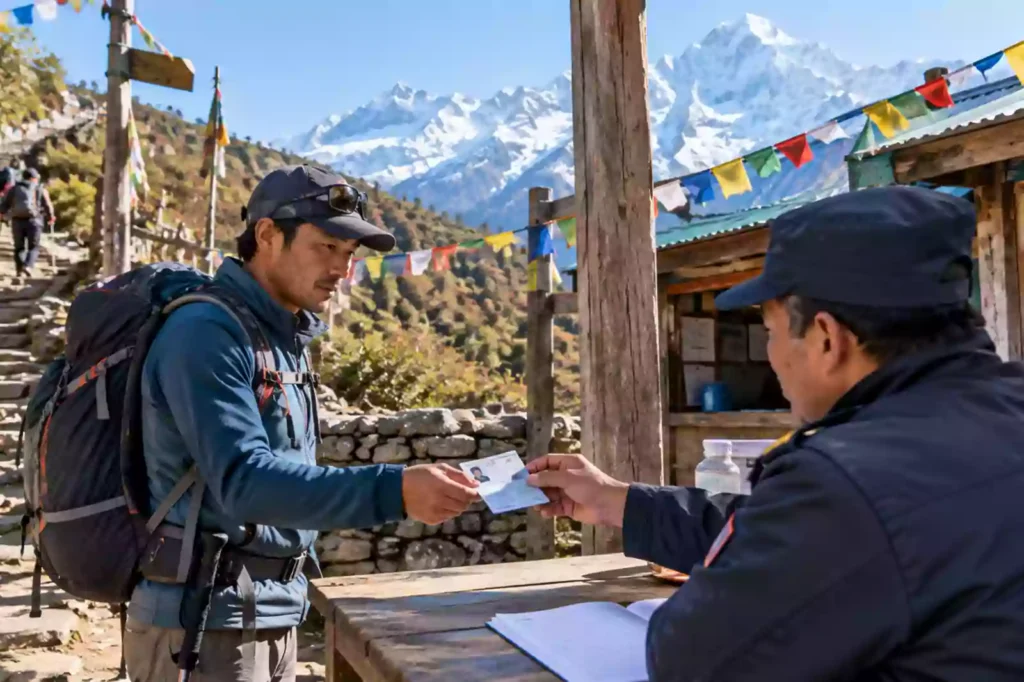
Rules differ by route, so don’t assume one trek’s requirements apply to another. The Nepal Tourism Board lists many popular areas Everest, Annapurna, Langtang, Manaslu, Mustang, Kanchenjunga, Makalu where a licensed guide and a TIMS card are required.
Before departure, check:
Whether your route requires a licensed guide.
Whether you need a TIMS card.
Whether a park or conservation-area permit applies.
Whether the route is a restricted area.
Whether seasonal or weather restrictions apply.
For remote or high-altitude routes, a guide also helps with navigation, communication, and emergencies.
4. Don’t Rely on Foreign Currency in Remote Areas
Foreign currency may work in tourist centers, but it becomes impractical as you move into rural, high-altitude terrain. The Nepalese rupee (NPR) is the practical option everywhere else.
Carry enough cash for tea houses, meals, snacks, local transport, charging fees, tips, and unexpected costs ATMs are unreliable on remote trails. For currency exchange, use only authorized institutions or licensed services, as the Nepal Tourism Board advises.
5. Don’t Enter Homes, Temples, or Monasteries With Shoes On
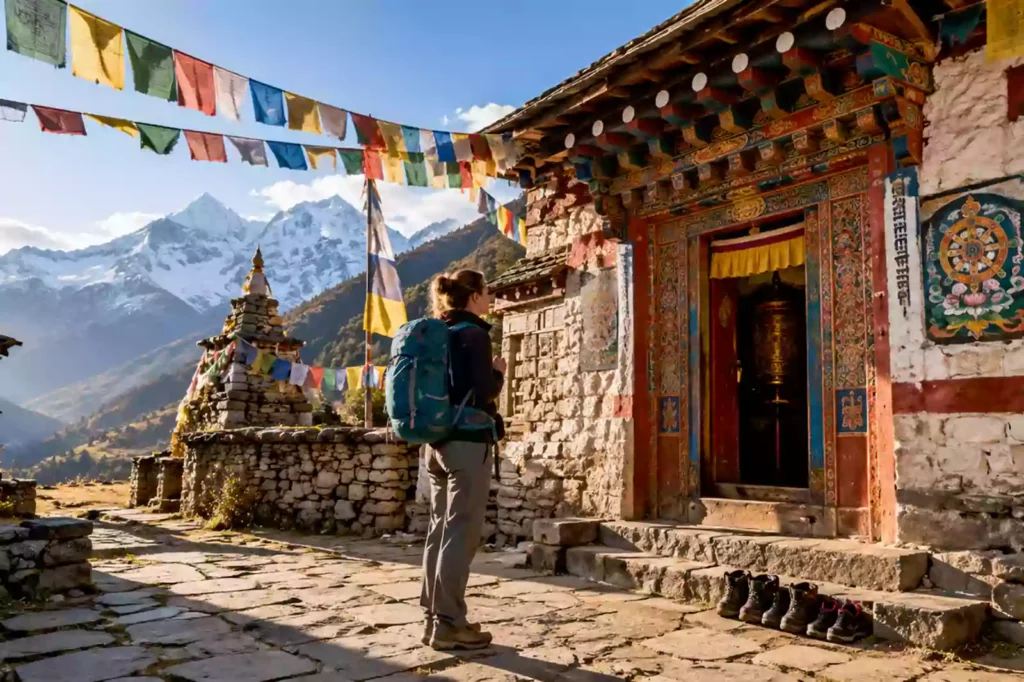
Removing shoes is standard etiquette before entering a Nepali home, temple, monastery, or shrine look for shoes left outside, or follow local instructions.
Rules vary by site: some temples restrict entry to non-Hindus, and others have specific photography or clothing rules. Trail towns like
Namche Bazaar have several monasteries where this etiquette matters closely.
When visiting a religious site:
Remove your shoes when required.
Follow posted instructions and ask before photographing.
Don’t touch religious objects without permission.
Walk around stupas and temples per local custom.
Respect closed-off areas.
6. Don’t Drink Untreated Water
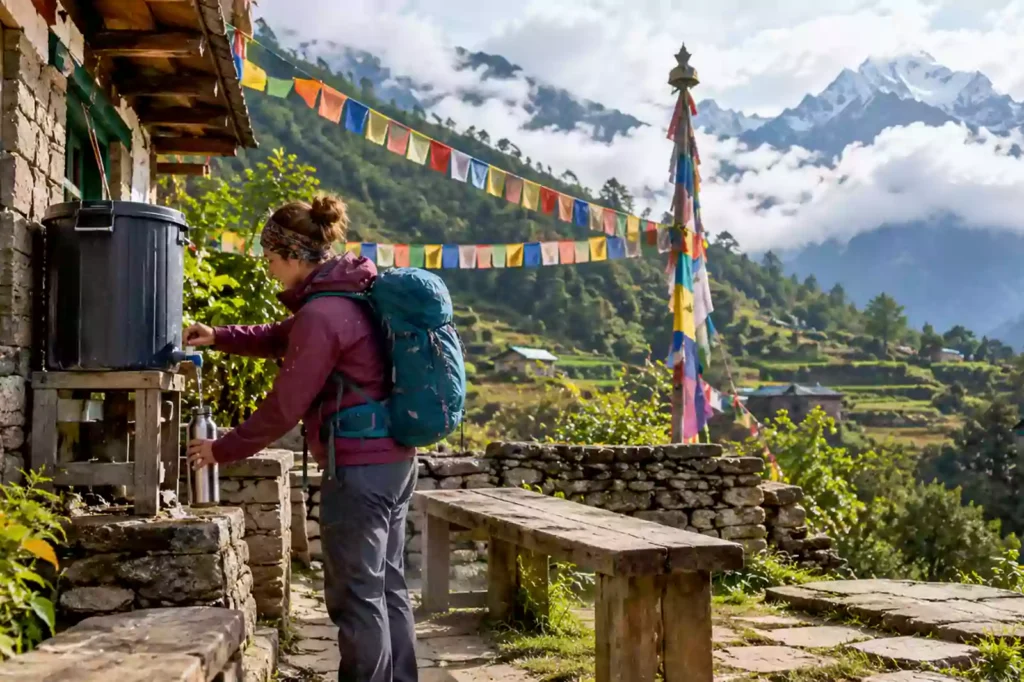
Natural water can look clean without being safe. Avoid drinking directly from untreated streams, springs, rivers, or questionable taps they can carry microorganisms that cause illness.
Safer options:
Boiled water from a tea house or lodge.
Properly filtered water.
Purification tablets or other approved treatment.
Sealed bottled water where needed.
If you carry a reusable bottle, plan refill points ahead; water sources and treatment options vary between villages, especially on longer treks.
7. Don’t Ignore Dress Etiquette
You don’t need formal clothing, but dress modestly in villages, homes, and religious sites. Standards vary by region, and the Nepal Tourism Board notes that skimpy clothing is frowned upon, especially in rural areas.
For most situations:
Wear normal trekking clothes on the trail.
Carry a light layer for extra coverage.
Avoid revealing clothing near villages or religious sites.
Cover shoulders and knees where custom calls for it.
Follow specific dress rules at religious sites.
Quick Checklist: What to Avoid While Trekking in Nepal
| Don’t do this | Do this instead |
| Ignore local customs | Learn basic Nepalese etiquette |
| Give cash directly to children | Support local businesses or reputable organizations |
| Assume every trek has the same rules | Check guide, TIMS, and permit requirements |
| Depend entirely on foreign currency | Carry enough Nepalese rupees |
| Enter religious places with shoes on | Remove shoes when required |
| Drink untreated water | Use boiled, filtered, or treated water |
| Wear inappropriate clothing at cultural sites | Dress respectfully |
Trekking Safety Matters Too
Etiquette is only part of responsible trekking; mountain safety matters just as much at higher elevations.
Altitude sickness can develop above 2,500 meters; symptoms like headache, nausea, dizziness, and fatigue shouldn’t be ignored. The Nepal Tourism Board advises ascending gradually, staying hydrated, and not continuing higher once symptoms appear.
Also:
Follow designated routes and avoid trekking alone where unsafe.
Carry a basic first-aid kit and keep emergency contacts handy.
Check weather and trail conditions beforehand.
Allow enough time for acclimatization.
Tell your guide or accommodation your itinerary.
Proper acclimatization isn’t optional at altitude; it’s core to staying safe.
Responsible Trekking Helps Protect Nepal
Good etiquette extends to the environment: use designated trails and campsites, minimize firewood use, and manage waste responsibly. This protects fragile mountain ecosystems while keeping tourism income local.
Aim to:
Carry a reusable water bottle and minimize single-use plastic.
Pack out rubbish where disposal isn’t available.
Stay on established trails and respect wildlife.
Use local guides, porters, lodges, and homestays.
Essential Tips for Responsible and Safe Trekking in Nepal
Knowing what to avoid while trekking in Nepal helps you sidestep common cultural, safety, and practical mistakes. The core principles are simple: respect local customs, follow current regulations, drink safe water, carry rupees, dress appropriately, and take mountain safety seriously.
Nepal’s trekking experience, whether on the classic Everest Base Camp Trek or a quieter route is as much about how responsibly you travel as it is about the views. Check current route requirements and prepare for altitude, weather, permits, and transportation before you leave.
Ready to Explore Nepal on Foot?
Plan your trek with practical route information, experienced local support, and the right preparation for the Himalayas.
Frequently Asked Questions About Trekking in Nepal
What should tourists avoid doing in Nepal?
Avoid disrespecting local customs, entering temples without following their rules, photographing people without permission, littering, giving cash directly to children, and drinking untreated water. Also check current guide, TIMS, and permit requirements before starting.
Is it rude to say hello instead of Namaste in Nepal?
No. “Hello” isn’t inherently rude, especially in tourist areas but Namaste is a respectful, widely understood way to acknowledge local culture.
Can you trek in Nepal without a guide?
It depends on the route. Many major areas, Everest, Annapurna, Langtang, and Manaslu, currently require a licensed guide and a TIMS card. Always confirm current rules for your specific route.
Can you drink tap water while trekking in Nepal?
Don’t assume untreated tap, spring, or river water is safe. Use boiled, filtered, treated, or sealed water, and carry a reliable purification method on longer treks.
What should you wear when visiting temples in Nepal?
Dress modestly at temples, monasteries, and villages. Trekking clothes are fine on the trail, but avoid very revealing clothing near religious or rural sites, and follow any posted dress rules.
Should I carry Nepalese rupees while trekking?
Yes, remote areas have limited card and ATM access. Carry enough rupees for meals, accommodation, snacks, and transport rather than relying on foreign currency.